



Gold Framed Architectural Art
Gold framed architectural art brings together centuries of historic streetscapes, classical ruins and urban vistas held within gilded borders.
Gold Framed Architectural Art
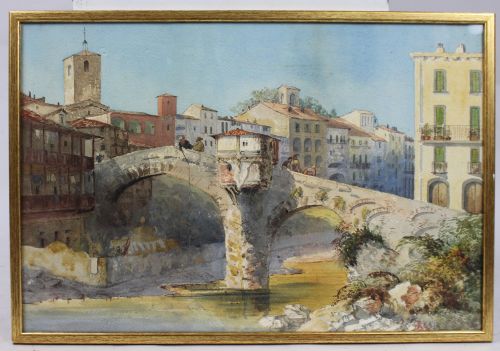
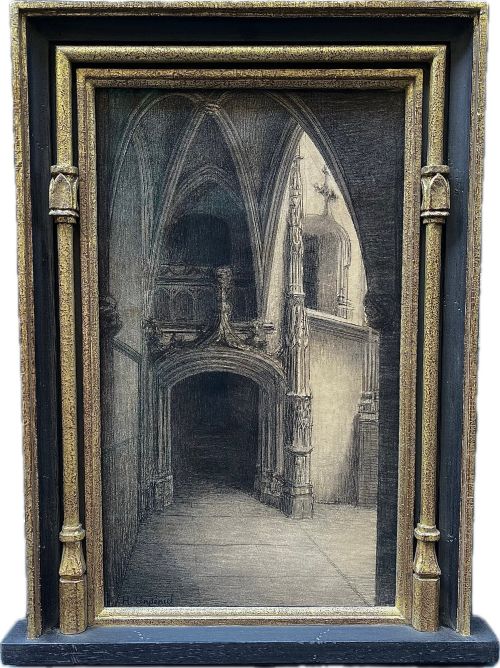
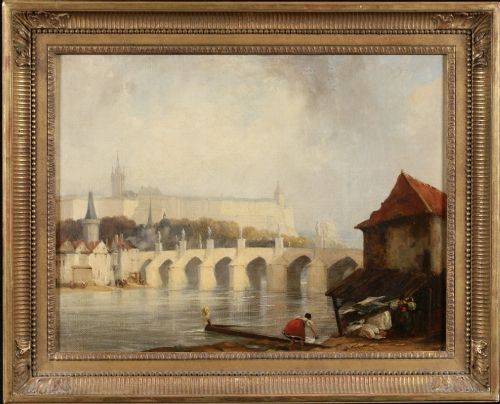
Gold framed architectural art encompasses paintings, watercolours, prints and engravings depicting buildings, townscapes, castles and archaeological sites. These works capture urban landscapes from the eighteenth, nineteenth and twentieth centuries, often framed in gilt wood or gold leaf.
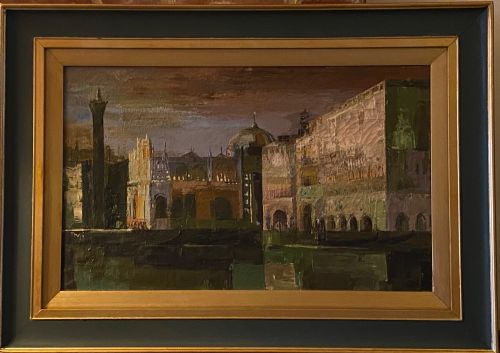
The pieces on this page range from grand oil paintings of Venetian canals and Bavarian Gothic castles to intimate watercolours of British abbeys and classical Roman ruins. Buyers encounter everything from large nineteenth-century canvases to early twentieth-century townscapes and coloured lithographs of architectural scenes.
Many items present specific historical locations, such as Prague Castle, the Colosseum, or local churches and bridges, rendered by named artists or skilled regional schools. The defining characteristic across the selection is the architectural subject matter paired with a prominent gold or gilt frame.
Materials and Construction
The physical objects rely on traditional fine art supports including paper, wood panels and canvas for the painted or printed imagery. Watercolours and lithographs utilise paper surfaces, while larger vistas employ oil on canvas or board.
Encasing these works are wooden mouldings finished with gold leaf or giltwood, applying thin layers of gold or metallic leaf to create the characteristic metallic sheen around the artwork. These frames often match the period of the piece, securing the visual weight of the architectural subject.
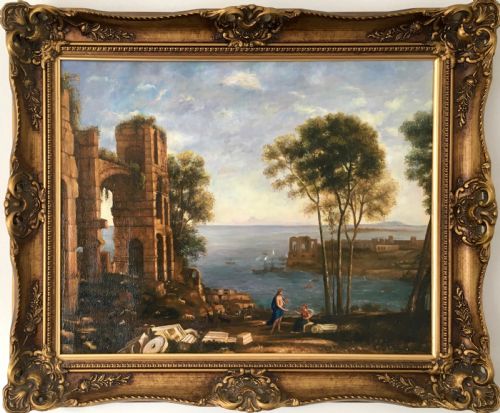
Several pieces capture travellers pausing to admire Roman ruins, proving that dodging tourists with a sketchbook is a centuries-old tradition.
Assessing Quality and Execution
Quality rests in the precision of the architectural perspective, the handling of light across stone and masonry, and the depth of the composition. Stronger examples display confident brushwork or sharp delineation in engravings, capturing the precise proportions of ruins, facades and bridges.
The relationship between the artwork and its frame dictates visual success, where period-appropriate giltwood enhances the tone of the subject without overwhelming it. Finer pieces demonstrate careful preservation of the original pigments alongside robust framing materials.
Henri Charles Angéniol·Victor Gabriel Gilbert·Alfred George Morgan·Cornelis Christian Dommersen·David Roberts RA·Karl Herrle
The Gold Framed Architectural Art Glossary
- Giltwood
- Wood carved and coated with gold leaf or gilt finish. This material forms the classic reflective borders found on period frames.
- Lithograph
- A print made from a design drawn on limestone or metal plate. This technique allowed for the mass production of detailed architectural views in colour or monochrome.
- Neoclassical
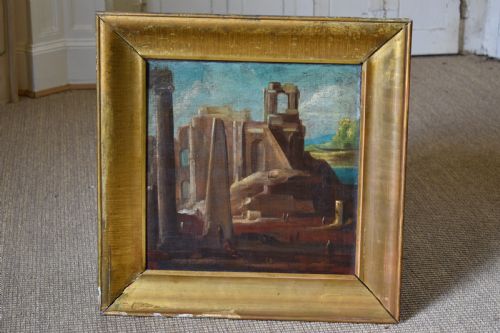
- A style reviving classical Greco-Roman forms and architecture. Pieces in this category frequently feature columns, ruins and classical symmetry.
- Italianate
- An artistic style inspired by the architecture and landscape of Italy. Works often incorporate sunlit villas, classical arches and Mediterranean topography.
- Diptych
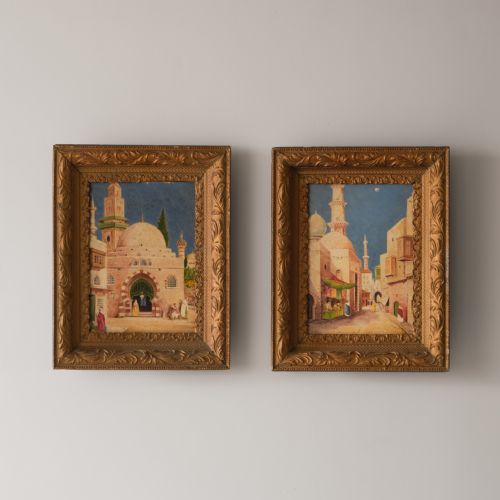
- A painting or artwork divided into two matching panels. This format is typically hinged or displayed as a paired set of views.
Gold Framed Architectural Art: Frequently Asked Questions
What periods do these pieces date from?
The selection spans from the eighteenth century through the nineteenth and twentieth centuries. Works reflect historical artistic movements including Georgian, Victorian, Edwardian and mid-century styles.
Most items originate from the 1800s and early 1900s, capturing urban development and the Romantic interest in ancient ruins and historic European cities.
How should I hang these framed works?
Because these pieces feature heavy gilt frames and detailed subjects, they require secure wall fixings suited to their weight. Position them at eye level where direct or ambient light can catch the gold leaf of the frame.
Keep them away from direct sunlight and damp environments to protect both the paper or canvas and the underlying wooden frame.
Are all the artworks original?
The page includes a mixture of unique hand-painted works and period prints. Original oil paintings and watercolours sit alongside nineteenth-century lithographs and engravings of architectural subjects.
Each listing specifies the exact medium used, distinguishing between unique painted canvases and printed graphic works.
How do I identify architectural subjects?
Architectural art focuses primarily on built structures, including castles, cathedrals, streetscapes, bridges and ancient ruins. Figures may appear for scale, but the main subject is the built environment.
Titles often name specific locations, monuments or cities, helping buyers trace the exact buildings depicted in the artwork.