


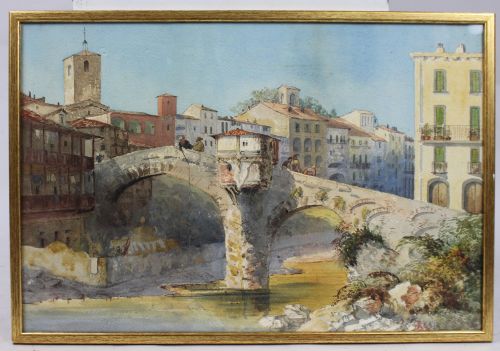
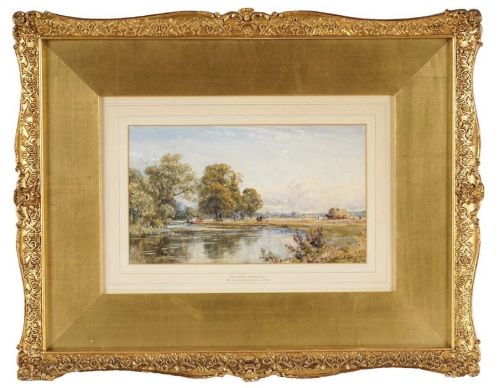
Gold Frame Watercolour Painting
A gold frame watercolour painting brings together delicate pigments on paper and ornate wooden mouldings.
Gold Frame Watercolour Painting
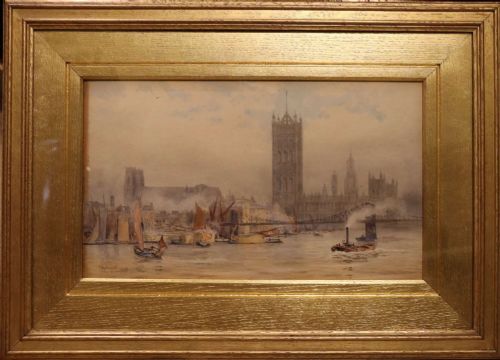
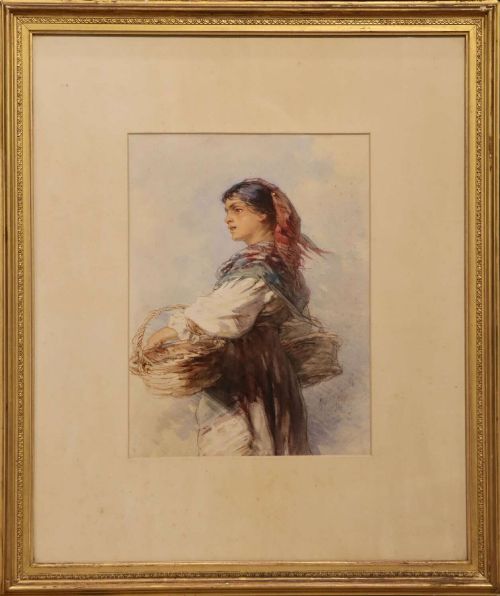
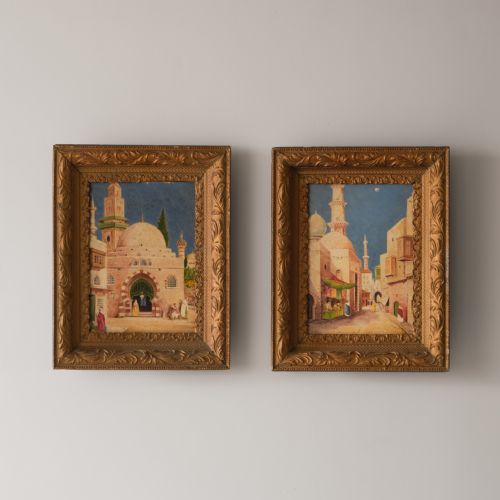
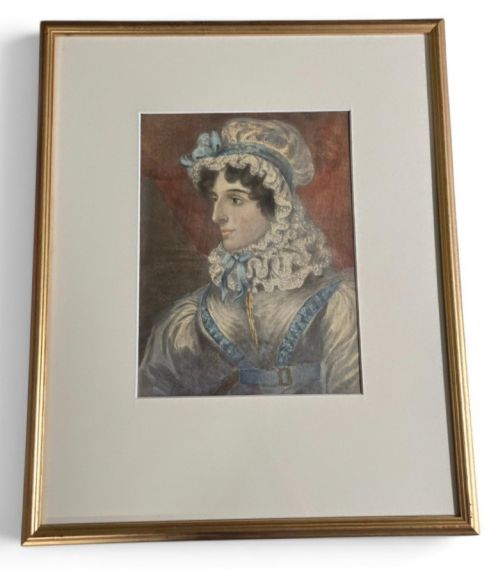
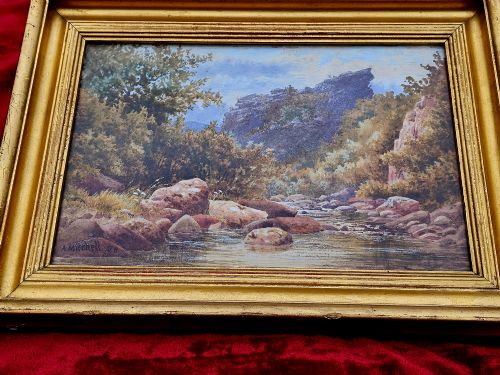
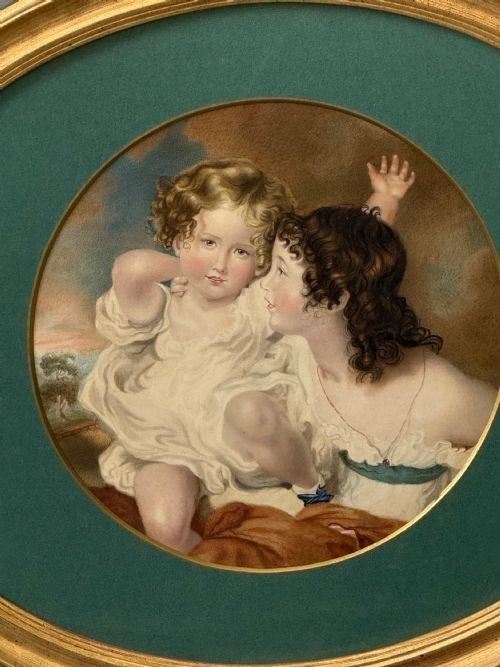
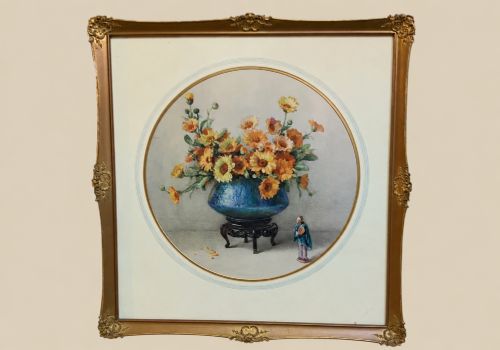
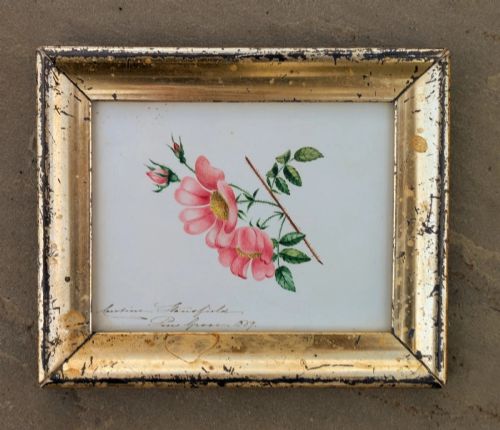
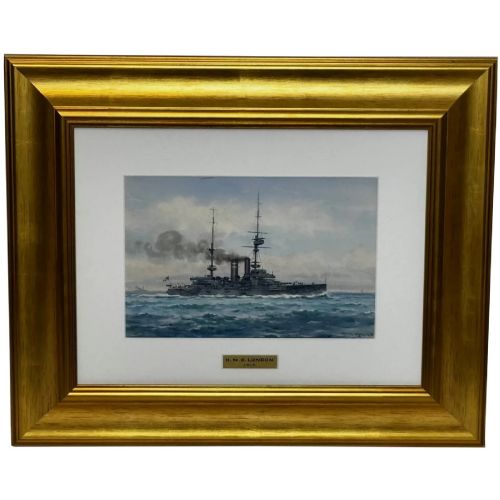
When you search for a gold frame watercolour painting, you encounter works executed on paper, glass, or card, housed within protective borders of gilt wood, metal, or gesso. These pieces span the eighteenth, nineteenth, and twentieth centuries, taking the form of detailed landscapes, maritime scenes, botanical studies, and portrait miniatures.
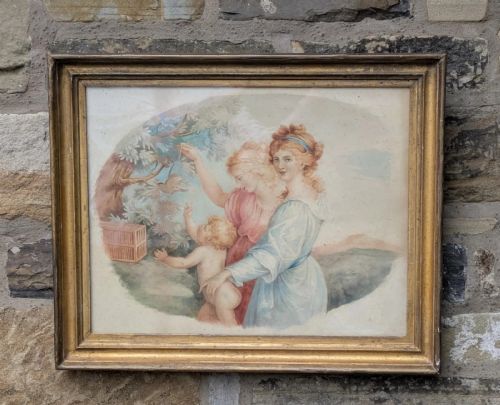
You are most likely to meet nineteenth-century English and continental watercolours on this page, often framed in gilt surrounds that reflect the Victorian or Georgian taste for rich ornamentation. Subjects range from naive topographical views and serene harbour scenes to classical figures and intimate family portraits.
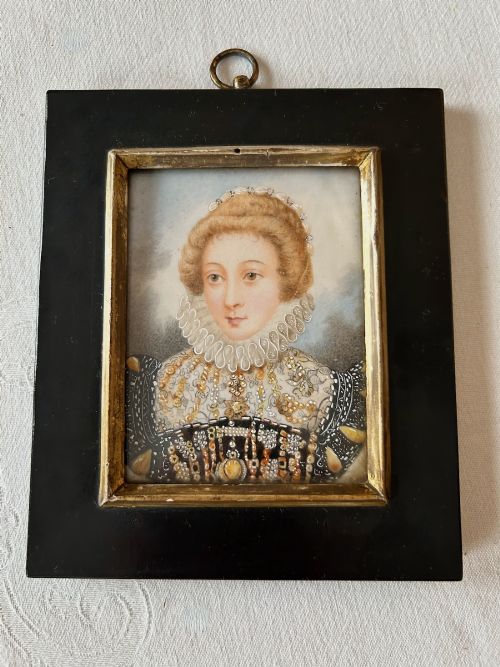
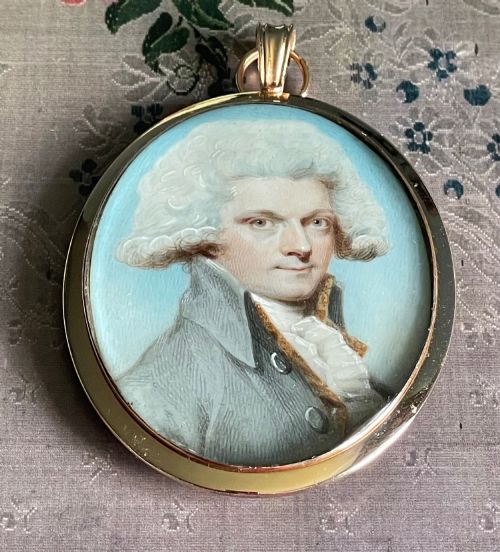
The physical format varies from small pocket-sized portrait miniatures under glass to larger framed wall art depicting expansive countryside vistas. Each piece relies on the transparency of water-soluble pigments, sometimes heightened with bodycolour, set within a protective glazed enclosure.
How they were made
Watercolour pigments were bound with water-soluble vehicles such as gum arabic and applied to paper, card, or prepared glass with fine brushes, allowing light to reflect off the pale ground through translucent washes. Artists occasionally employed bodycolour or gouache for opaque highlights, building depth in floral studies and architectural details.
The surrounding frames were constructed from carved timber or moulded composition applied to a wooden core, then finished with gold leaf or gilt metal. Guilders applied thin sheets of gold onto a prepared bole and size base, burnishing the surface to achieve a metallic sheen that complemented the delicate tones of the painting within.
Listings feature works from the eighteenth, nineteenth, and twentieth centuries, incorporating both modest portrait miniatures and expansive landscape paintings.
What varies in quality
The quality of a watercolour painting rests upon the sureness of the brushwork, the preservation of pigment vibrancy, and the subtlety of tonal washes. Finer examples display precise draftsmanship and atmospheric depth, whereas lesser works can appear flat or overworked.
Framing standards also divide the range, as original period gilt wood or leaf frames with hand-carved ornamentation elevate a piece far beyond standard modern replacements. The harmony between the mount, the protective glass, and the gilt surround indicates the care taken in presenting the artwork.
Henri Fradelle·Charles Shirreff·William Banks Fortescue·Frank Watson Wood·Robert Thorne Waite·Richard Cosway·Ernest Arthur Rowe·George Oyston·Frederick James Kerr·Arthur Dudley·Frederick Buck·Robert George Talbot Kelly·David Cox·Charles Henry Slater·Herman S Melville·George Stanfield Walters·Charles Edward Wilson
The Gold Frame Watercolour Painting Glossary
- Giltwood
- Wood carved and covered with gold leaf or gilt composition. This finish provides a bright metallic boundary that isolates the paper painting from its surroundings.
- Watercolour
- A painting method in which the paints are made of pigments suspended in a water-based solution. The medium relies on white paper showing through transparent washes.
- Portrait miniature
- A small-scale painting depicting a person, executed on ivory, vellum, card, or glass. These delicate works were frequently housed in small, ornate gilt metal or wood frames.
- Bodycolour
- Watercolour paint mixed with a white pigment to make it opaque. Artists used this technique to add solid highlights and dense areas of colour to their paintings.
Gold Frame Watercolour Painting: Frequently Asked Questions
How should I clean a gilt frame?
Dust the gilt surface gently with a dry, soft brush or a clean feather duster to remove particles without disturbing the fragile gold leaf.
Avoid using water, liquid cleaners, or abrasive cloths, as moisture and friction will strip the delicate metallic finish from the wood or gesso beneath.
Can I hang watercolours in direct sunlight?
Watercolour pigments and the paper support are highly sensitive to ultraviolet light, which causes fading and discolouration over time.
Position these paintings on interior walls away from direct windows and harsh artificial spotlights to preserve the integrity of the original tones.
What is a portrait miniature?
Portrait miniatures are small paintings created to commemorate family members or public figures, often designed to be carried or displayed in intimate settings.
They are commonly rendered on thin paper, card, or glass, and housed within tight protective cases or small decorative gilt frames.
How do I date a gold frame?
Examine the construction methods visible on the reverse of the frame, including corner joints, the type of wood used, and the composition of the gesso base.
Georgian and Victorian frames often feature hand-carved wooden corners or distinct moulding profiles that differ from later twentieth-century reproductions.