





Gold Frame Seascape Pair
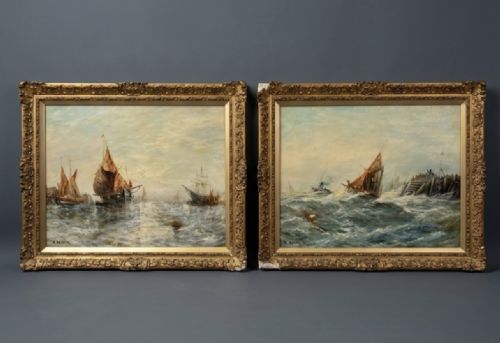
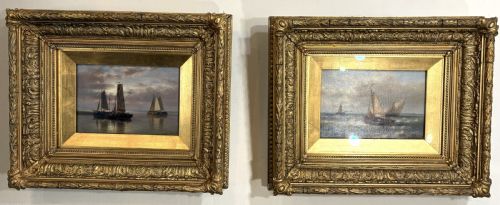
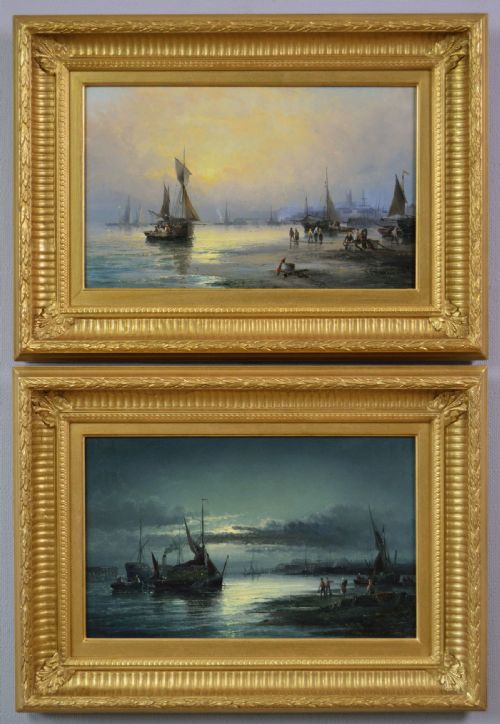
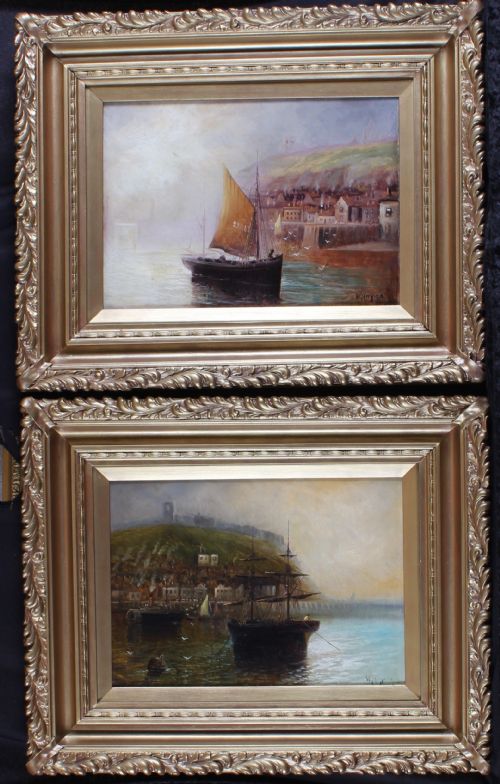
A gold frame seascape pair offers matched maritime views of coastal life and rough water, bringing balanced Victorian atmosphere to a wall.
Gold Frame Seascape Pair
A gold frame seascape pair consists of two matching maritime oil paintings or watercolours housed in gilt wooden surrounds, capturing coastal scenes, fishing boats, and shipping traffic. These works date predominantly from the nineteenth century and the Edwardian period, spanning Victorian maritime styles and Dutch marine traditions.
The subjects on this page range from choppy channel waters and moonlit northern harbours to calm river scenes on the Medway and London Thames views. Buyers encounter works attributed to named marine artists alongside unsigned coastal studies created as balanced interior decorations.
How they were made
These works are painted in oil or watercolour on canvas, board, or paper, capturing coastal light and maritime atmosphere through layered brushwork. Oil paint applied to canvas provides depth to churning waves and overcast skies.
The surrounds are constructed from wood and gesso, finished with gold leaf or gilt paint to frame the maritime subject. Moulded gesso details on the frames catch the light, complementing the tonal contrasts within the painted scenes.
Listings feature nineteenth-century and Edwardian works executed in oil paint, watercolour, canvas, and giltwood.
What varies in quality
Quality depends upon the skill of the brushwork in rendering rigging, water movement, and atmospheric light, alongside the original artistry of the matching gilt frame. Stronger works display confident handling of maritime architecture and vessel proportions.
The condition of the canvas and the integrity of the gesso mouldings shape the overall standard of a pair. Intact original gilding and stable paint surfaces preserve the visual balance intended by the maker.
Abraham Hulk I·Gustave De Bréanski·Pieter Cornelis Dommersen·Adrian Van Porten·George Dodgson Callow·Thomas Bush Hardy·Ebeneezer Colls·Hubert Thornley·John James Wilson·Walter Meegan·Francis Moltino·Walter Williams
The Gold Frame Seascape Pair Glossary
- Gesso
- A plaster-like mixture applied to wooden frames as a base for gilding. It is carved or moulded into decorative patterns before the gold leaf is laid.
- Giltwood
- Wood that has been coated with gold leaf or liquid gilding. This finish gives frames their bright reflective surface.
- Marine art
- Painting that depicts ships, shipping, and coastal views. It encompasses historical naval battles, merchant shipping, and local fishing boats.
- Provenance
- The documented history of a painting's ownership and origin. It helps verify the attribution of nineteenth-century works.
Gold Frame Seascape Pair: Frequently Asked Questions
How should I hang a pair?
Hang the two paintings at eye level with a consistent gap between them to maintain visual balance on the wall. Aligning the lower or upper edges helps anchor the pair as a single composition.
Consider the light in the room to avoid glare reflecting off the glazed watercolours or the polished gilt surfaces of the frames.
Are these works signed?
Many nineteenth-century maritime paintings feature artist signatures in the lower corners, while others remain unsigned studio works. Signatures provide attribution to specific marine painters active during the Victorian period.
Unsigned pairs still reflect the stylistic conventions of nineteenth-century coastal and marine art.
What subjects appear most often?
Common subjects include fishing boats on coastal waters, merchant shipping off harbour walls, and river scenes with traditional barges. Locations range from specific English ports like Scarborough and Portsmouth to Dutch shores.
Moonlit coastal views and choppy channel waters also recur across the nineteenth-century selections.
How do I care for gilt frames?
Dust gilt frames gently with a soft, dry brush to prevent accumulation in the moulded gesso details. Avoid moisture and chemical cleaners, which can strip the gold leaf finish.
Keep the paintings away from direct sunlight and steady heat sources to protect the canvas and wood from warping.