






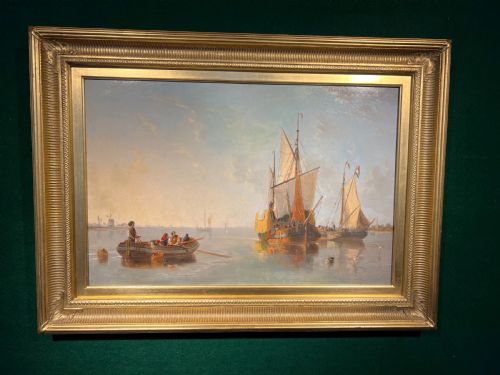

Gold Frame Coastal Art
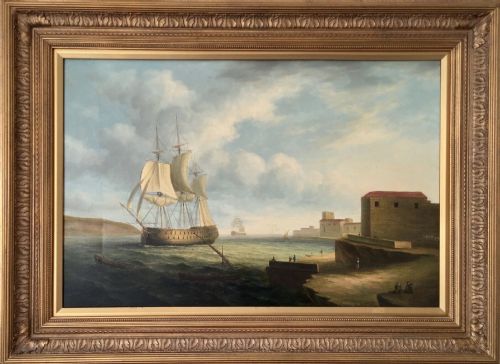
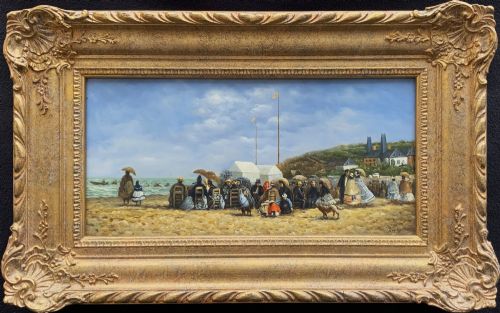
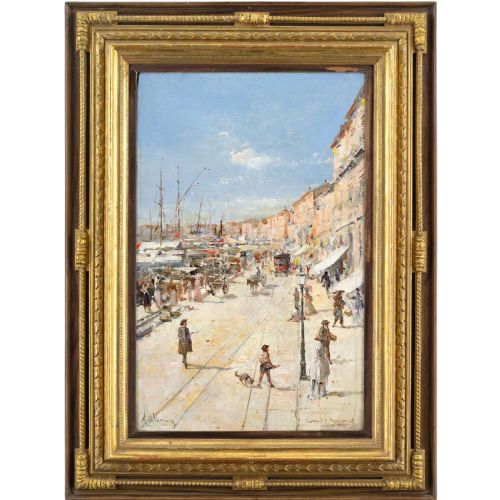
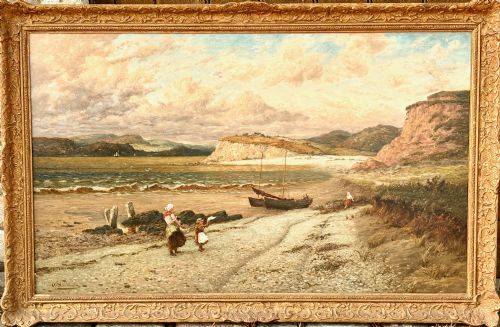
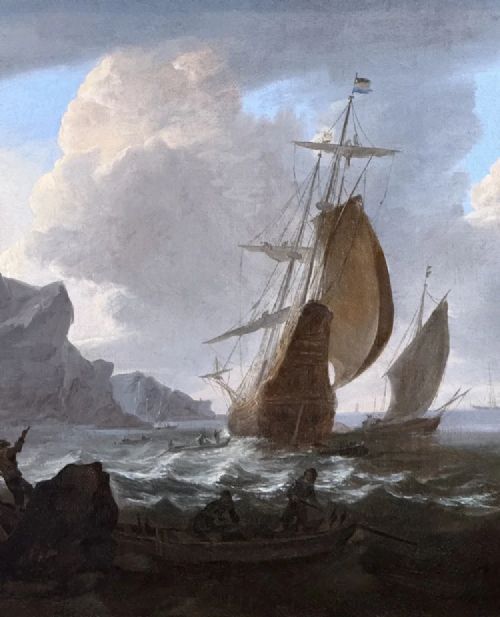
Gold frame coastal art captures maritime life and seaside vistas through traditional painting mediums housed in ornate wooden settings.
Gold Frame Coastal Art
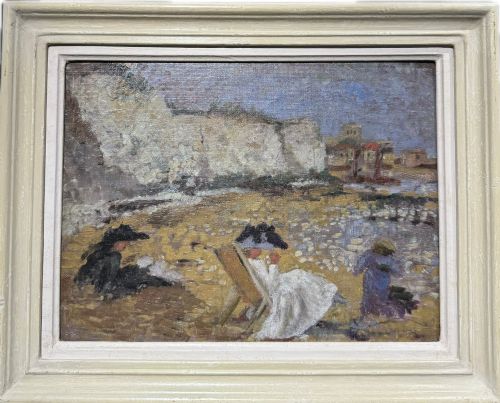
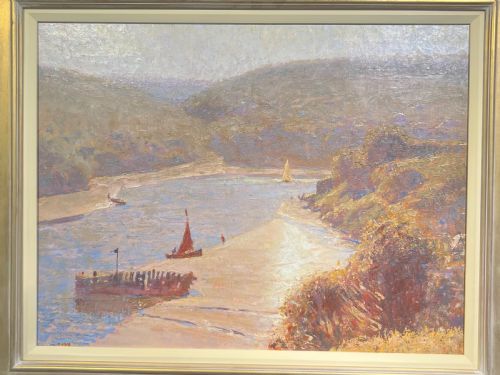
Gold frame coastal art encompasses oil paintings, watercolours, and fine art pieces depicting harbours, ships, and shores. Buyers encounter traditional seascapes spanning the Victorian era through to the early twentieth century.
The selections include local scenes from British and European locations such as St Ives, Malta, and the Isle of Man. Works range from intimate watercolours on paper to large oil paintings on canvas and panel.
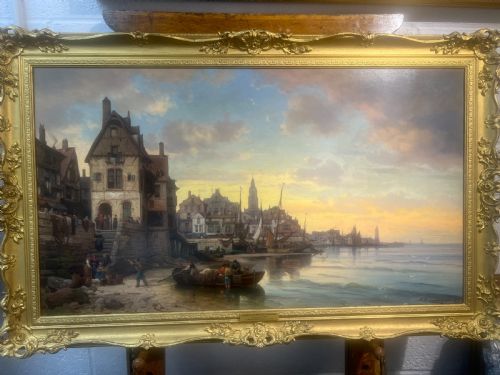
Framing is a central component, with gilt wood and giltwood mouldings enclosing the painted surfaces. These pieces bring maritime heritage and coastal atmosphere directly into domestic interiors.
Materials and construction
Artists relied primarily on oil paint applied to canvas, wood panels, or board, alongside watercolour pigments on paper. These traditional media allowed for varied textures, from smooth washes to heavy impasto capturing breaking waves.
Frames are constructed from wood and finished with gilt or giltwood treatments to create metallic sheens around the artwork. Such frames often feature moulded decoration that complements the period aesthetic of the painting within.
Several canvases manage to capture the exact salty glare of a brisk morning on the North Sea.
Distinguishing quality across the selection
The condition and period authenticity of the gilt wooden frame contribute significantly to the overall integrity of the piece. Hand-carved or deeply moulded frames that match the age of the canvas elevate the presentation.
William Banks Fortescue·Augusto Alberici·Bonaventura Peeters·Bernard Benedict Hemy·John Wilson Carmichael·Abraham Cooper·William Henry Williamson·John Holland·George Stanfield Walters·Abraham Hulk·John Moxon·John Bedloe Goddard·William Edward Webb·Charles Napier Hemy·Gustave Vidal·George Turland Goosey·Gustave De Bréanski·Pieter Cornelis Dommersen
The Gold Frame Coastal Art Glossary
- Giltwood
- Wood that has been treated with gold leaf or a metallic gold finish. This material creates the bright, reflective borders typical of period picture frames.
- Impasto
- Paint applied in thick layers that stand out from the surface. Artists utilise this technique to give texture to crashing waves or clouds.
- Seascape
- A work of art that depicts the sea, coastal views, or marine subjects. These pieces form the core of maritime painting traditions.
- Watercolour
- A paint consisting of pigment suspended in a water-based solution, typically applied to paper. It produces translucent washes suited to atmospheric coastal light.
Gold Frame Coastal Art: Frequently Asked Questions
What subjects do these paintings show?
These artworks depict maritime scenes, including harbour views, sailing ships, fishing boats, and coastal cliffs. Many capture specific locations in Britain and Europe during the nineteenth and early twentieth centuries.
Artists focused on daily life by the shore, ranging from bustling port activities to quiet coastal paths and sunlit beaches.
How should I hang a gilt framed painting?
Hang these works on sturdy hooks secured directly into wall studs or using appropriate masonry fixings, due to the substantial weight of wood and gilt frames. Ensure the wall location avoids direct, strong sunlight to protect the pigments.
Position the artwork at eye level in a room with stable humidity to preserve both the canvas and the wooden frame.
Are these works original paintings?
The selection consists primarily of original oil and watercolour paintings created by period artists rather than modern reproductions. Each piece bears the distinct brushstrokes and textural details of hand-painted art.
Many listings feature signed works or documented attributions to historical painters from the Victorian and Edwardian periods.
How do I identify the period of a frame?
Period frames exhibit construction methods, corner joins, and gilding techniques characteristic of their era, such as nineteenth-century compo ornamentation over wooden cores. Inspecting the reverse reveals the age of the wood and fixings.
Original frames often show natural patina and wear that align with the estimated date of the painting they enclose.