
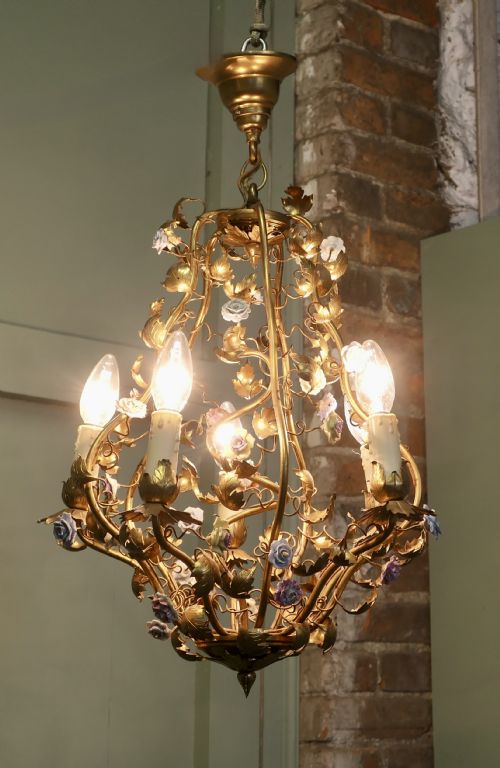
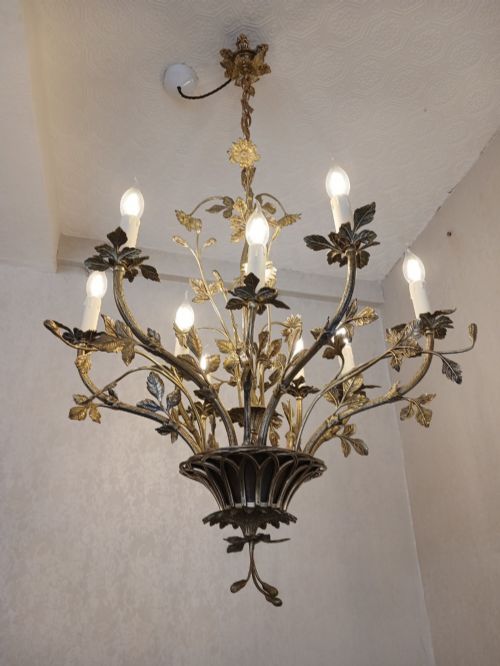


Gold Floral Light Fixture
These gold floral light fixtures bring botanical warmth and gilt metalwork to a room, offering the classic French and Italian styling buyers want.
Gold Floral Light Fixture
A gold floral light fixture combines gilded metalwork with ceramic or porcelain flowers to create an ornamental ceiling or wall light. Buyers searching this phrase encounter pieces dating from the Edwardian era through the nineteen-thirties, spanning chandelier and wall light formats.
The selection here draws heavily on French and Italian aesthetics, ranging from Florentine gilt work to French toleware and rococo revival forms. These pieces often incorporate branch and tole floral motifs, giving them a distinct botanical character.
Chandelier designs dominate the listings, featuring multi-bulb branches alongside occasional wall lights and table lamps. The prevalent finishes rely on gilt metal, brass, and silver gilt surfaces paired with glass or ceramic elements.
How They Were Made
Makers constructed these fixtures using shaped metal frames in brass, iron, and gilt metal, often forming branching structures to support multiple bulbs. Artisans then applied gold or silver gilding to create reflective, opulent surfaces.
Ceramic and porcelain elements were hand-formed into floral shapes and painted to mimic natural blossoms, then wired directly into the metal armature. Frosted glass and crystal drops were integrated to diffuse the light cast by the bulbs.
Several chandeliers include tiny porcelain flowers wired tightly among the metal branches so they bloom indoors permanently without water.
What Varies in Quality
Quality rests in the finesse of the metalwork and the hand-modelling of the ceramic flowers, where finer examples display delicate petal layering and precise gilding. Heavier casting in the brass and bronze arms distinguishes more substantial fixtures from lighter pressings.
The integration of decorative elements, such as cherub arms or crystal waterfalls, separates standard branch configurations from more elaborate compositions. Preservation of the original gilt finish and intact porcelain petals also elevates the standing of a piece.
The Gold Floral Light Fixture Glossary
- Toleware
- Painted or lacquered metalware, frequently shaped into floral and leaf motifs for decorative lighting. This technique originated in France.
- Gilt Metal
- Metal that has been treated with a thin layer of gold leaf or gilt paint to impart a golden surface. It provides the characteristic shine on antique chandeliers.
- Capodimonte
- A style of Italian porcelain known for intricate sculptural details, often appearing as applied flowers on mid-period lighting. It originated from the historic Naples porcelain factory.
- Tent and Waterfall
- A chandelier arrangement where strings of crystal beads form a tent shape above and a waterfall cascade below. This configuration increases light refraction across the room.
Gold Floral Light Fixture: Frequently Asked Questions
How do I clean a floral chandelier?
Dust the metal arms and porcelain petals gently with a soft brush to prevent damage to the gilt surface and fragile ceramic flowers.
Avoid using harsh chemical cleaners that can strip the gold gilding or discolour the painted botanical details.
Are these lights suitable for low ceilings?
Most chandeliers and multi-bulb fixtures require adequate headroom, though smaller three-branch versions fit standard domestic spaces comfortably.
Wall lights offer an alternative for rooms where hanging central fixtures would sit too low.
Can modern bulbs be used?
Standard modern bulb fittings can generally be accommodated by an electrician during installation, depending on the age of the internal wiring.
Low-heat LED alternatives help protect antique ceramic and glass components from thermal stress over extended periods.
How do I date a gilt chandelier?
Dating relies on stylistic markers such as the presence of Edwardian proportions or nineteen-thirties rococo revival flourishes.
Examining the wiring methods, metal casting techniques, and fastener types helps confirm the manufacturing era.