
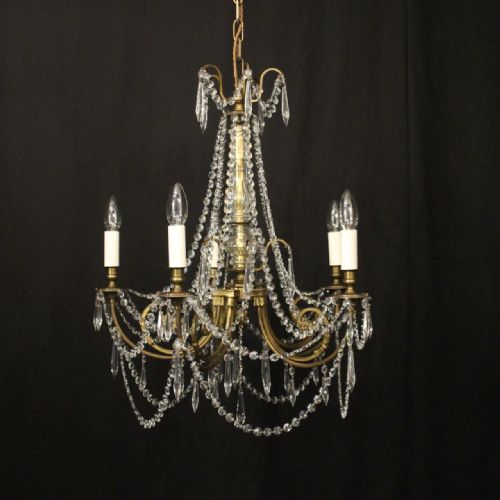


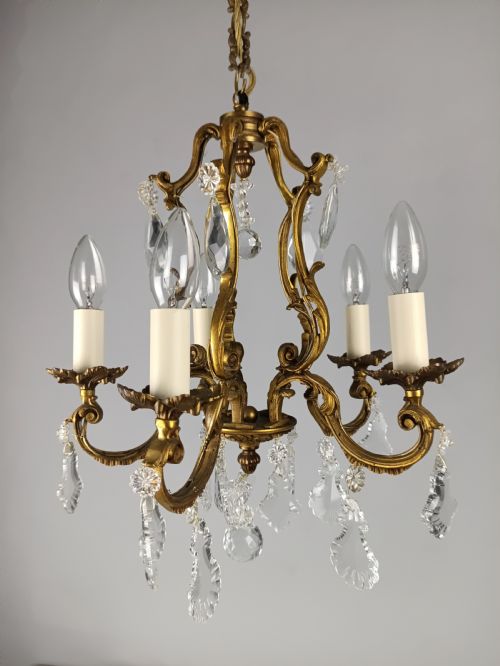


Gold Five Arm Light
A gold five arm light brings genuine warmth and historical character to a room through its polished metal and branching candle or lamp holders.
Gold Five Arm Light
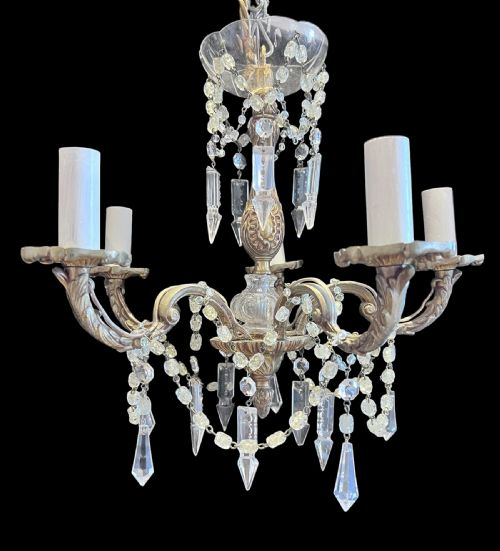
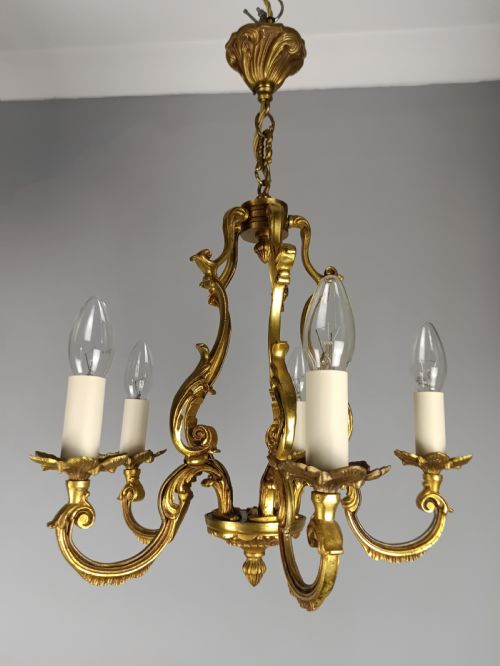
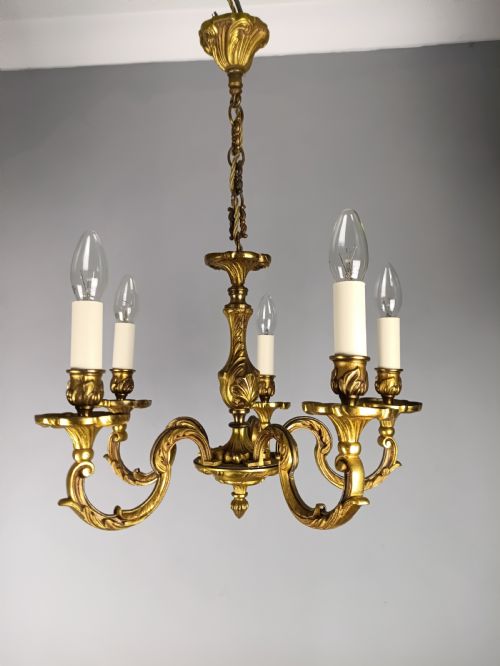
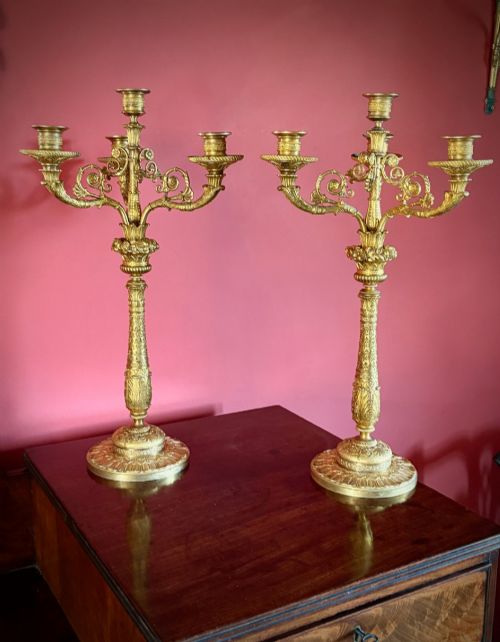
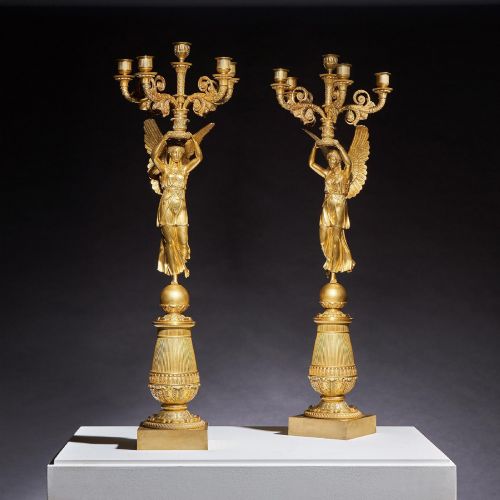
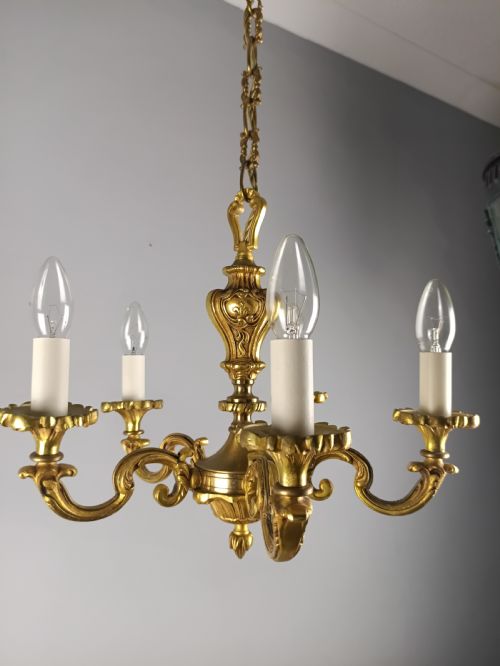
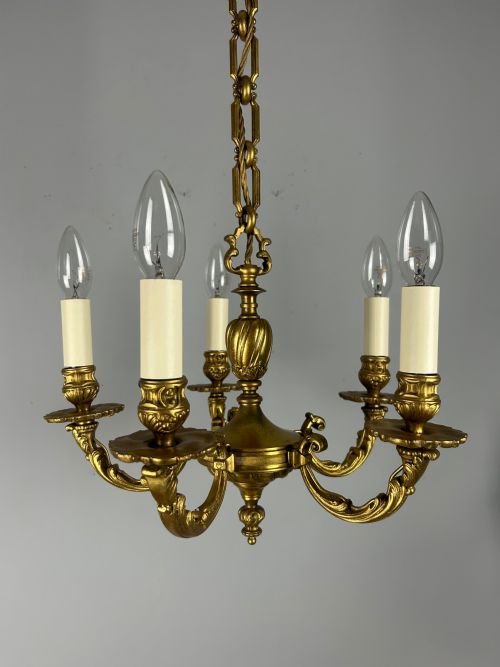
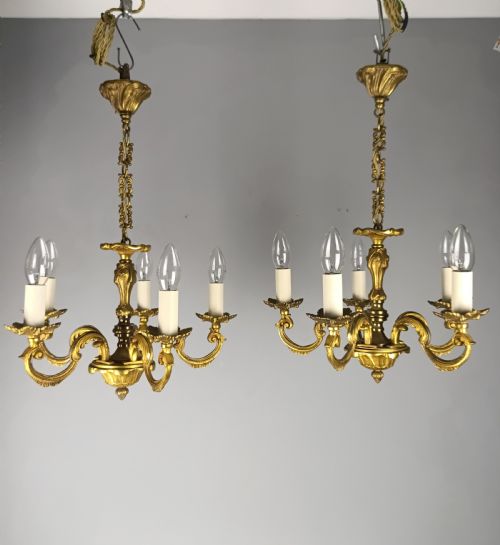
A gold five arm light encompasses brass, gilt bronze, ormolu, and gilded metal fixtures designed to project illumination across five distinct branches. Buyers searching for a gold five arm light encounter primarily French chandeliers and candelabra alongside Edwardian and early twentieth century British or Italian brass ceiling lights and wall lights. These pieces range from substantial nineteenth century French empire designs attributed to makers like Pierre Philippe Thomire down to smaller nineteen twenties domestic fittings.
The selection leans heavily toward French rococo revival, louis xiv style, and chateau aesthetics, characterised by elaborate casting and gilding. Alongside these grander French forms, simpler Edwardian brass branches and arts and crafts iterations appear in domestic settings. The primary forms remain ceiling chandeliers and paired table or mantel candelabra sharing the characteristic five-branch configuration.
How they were made
Makers utilised brass, bronze, and ormolu, applying fire gilding or gold leaf to create the distinctive metallic finish seen across the inventory. Cast metal components were assembled with threaded rods or pins, incorporating glass drops, crystal pendants, and swag details where decorative enrichment was desired.
Surface finishes vary from polished gilt brass to patinated bronze and carved giltwood, reflecting the specific regional workshops and periods of production.
Listed pieces span from nineteenth century candelabras down to nineteen thirties ceiling fixtures and Edwardian wall lights.
What varies in quality
The refinement of the casting and chasing separates standard production from exceptional examples, with finer pieces displaying crisp botanical motifs, sharply defined facial details, and deeply undercut foliate scrolls. Attribution to known bronzeiers or adherence to specific historical styles like the French empire period elevates the standing of an individual piece.
Weight, gauge of metal, and the integration of cut crystal elements also distinguish high tier objects from simpler utilitarian counterparts.
Pierre Philippe Thomire
The Gold Five Arm Light Glossary
- Ormolu
- Finely chopped high-karat gold amalgamated with mercury and applied to a bronze base, then fired to drive off the mercury. This historic fire gilding technique produces a deep, durable golden lustre distinct from modern electroplating.
- Gilt bronze
- Bronze metal that has been coated with a layer of gold leaf or gilt wash. It provides the structural strength of bronze while presenting a rich golden exterior surface.
- Chandelier
- A branched ceiling-mounted lighting fixture designed to hold multiple light sources. They distribute illumination from a central hanging point downwards into a space.
- Candelabra
- A branched candlestick or multi-light holder designed for tabletops, sideboards, or mantelpieces. Unlike hanging lights, these freestanding objects feature a stable base and upright arms.
- Swag
- A decorative chain, garland, or drape of beads and crystals suspended between two points on a light fixture. This ornamental device adds movement and catches ambient light.
Gold Five Arm Light: Frequently Asked Questions
How do I hang a heavy bronze chandelier?
Hanging a substantial gilt bronze or brass fixture requires securing the weight directly into ceiling joists or using a rated structural ceiling hook. Professional electrical installation ensures the internal wiring safely supports the voltage while maintaining the integrity of the antique hanging loop.
Lowering the fixture to a comfortable height above a dining table or hallway floor maximises its visual impact while allowing proper clearance for daily movement underneath.
What is the difference between ormolu and gilt brass?
Ormolu consists of mercury-gilded bronze, a historic technique yielding a rich, matte golden surface texture that does not easily wear down. Gilt brass typically employs a thinner layer of gold applied over a yellower, copper-alloy base metal.
Objects cast in solid bronze or ormolu generally exhibit heavier weight and sharper detail retention than lighter brass alternatives from later periods.
Where should I place a five arm candelabra?
Freestanding five arm candelabras suit dining tables, sideboards, and mantelpieces where their height and branching arms create a balanced focal point. Placing them away from busy walkways protects the extended arms from accidental knocks.
Pairing two matching candelabras at opposite ends of a room or surface establishes architectural symmetry reminiscent of nineteenth century interior layouts.
How do I date a brass and crystal light?
Dating relies upon examining the cast construction methods, screw threads, glass cutting styles, and overall stylistic adherence to periods like the Edwardian era or nineteenth century French revivals. Hand-cut crystal drops and heavy sand-cast brass components typically point towards earlier manufacture.
Later twentieth century reproductions often reveal machine-tooled threads, brighter modern lacquers, and simpler joint assemblies upon close inspection.