
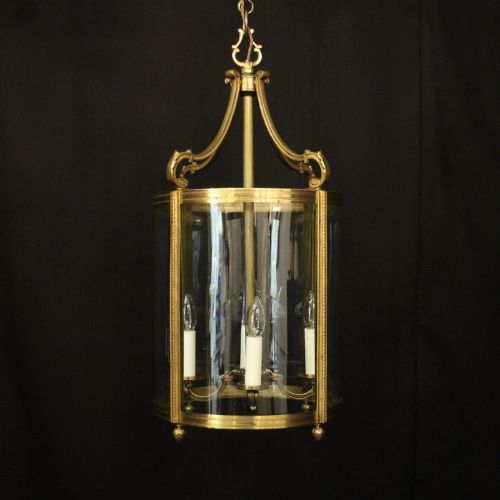


Louis XVI Brass Chandelier
A louis xvi brass chandelier brings restrained French Neoclassical symmetry and warm metallic illumination to a high ceiling.
Louis XVI Brass Chandelier
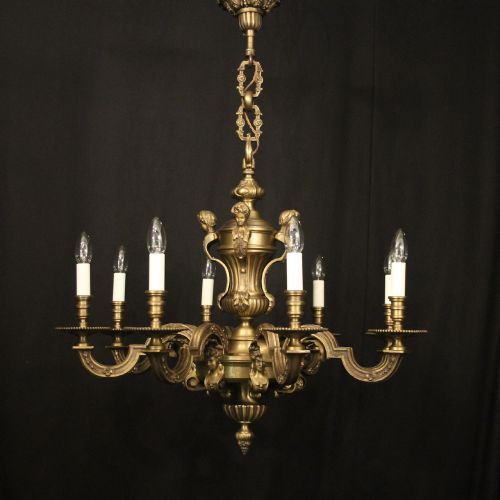
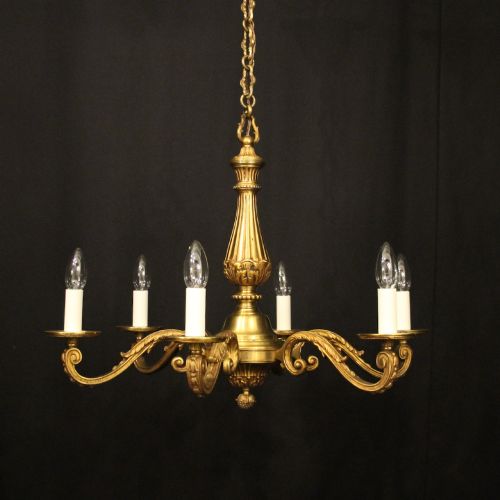
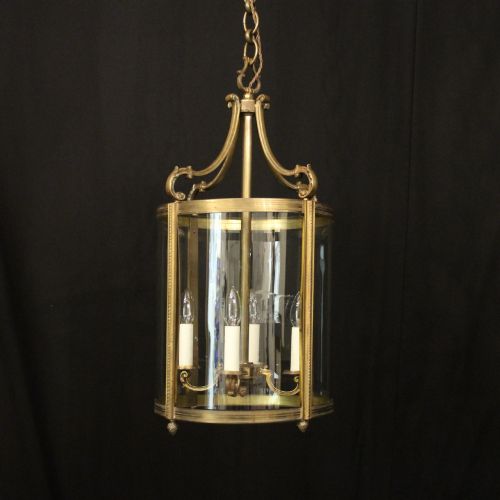
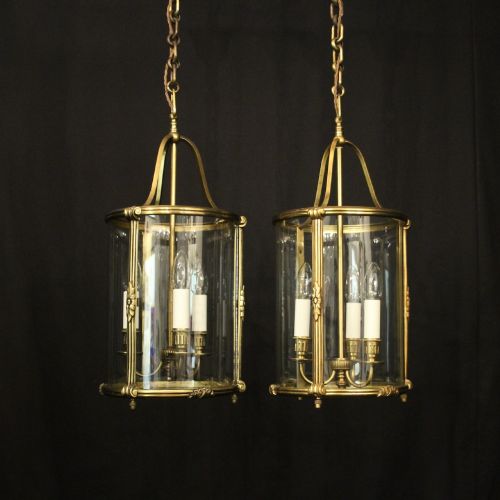
A louis xvi brass chandelier takes the form of French Neoclassical ceiling lighting, hall lanterns, and pendant lights rooted in the Louis XVI style. These pieces emerge in styles like French Chateau and Louis XVI Revival, spanning periods from the nineteenth century through the 1930s.
Buyers meet multi-arm chandeliers carrying four to nine lights, alongside convex and hexagonal hall lanterns paired with glass. The selection draws on nineteenth century manufacturing as well as twentieth century revivals that imitate the decorative arts of the French court.
Materials and construction
Makers construct these hanging fixtures using cast brass, bronze, gilt bronze, ormolu, and gilded brass. Metal components support panes of cut, frosted, or etched glass within structured frames.
Metals undergo casting, gilding, and chasing to produce the characteristic neoclassical ornamentation seen in French lighting fixtures. Glass elements are fitted securely into metal armature frames designed for ceiling suspension.
The listings demonstrate a strong preference for French manufacture, spanning the nineteenth century through the 1930s in brass, gilt bronze, and glass.
Distinctions in execution
The standard of a fixture rests on the crispness of the cast metal ornament and the depth of the gilding applied to the bronze or brass surface. Heavy, well-defined casting separates superior examples from lighter, simpler commercial productions.
Integration of high-grade cut or etched glass components and the structural integrity of the hanging mechanism determine the overall execution of the piece. Finer items exhibit precise assembly where the metal frame meets the glass panels.
The Louis XVI Brass Chandelier Glossary
- Ormolu
- Gilded bronze produced by applying a mercury and gold amalgam to a bronze base, creating a durable golden finish. This technique defines the rich surface texture of high-end French decorative metalwork.
- Neoclassical
- An artistic movement drawing inspiration from the classical art and architecture of ancient Greece and Rome. This aesthetic prioritises symmetry, straight lines, and restrained classical motifs.
- Hall lantern
- An enclosed hanging light fixture designed primarily for entryways, vestibules, and corridors. These pieces typically feature glass panels held within a brass or bronze metal frame.
- Gilded bronze
- Bronze metal treated with a thin layer of gold leaf or gold paint to simulate solid gold. It provides the reflective metallic sheen characteristic of formal French lighting.
- Pendant light
- A single light fixture suspended from the ceiling by a chain, cord, or metal rod. These fixtures hang down to illuminate specific spaces within a room.
Louis XVI Brass Chandelier: Frequently Asked Questions
How do I hang a heavy bronze chandelier safely?
Suspension requires a professional electrician to anchor the fixture directly into ceiling joists using rated structural hardware. The weight of multiple metal arms and glass components demands secure ceiling support.
Electrical wiring must be inspected and updated to modern safety standards before installation. Proper height positioning ensures the fixture clears walking paths while providing balanced room illumination.
How do I clean gilt bronze and glass safely?
Dust metal surfaces gently with a soft, dry cloth to prevent the accumulation of dirt within chased details. Avoid harsh chemical cleaners that can strip the gold leaf or gilding from the bronze base.
Glass panels can be removed carefully for washing with mild soapy water and dried thoroughly before reinsertion. Regular, gentle maintenance preserves the original finish of both the metal frame and the glass elements.
How can I tell a nineteenth-century piece from a later revival?
Nineteenth-century pieces often display hand-chased metalwork, heavier casting techniques, and period-specific assembly methods. Examining the screws, joins, and patination provides clues regarding the age of the construction.
Revival pieces from the early twentieth century replicate these earlier French court styles using machine-assisted manufacturing methods. Comparing the weight, wear patterns, and internal wiring components helps differentiate between original nineteenth-century items and later twentieth-century interpretations.