


Bronze Eight Arm Chandelier
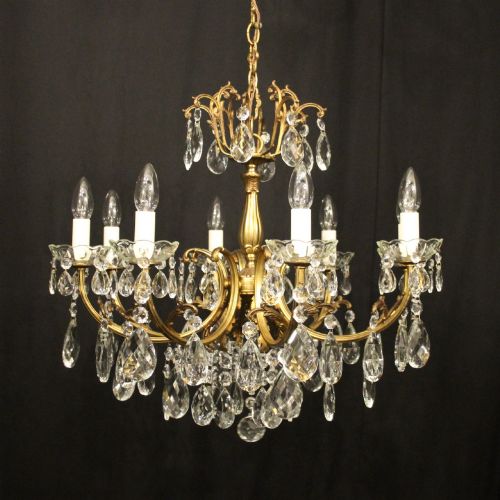
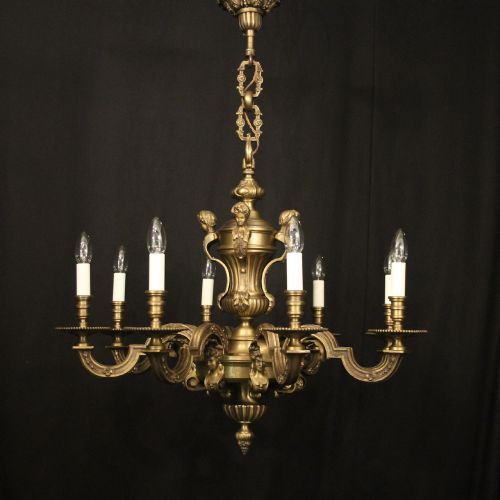
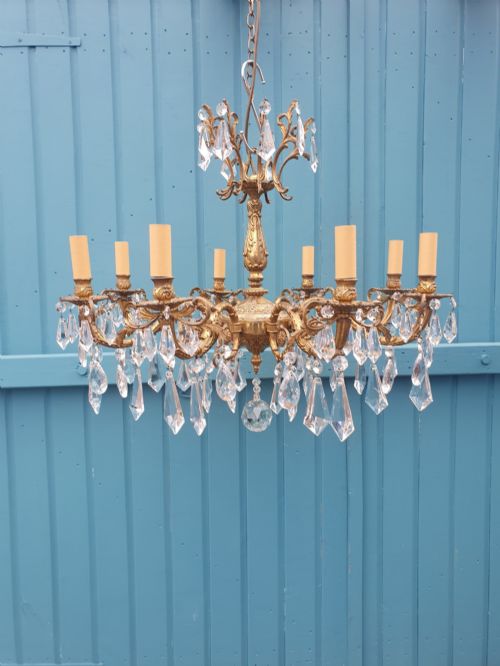
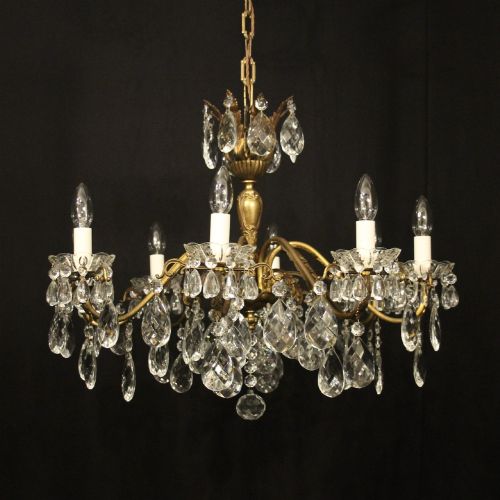
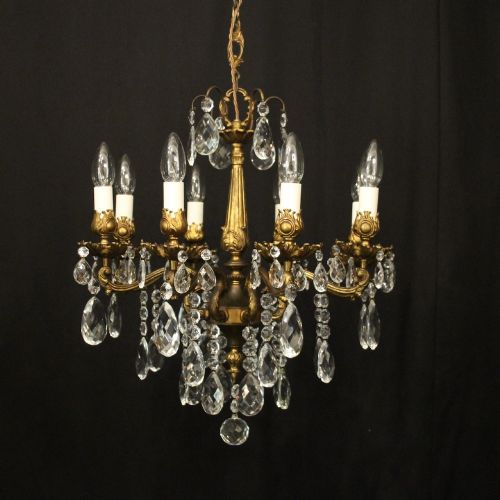
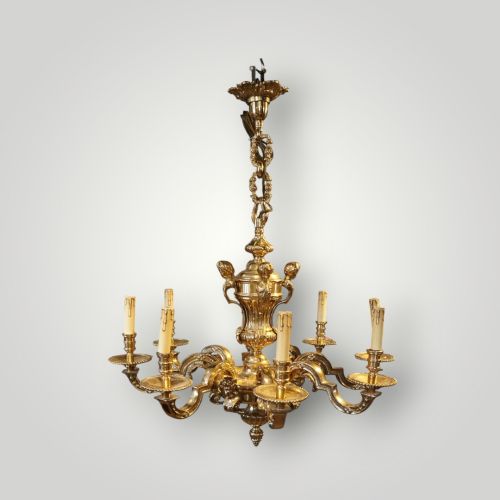
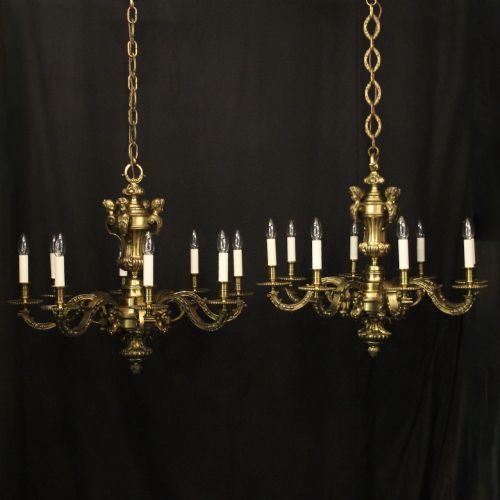
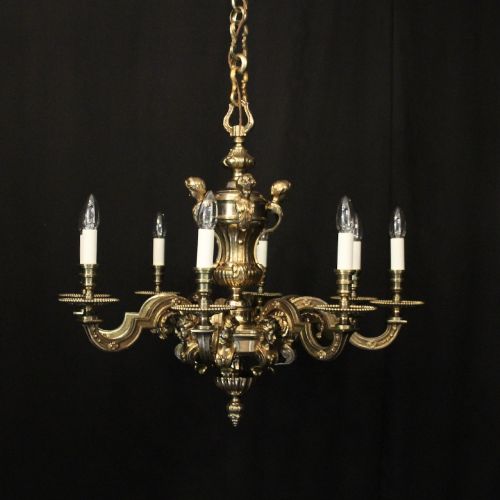
A bronze eight arm chandelier brings weight and presence to a room, offering eight distinct points of light through French-styled metalwork.
Bronze Eight Arm Chandelier
When you search for a bronze eight arm chandelier, you encounter substantial ceiling pieces designed to illuminate large spaces with eight branching lights. These fixtures predominantly originate from France, spanning the nineteenth century through the decades of the nineteen-twenties and nineteen-thirties.
The examples on this page heavily favour French taste, drawing on historic design vocabularies like Rococo, Empire, and Neoclassical revivals. Buyers find works executed in heavy cast bronze and brass, often enriched with gilt finishes or paired with crystal elements.
Most pieces balance robust metal arms with decorative flourishes characteristic of chateau interiors and formal reception rooms. The typical configuration distributes eight lights evenly around a central shaft, creating a balanced circle of illumination.
Materials and construction
These fixtures rely on solid bronze, brass, and gilt metals cast into complex branching structures that support eight individual light points. Artisans shaped the metal through traditional founding methods, adding chased surface details and securing structural elements with threaded joints.
Gilding and ormolu finishes were applied to enhance the reflective quality of the metalwork, catching ambient light even when unlit. Many pieces integrate cut glass and crystal pendants or bobeches that refract the illumination from the eight arms.
One cheerful chandelier even bears the delightfully redundant catalogue entry of being a Rococo chandelier with a spelling variant.
Judging quality and execution
Quality in these chandeliers rests on the crispness of the metal casting and the depth of the chasing on the bronze surface. Superior pieces exhibit sharply defined ornamentation along the arms and central body, whereas lesser examples show softer, generalized contours.
The proportion and weight of the metal components distinguish finer fixtures from standard production work. Heavier gauge bronze and meticulous assembly ensure the eight arms maintain rigid symmetry and structural integrity over time.
The Bronze Eight Arm Chandelier Glossary
- Ormolu
- Finely chopped and chased gilt bronze used for decorative mounts and lighting fixtures. This technique creates a rich gold-coloured surface on the bronze base.
- Rococo
- An ornate design style marked by asymmetric scrolls, shell motifs, and curving plant forms. This aesthetic heavily influences many nineteenth-century French chandeliers.
- Empire
- A neoclassical style originating during the French Napoleonic period characterised by classical motifs, military symbols, and strict symmetry. Chandeliers of this design utilise clean architectural lines.
- Gilt
- A thin layer of gold or gold-coloured metal applied to the surface of bronze or brass. This finish brightens the overall appearance of the fixture.
Bronze Eight Arm Chandelier: Frequently Asked Questions
How high should I hang my chandelier?
These fixtures require sufficient clearance beneath them to allow comfortable movement in a room. Typically, they hang centrally in spaces with high ceilings to properly illuminate the floor area.
In dining settings, positioning the fixture lower over the table creates a focused pool of light. Ensure the scale of the eight arms matches the proportions of the surrounding furniture.
What period do these chandeliers date from?
The pieces available span the nineteenth century and the early decades of the twentieth century. French workshops produced the majority of these designs during the nineteen-twenties and nineteen-thirties.
Stylistic revivals dominate the selection, referencing older artistic movements such as Baroque, Rococo, and Empire. Makers reproduced historical aesthetics using traditional metal casting techniques.
How do I clean a bronze chandelier?
Maintenance involves gentle dusting with a soft brush to prevent accumulation on the intricate metalwork and crystal drops. Avoid harsh chemical cleaners that can strip gilt or patinated surfaces.
Crystal elements can be wiped down individually with a mild solution while supported carefully. Regular care preserves the original finish of the bronze and glass components.
Are all eight arm fixtures electrified?
Most surviving examples have been adapted for modern electrical wiring to function safely in contemporary homes. The original candle-holding nozzles are converted into lamp holders.
Rewiring ensures that the internal components meet current safety standards while retaining the exterior antique appearance. Professional installation is recommended due to the weight of cast bronze.