


Gold Filigree Gemstone Pendant
A gold filigree gemstone pendant brings together intricate wirework and vibrant stones across Victorian, Edwardian, and mid-century designs.
Gold Filigree Gemstone Pendant
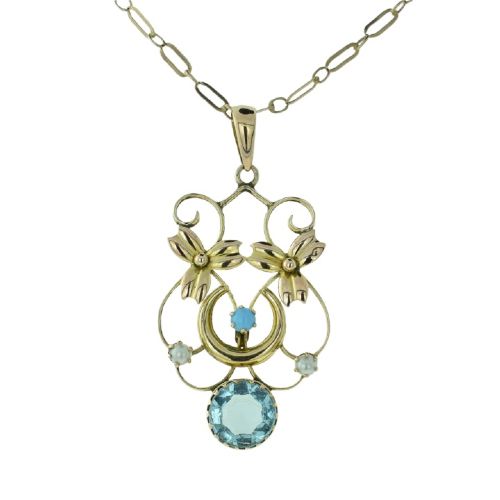
A gold filigree gemstone pendant combines delicate metal threads with coloured stones in neckwear spanning the Victorian, Edwardian, and mid-century periods. These pieces range from dainty lavalier necklaces to substantial pendants set with amethysts, topazes, and opals.
Buyers will encounter various forms on this page, including Art Nouveau creations and vintage pieces from nineteen fifty. Each item displays distinct craftsmanship shaped by its era, often featuring seed pearls alongside central gemstones.
Materials and construction
The metalwork relies on nine-carat, fourteen-carat, and eighteen-carat gold, encompassing both yellow and rose gold tones alongside white gold. Fine wire is soldered into openwork filigree patterns to frame the stones.
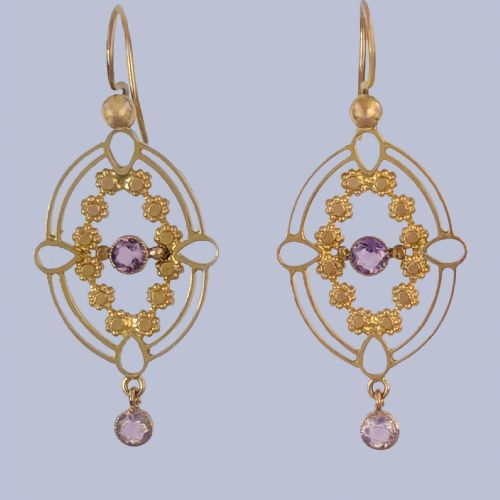
Set stones include amethyst, blue topaz, turquoise, apatite, tourmaline, and diamond, frequently accented with tiny seed pearls. Handcrafted elements define the construction across nineteenth-century and later examples.
Listings feature items from the Victorian, Edwardian, and mid-century periods, utilising amethysts, topazes, and seed pearls.
Distinguishing quality in filigree jewellery
Quality rests in the precision of the soldered wirework and the depth of the filigree design. Finer pieces demonstrate meticulous handcrafting where the metalwork flows seamlessly around the set gems.
The choice and cut of the central gemstone also dictate distinction. Substantial stones like large amethysts or topazes paired with clean gold work mark the upper tier of these pieces.
Carl Bucherer
The Gold Filigree Gemstone Pendant Glossary
- Filigree
- Decorative work consisting of delicate, interlaced threads of gold soldered together in open patterns. This technique creates a lace-like effect characteristic of many antique pendants.
- Lavalier
- A pendant necklace featuring a central stone with a smaller drop suspended below it. Popularized in the Edwardian era, these designs often incorporate delicate chainwork.
- Seed pearl
- A very small, natural or cultured pearl used as an accent in antique jewellery. They frequently frame larger central gemstones in Victorian and Edwardian pieces.
- Solitaire
- A piece of jewellery featuring a single set gemstone without accompanying side stones. This setting highlights the individual stone within the surrounding gold filigree.
Gold Filigree Gemstone Pendant: Frequently Asked Questions
What periods do these pendants come from?
The listings span several distinct eras, including Early Victorian, Victorian, Edwardian, and mid-century pieces up to nineteen fifty.
Each period imparts specific stylistic traits, from the romantic motifs of the nineteenth century to the flowing lines of Art Nouveau.
How do I care for antique gold filigree?
Delicate wirework requires gentle handling and cleaning with a soft brush and mild soapy water. Avoid ultrasonic cleaners, which can damage fragile filigree joints and delicate seed pearls.
Store each pendant separately in a lined box to prevent the fine metal threads from catching on other items.
What gemstones are commonly found in these pieces?
Amethyst is particularly prevalent, appearing in various shades alongside blue topaz, turquoise, tourmaline, and opal. Seed pearls and diamonds frequently serve as secondary accent stones.
Coloured gemstones are chosen to complement the warm tones of yellow and rose gold.
How can I tell an Edwardian pendant from a Victorian one?
Edwardian pieces often feature lighter mountings in white gold or platinum-topped gold, with an emphasis on airy filigree and seed pearls. Victorian designs tend to use heavier yellow or rose gold with substantial coloured stones like amethyst and banded agate.
Stylistic cues such as Art Nouveau curves also help distinguish the exact period.