


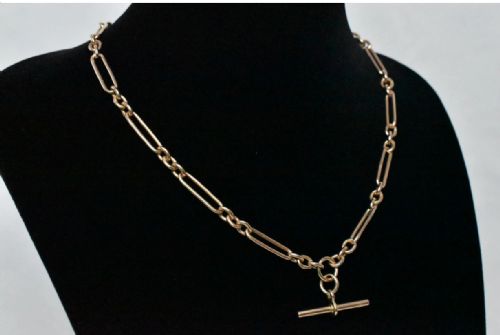


9ct Rose Gold Necklace
A 9ct rose gold necklace brings a warm, distinctively coppery tone to the skin, uniting Victorian sentiment with Edwardian elegance.
9ct Rose Gold Necklace
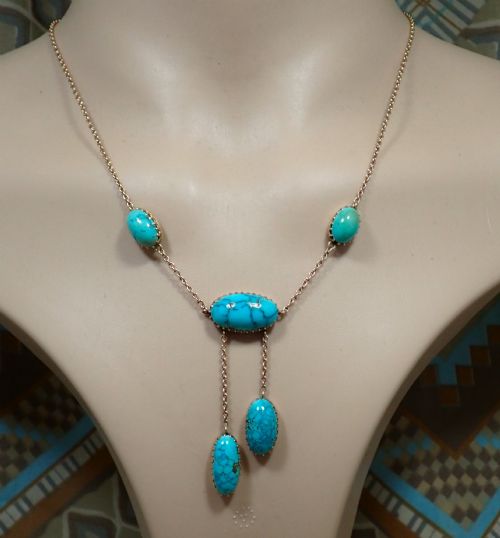
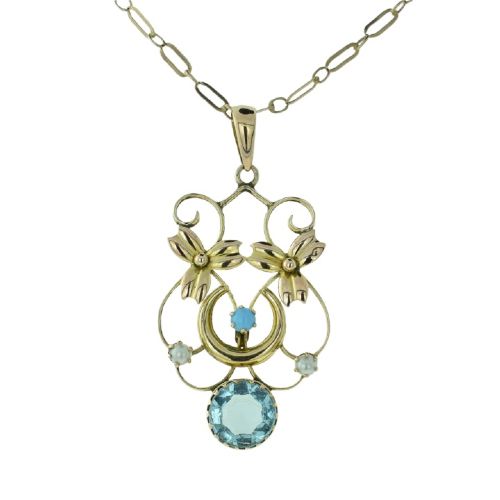
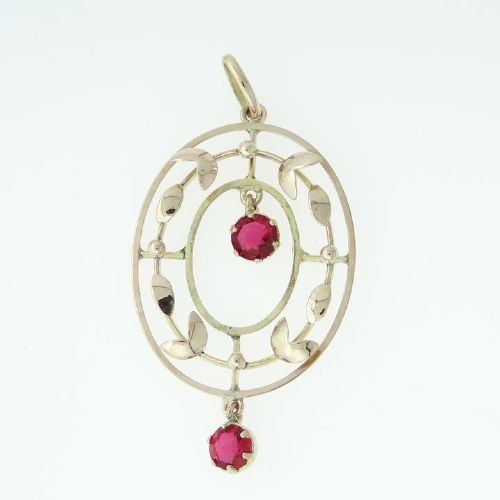
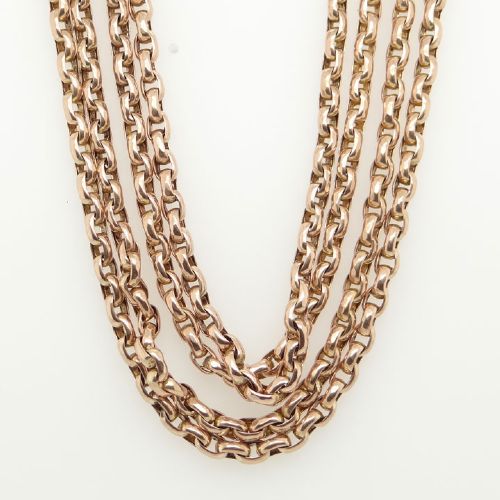
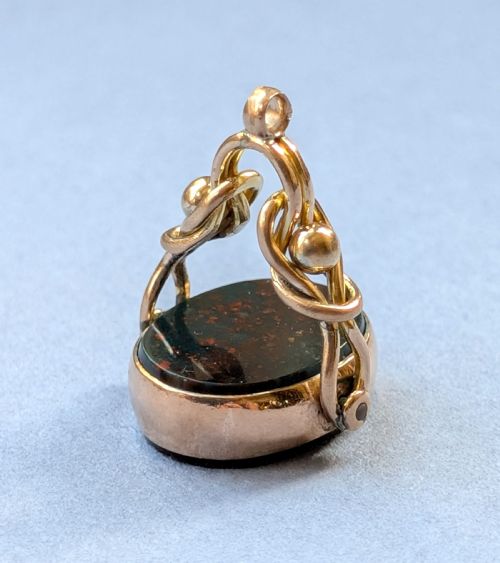
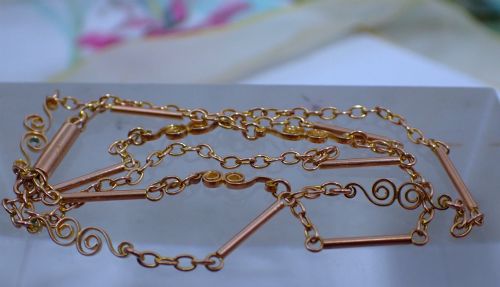
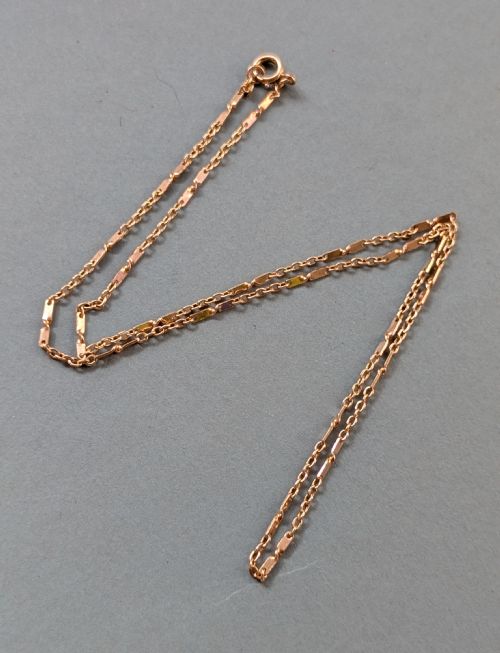
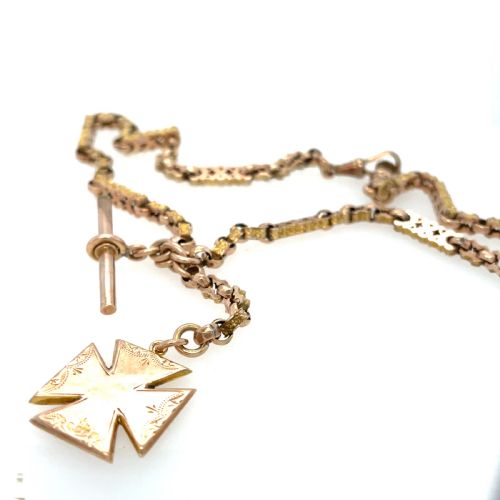
A 9ct rose gold necklace spans substantial pocket watch chains adapted for the neck, delicate cable and curb links, and intricate pendants set with gems. You will find pieces originating from the Victorian and Edwardian eras, alongside items dated from nineteen hundred up to the nineteen thirties. These items range from long guard chains and Albert chains fitted with T-bars to lavalier pendants and multi-gem clusters.
The selection leans heavily towards pieces carrying dog clips, swivel clasps, and sliding fobs originally intended for practical daily use. Makers of the period utilised the alloy's characteristic pink hue to frame delicate stones such as turquoise, seed pearls, garnets, and diamonds. Whether you seek a simple short chain or a complex negligee pendant, the forms reflect the functional craftsmanship of the late nineteenth and early twentieth centuries.
How they were made
Goldsmiths worked with nine-carat rose gold, combining gold with copper to achieve the warm reddish tint characteristic of the Victorian and Edwardian periods. Links were fashioned by hand or semi-mechanised processes into robust patterns like curb, belcher, trombone, and fetter and knot.
Gemstones including turquoise, seed pearls, garnets, and diamonds were securely bezel-set or claw-set into pendants, often accompanied by structural elements such as dog clips and T-bars. Surface finishes relied on natural metal polish rather than modern plating, allowing the warm alloy to develop a soft patina over decades of wear.
The listings show a strong presence of Edwardian and Victorian guard chains alongside stone-set pendants featuring garnets and seed pearls.
What varies in quality
The integrity of link construction and the crispness of chased or engraved details on fobs and T-bars set finer examples apart from simpler utilitarian chains. Substantial weight, original dog clips that retain a strong spring, and matching hallmarks contribute significantly to a piece's structural standing.
The selection and matching of gemstones also dictate the tier of a pendant, with well-matched seed pearls, clean garnets, and secure diamond pavé settings indicating superior workshop standards. Pieces that retain their original length without replaced components command greater respect among collectors.
The 9ct Rose Gold Necklace Glossary
- Albert chain
- A pocket watch chain designed to be worn across a waistcoat or adapted as a necklace. These typically feature sturdy links, a T-bar at one end, and one or two swivel dog clips.
- Dog clip
- A spring-loaded swivel clasp used on watch chains to secure a pendant or pocket watch. It allows the attached charm to rotate freely without twisting the metal links.
- Negligee necklace
- A pendant style popular in the Edwardian era featuring two or more drops suspended from a central motif, often asymmetrical. They hang gracefully down the chest with delicate stone-set terminals.
- T-bar
- A short transverse bar attached to the centre of an Albert chain. Originally used to anchor the chain through a buttonhole, it now serves as a decorative drop feature on converted necklaces.
- Fetter and knot link
- A chain pattern alternating between elongated oval links and tight decorative knots. This design provides both visual rhythm and structural flexibility.
9ct Rose Gold Necklace: Frequently Asked Questions
How do I wear a heavy watch chain?
Pocket watch chains such as Albert chains can be doubled around the neck as chokers or worn at their full length depending on the links. Their substantial weight sits comfortably against clothing or directly on the skin.
Many collectors attach the original dog clips directly to one another or incorporate a separate pendant to create a custom layered look.
Are these pieces solid gold?
The items listed are nine-carat gold, meaning the alloy contains a specific proportion of pure gold mixed with copper and other metals to achieve the rose colour. This standard was widely regulated and hallmarked during the nineteenth and twentieth centuries.
The high copper content gives the metal its durable quality and distinctive warm hue rather than a surface wash or plating.
How do I date a Victorian chain?
Dating relies on stylistic clues such as link geometry, clasp mechanisms, and accompanying fob pendants characteristic of the period. Victorian pieces often display robust curb or trombone links paired with sturdy swivel clasps.
Assay office marks and maker's stamps stamped directly onto the metal provide definitive chronological markers when legible.
Can I add pendants to an antique chain?
Most chains featuring original dog clips or spring rings allow you to easily attach and remove various pendants or fobs. The secure swivel mechanisms were engineered to handle interchangeability without straining the metal links.
Ensure the jump rings on your chosen pendant match the scale and opening capacity of the chain's existing hardware.