


Gold Emerald Pearl Jewellery
Gold emerald pearl jewellery brings together rich green gems and luminous pearls in settings from the Georgian era to the mid-century.
Gold Emerald Pearl Jewellery
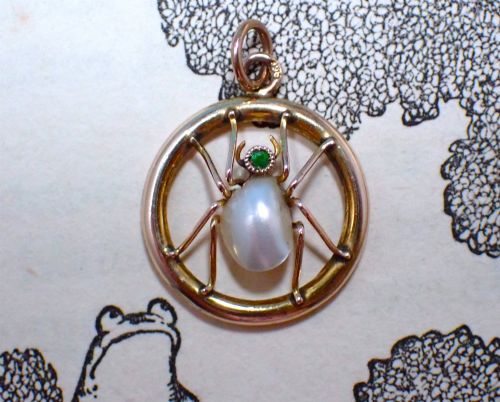
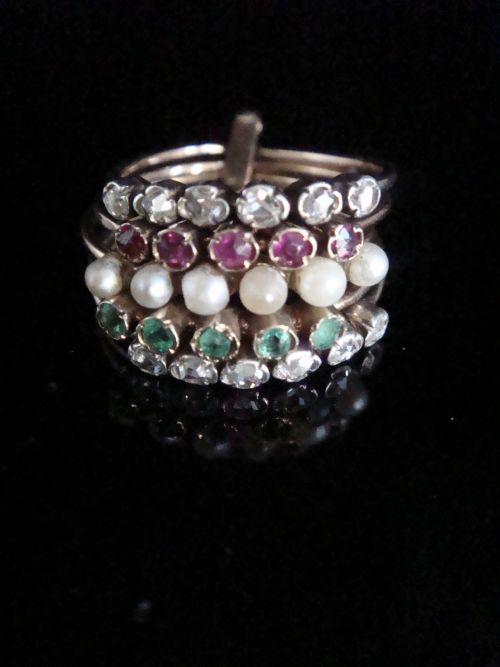
Gold emerald pearl jewellery encompasses rings, pendants, necklaces, brooches, bracelets and tiaras spanning the Georgian, Victorian, Edwardian, Belle Epoque, Art Deco and mid-century periods. These pieces combine lustrous pearls with vibrant emeralds, frequently accompanied by diamonds, rubies and sapphires in yellow gold, rose gold, platinum and silver.
The Edwardian and Victorian eras dominate the selection, offering delicate motifs such as spider pendants, heart lockets and cluster rings alongside elaborate coronet brooches and multi-gem bracelets. Buyers encounter French and Portuguese craftsmanship as well as English designs, reflecting the diverse origins of these surviving works.
Materials and construction
Maker's workshops utilised high carat 15ct yellow gold, 18ct gold, platinum and silver to mount natural pearls and emeralds. Metals were cast and worked by hand to support multi-stone settings, integrating accent diamonds and rubies.
Stones were cut and shaped to fit specific forms, from emerald-cut amethysts and rubies to cabochon or faceted emeralds paired with natural saltwater pearls in structured rings, tiered pendants and articulated bracelets.
Listings feature emeralds and pearls combined with platinum, silver, 15ct gold and 18ct gold across rings, pendants and bracelets.
Assessing quality and character
Quality rests on the depth of colour in the emeralds, the matching lustre of the pearls and the integrity of the original metal mountings. Pieces that retain their structural balance across intricate wirework, such as spider webs or tiara bands, show superior benchwork.
The sophistication of the secondary gem setting, whether involving supporting diamonds, rubies or platinum clasps, elevates the overall execution. Greater cohesion between the period style and the gemstone arrangement distinguishes finer examples.
The Gold Emerald Pearl Jewellery Glossary
- Belle Epoque
- A period of refined jewellery design spanning the late nineteenth and early twentieth centuries, characterised by platinum settings and diamond accents. It follows the Victorian era and precedes Art Deco.
- Cabochon
- A gemstone cut with a smooth, rounded surface rather than facets. This shape highlights the internal depth of emeralds and the soft sheen of pearls.
- Columbian Emerald
- An emerald originating from the mines of Colombia, historically prized for an intense green hue. These stones frequently appear in high-grade nineteenth and twentieth-century pieces.
- Coronet Brooch
- A pin styled in the form of a small crown. Such pieces often combine emeralds, rubies, pearls and diamonds in structured precious metal.
- Natural Saltwater Pearl
- A pearl formed organically in ocean molluscs without human intervention. These pearls display distinctive orient and natural variation compared to cultured alternatives.
Gold Emerald Pearl Jewellery: Frequently Asked Questions
What periods do these pieces cover?
The selection spans from the Georgian era through the Victorian, Edwardian, Belle Epoque and Art Deco periods into the mid-century.
Individual items reflect the prevailing decorative styles and technical standards of each distinct decade.
What metals are used in the settings?
Makers employed 15ct yellow gold, 18K yellow and rose gold, platinum and silver.
Silver and platinum often appear alongside gold to provide contrast and secure stone settings in Edwardian and Belle Epoque work.
How do I care for emerald and pearl jewellery?
Pearls require gentle handling because organic nure is soft and sensitive to chemical exposure and cosmetics. Emeralds should also be kept away from harsh ultrasonic cleaners and sudden temperature changes.
Store pieces separately in lined boxes to prevent scratching between the softer pearls and harder gemstones.
Are these items primarily English in origin?
While many pieces reflect British manufacturing standards, the inventory includes French and Portuguese works.
Continental pieces often display distinct hallmarks and design traits typical of workshops in Paris and Lisbon during the early twentieth century.