




Vintage Seed Pearl Bracelet
These delicate pieces are vintage seed pearl bracelets, wearable works of historic craftsmanship valued for their intricate wirework and luminous tiny pearls.
Vintage Seed Pearl Bracelet
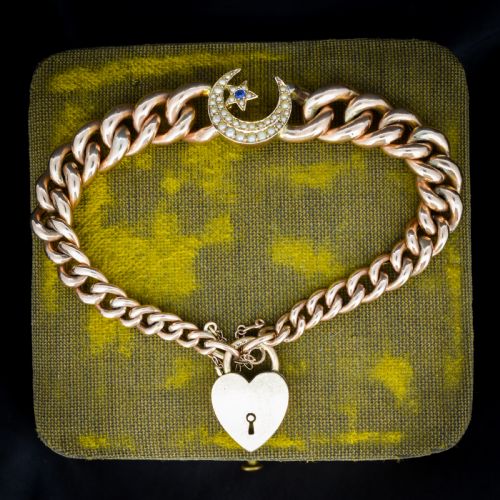
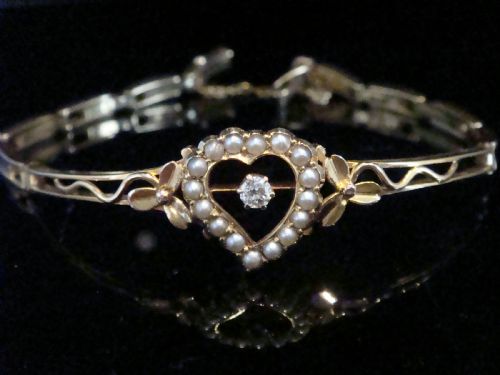
When you search for a vintage seed pearl bracelet, you encounter delicate pieces primarily originating from the Victorian and Edwardian eras, alongside later 1930s examples. These ornaments typically take the form of articulated link bracelets, hinged bangles, or matched jewellery sets.
The most common iterations on this page combine tiny pearls with higher-carat golds, often incorporating sentimental motifs like hearts, lovers' knots, or crescent moons. Many incorporate additional gemstones such as turquoise, diamonds, amethysts, and sapphires alongside the characteristic pearls.
Materials and construction methods
These items are constructed using yellow, rose, and white golds, predominantly in 9ct, 15ct, and 18ct purities, occasionally accompanied by silver or platinum settings. Seed pearls are meticulously wired or threaded into position, forming floral clusters, stars, or geometric patterns.
Hinged bangles utilise internal spring mechanisms or secure box clasps, whilst link bracelets frequently feature safety chains and heart padlocks. Metalwork techniques involve chased gold, enamel detailing, and intricate prong or collet settings to secure the smaller gems.
Some Victorian bangles enclose loose seed pearls behind glass, creating a miniature shaker effect that rattles softly with every movement of the wrist.
Distinctions in quality and execution
Quality separates through the uniformity and lustre of the seed pearls, where matching size and minimal surface blemishes indicate superior selection. The complexity of the underlying metalwork, from hand-twisted wire to solid cast gold links, defines the tier of the piece.
The integrity of the setting work and the presence of original boxes or legible hallmarks further distinguish exceptional examples from standard production. Cohesion in design, particularly in multi-stone pieces combining diamonds or coloured gems, reflects the original maker's skill.
The Vintage Seed Pearl Bracelet Glossary
- Seed pearl
- A very small, naturally formed or cultured pearl, typically under two millimetres in diameter. These tiny gems are densely clustered to create shimmering textural surfaces.
- Bangle
- A rigid circular or oval bracelet that slips over the hand or opens on a hinge. Hinged variants often secure with a snap clasp and safety chain.
- Padlock clasp
- A decorative fastening shaped like a miniature padlock, frequently found on Victorian curb link bracelets. It serves both as a functional clasp and a romantic ornament.
- Collet setting
- A collar of metal that surrounds and holds a gemstone in place. This technique provides a clean, secure edge around pearls and small diamonds.
- Shaker locket
- A glazed compartment within a bangle or pendant that encloses loose elements. In these pieces, unmounted seed pearls are typically held behind glass to move freely.
Vintage Seed Pearl Bracelet: Frequently Asked Questions
How do I care for my seed pearl bracelet?
Seed pearls are organic and sensitive to chemicals, perfumes, and cosmetics, which can damage their nacre over time. Wipe them gently with a soft, dry cloth after wearing and store them separately from harder gemstones.
Avoid immersing antique pearl jewellery in water or ultrasonic cleaners, as moisture can weaken the traditional silk threads or adhesives used in their construction.
Can I wear a vintage seed pearl bracelet daily?
These delicate ornaments require gentle treatment due to their age and the fine wiring holding the pearls. Occasional wear for special occasions ensures the survival of the fragile settings and clasps.
Stiff hinged bangles and sturdy 15ct or 18ct gold link versions handle regular wear better than delicate wirework pieces, but caution remains necessary with all historic jewellery.
What is the difference between Victorian and Edwardian styles?
Victorian pieces often feature robust yellow or rose gold settings, sentimental motifs like hearts and padlocks, and rich secondary stones such as turquoise, garnet, or coral. The aesthetic leans towards romantic symbolism and substantial metal weights.
Edwardian designs introduce lighter metals like platinum and white gold, favouring lacy openwork, diamonds, and refined geometric patterns that create a lighter, airier visual effect.
How are periods identified on these bracelets?
Periods are determined through a combination of hallmarks, metal purity standards, gemstone cuts, and stylistic motifs. British hallmarks on the pieces provide specific assay office marks and date letters for accurate dating.
Construction techniques, such as the evolution from closed-back settings to open-back mounts, also offer reliable clues to whether a piece belongs to the Victorian, Edwardian, or later eras.