



Gold Eagle Crest Mirror
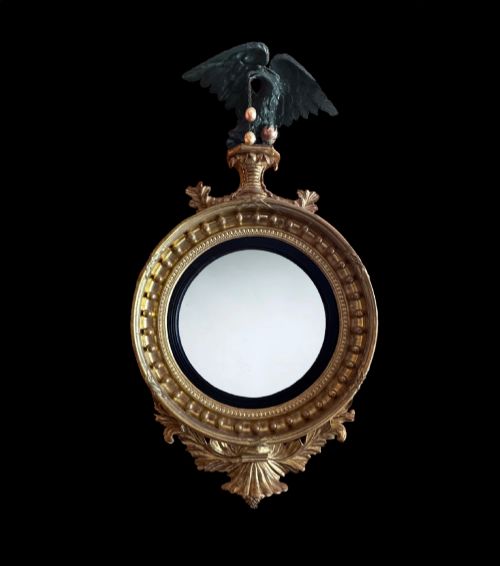
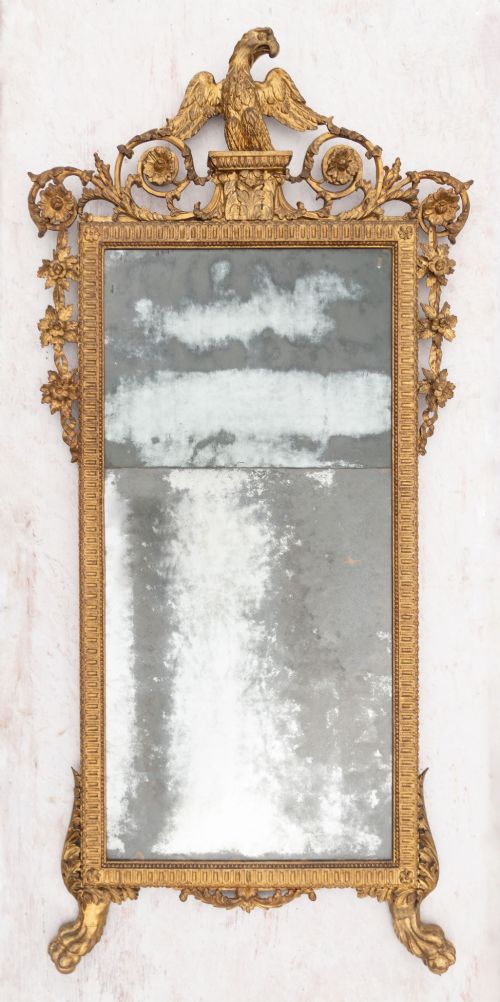
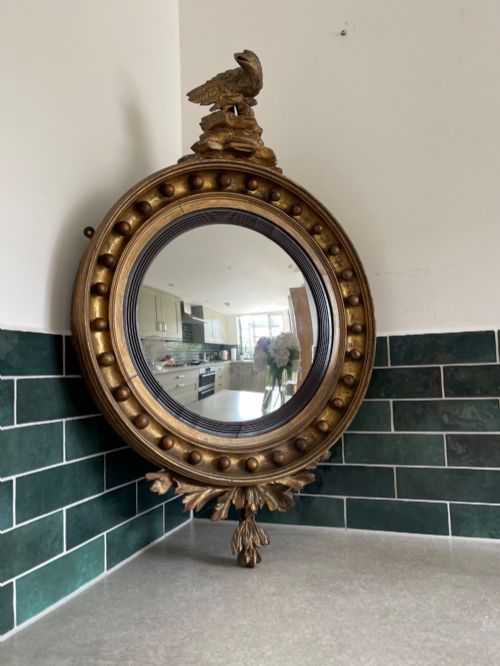
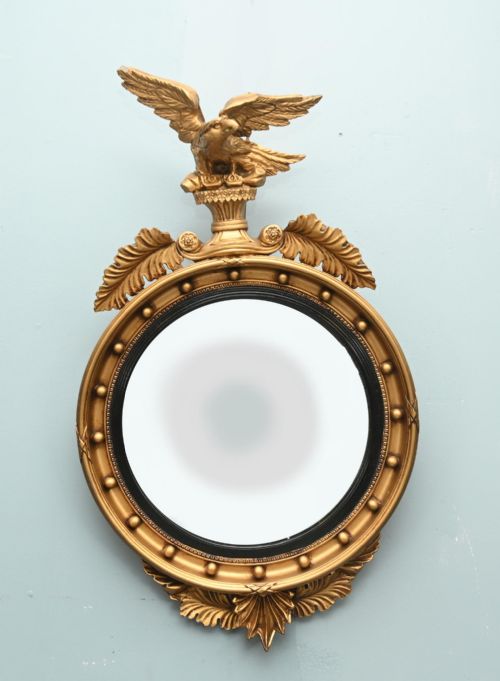
A gold eagle crest mirror brings a commanding Regency or Georgian presence to a room, crowned by a carved bird of prey.
Gold Eagle Crest Mirror
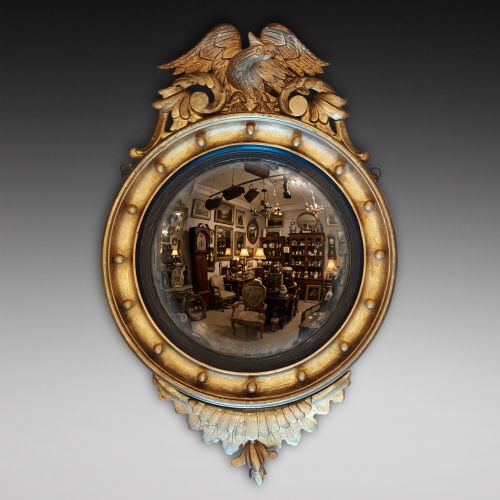
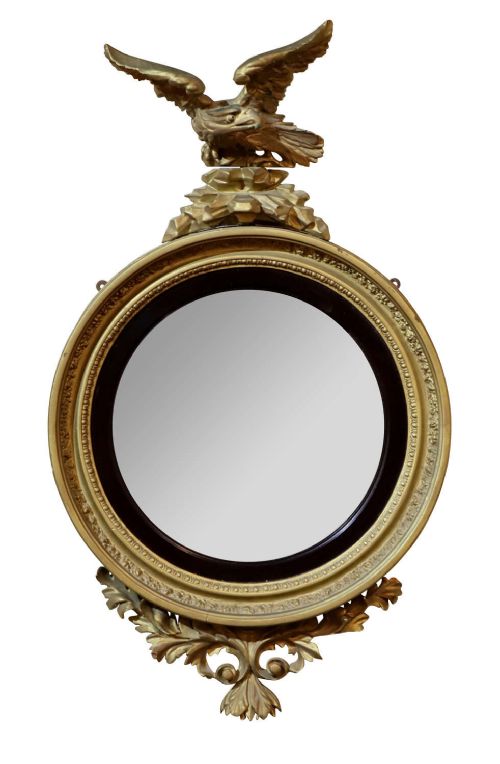
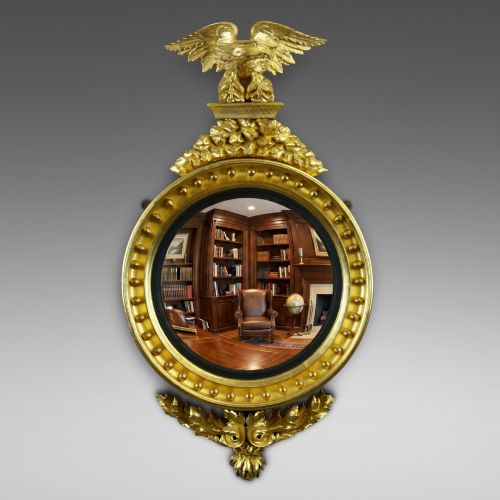
When you search for a gold eagle crest mirror, you encounter pieces designed to anchor a room with classical symmetry and commanding vertical reach. The listings show that circular convex forms dominate this group, frequently framed in gleaming giltwood and surmounted by a spread eagle or a Hoho bird. These wall mirrors and overmantel mirrors bridge the gap between functional glass and sculptural ornament, reflecting light across a space while drawing the eye upward.
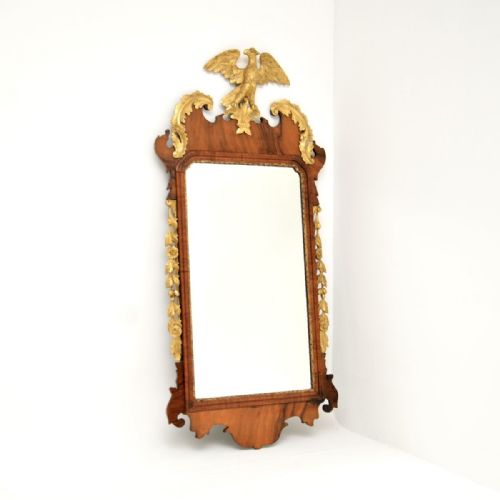
The majority of these pieces originate from the Regency and Georgian periods, alongside later Victorian and Edwardian interpretations built in the earlier styles. You will find rectangular overmantels and pier mirrors alongside the round convex plates, often featuring detailed carvings of foliage and birds. The materials shift between solid woods finished in parcel gilt and richly applied gold leaf over gesso moulding.
Originating primarily as decorative focal points for principal reception rooms, these mirrors served both to illuminate dark corners by multiplying candle flame and to signal taste. On this page, the dominant survivor is the circular convex mirror with an eagle surmount, typically housed in a deep gilded frame. This specific silhouette remains the most sought-after embodiment of the style.
Materials and construction
Makers built the foundational frames of these mirrors using timber such as mahogany or pine, which provided a stable base for intricate surface decoration. Gesso, a mixture of plaster and glue, was applied over the wood and carved deeply while pliable to create crisp decorative motifs before gilding.
Workers applied thin sheets of gold leaf over bolus to achieve the brilliant metallic finish characteristic of these pieces. Alternatively, parcel gilt designs allowed the natural grain of mahogany or ebonised wood to show through alongside gilded highlights.
Mirror glass in these periods was heavy and often curved for convex pieces, set securely into rabbeted frames behind protective backboards. Brass components appeared on girandole models to hold candle sconces securely against the wooden framework.
Gold Eagle Crest Mirror Retail Price Guide 2026
Typical asking prices for gold eagle crest mirror among the pieces listed under this phrase on Sellingantiques today, from the lower quarter to the upper quarter. They describe what is for sale here now, not the wider market.
Some eagles clutch stray glass balls in their talons, keeping a vigilant watch over every reflection in the room.
Assessing quality and execution
The distinction between ordinary and exceptional pieces rests in the sharpness and depth of the wood and gesso carving. Master carvers rendered the feathers of the eagle surmount and the surrounding acanthus leaves with distinct, anatomical precision rather than soft, rounded smoothing.
The quality of the gilding itself determines how light catches the surface, with genuine gold leaf retaining a warmer, deeper lustre over centuries compared to modern metallic paints. Furthermore, the integrity of the original mirror plate, whether flat or convex, carries significant weight in preserving the historic character of the frame.
The Gold Eagle Crest Mirror Glossary
- Convex mirror
- A round mirror with an outward-curving glass plate that produces a wide-angle, distorted reflection of the room. These were often called bullseye mirrors and placed to monitor gatherings.
- Giltwood
- Timber carved and coated with gold leaf or metallic powder over a prepared gesso ground. This finish provides a bright, reflective surface that resists tarnishing.
- Gesso
- A plaster-like mixture applied to wood frames to create a smooth surface for carving and gilding. It allows for intricate relief work that holds fine detail.
- Parcel gilt
- A finishing technique where portions of an object are gilded while other areas reveal the natural wood underneath. Mahogany frames frequently utilise this method to create contrast.
- Girandole
- A wall mirror fitted with one or more candle branches attached to the frame. The arms multiply the candlelight through reflection.
- Pier mirror
- A tall, narrow mirror designed specifically to hang on the wall space between windows. They matched the vertical proportions of Georgian rooms.
Gold Eagle Crest Mirror: Frequently Asked Questions
Where should I hang a convex mirror?
Hang these pieces at eye level in principal rooms where they can capture light from windows and reflect the breadth of the space. Because convex glass shrinks the field of view, positioning them opposite a light source maximises their brightness.
Avoid narrow corridors where the wide-angle reflection feels disorienting. A central placement above a fireplace or sideboard provides a balanced anchor for the surrounding furniture.
Why do these mirrors have eagles?
The eagle surmount served as a powerful patriotic and classical symbol in British interior decoration throughout the Georgian and Regency eras. It represented strength, majesty and vigilance.
Carvers placed the bird at the apex of the frame to draw the eye upward and add vertical grandeur. The presence of the eagle often distinguishes higher-status reception pieces from simpler domestic mirrors.
Are convex mirrors original to the 1800s?
Many circular convex mirrors date directly to the early nineteenth century and the Regency period, though revival styles were built later. Authentic period examples feature heavy timber construction and old mirror plates with minor foxing.
Later Victorian and Edwardian copies often replicate the earlier forms using machine-prepared components. Examining the backboards and joinery helps confirm the true age of the piece.