
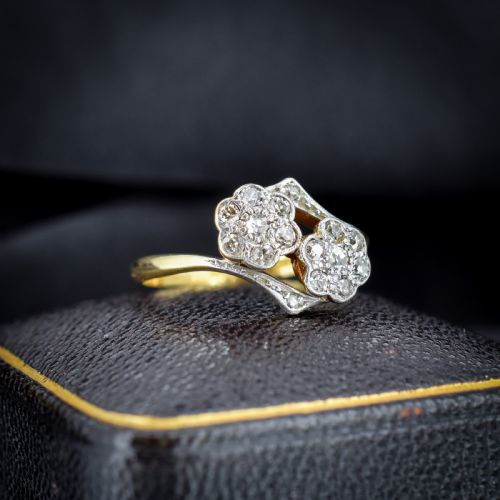
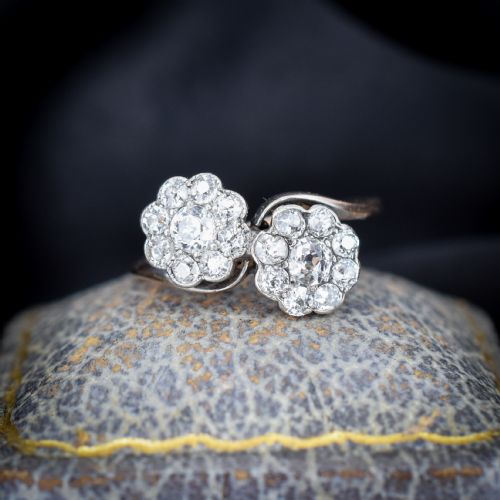


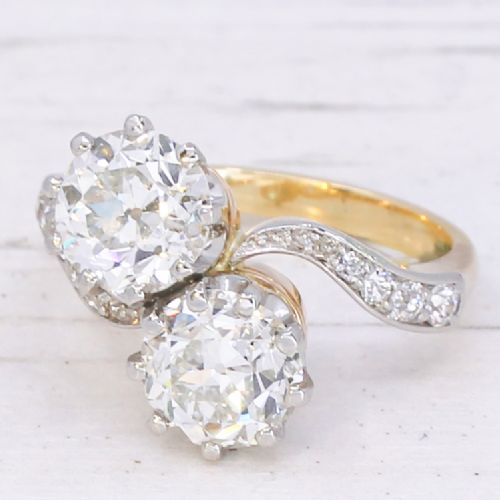


Gold Diamond Crossover Ring
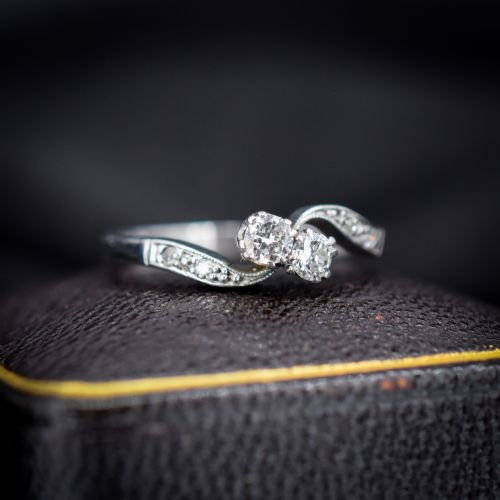
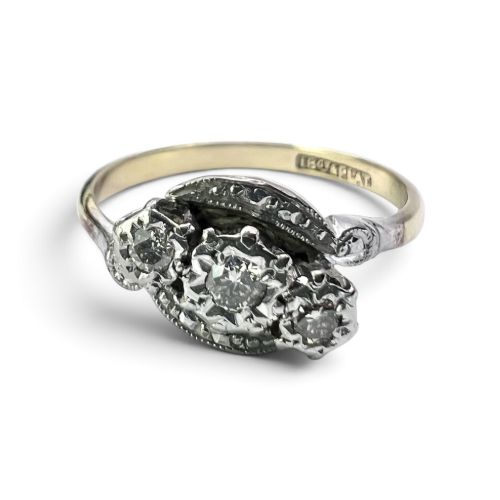
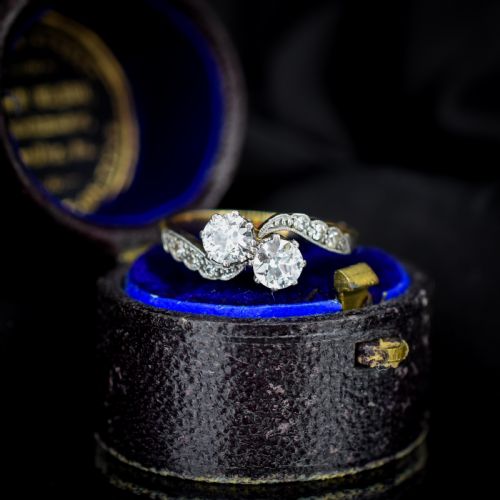
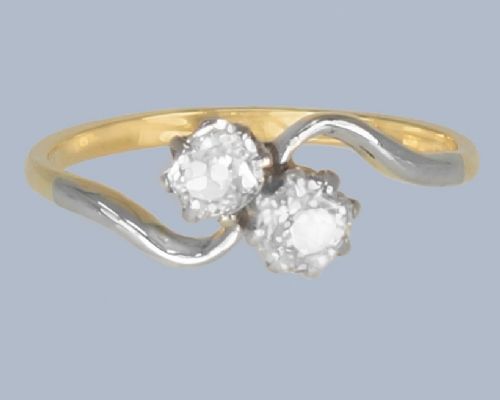
A gold diamond crossover ring wraps two opposing gems around the finger in a continuous, flowing gesture that has defined fine jewellery for over a century.
Gold Diamond Crossover Ring
When searching for a gold diamond crossover ring, buyers encounter pieces where the shank sweeps across the finger to present twin stones or intersecting bands. This page centres on antique and vintage examples, with Edwardian and Art Deco designs appearing alongside mid-century and later vintage pieces.
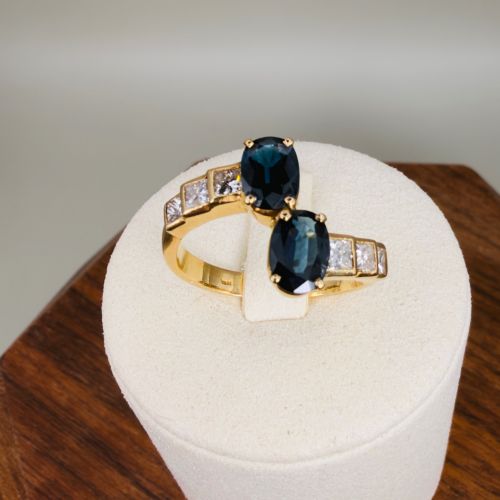
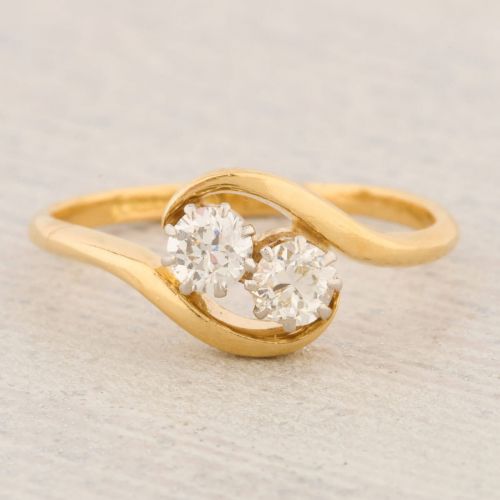
The form frequently takes the 'toi et moi' configuration, placing two principal gems in intimate dialogue, or utilises a bypass and twist mechanism. Yellow gold, white gold, and platinum are the primary metals shaping these curving profiles.
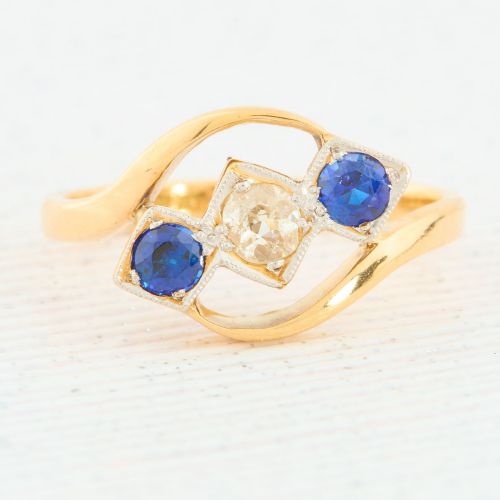
Originating largely from the early decades of the twentieth century, these rings rely on old-cut, old mine-cut, or transitional diamonds. Coloured stones such as sapphires, rubies, and pearls often accompany the diamonds to complete the asymmetric sweep.
Construction and materials
The manufacturing process typically combines 18ct yellow or white gold for the main shank with platinum settings for the diamond claws. Platinum allowed jewellers to forge delicate, secure mounts that maximised the play of light through old-cut stones without heavy metal borders.
Goldsmiths shaped the precious metal into fluid, overlapping ribbons that required precise tension and soldering to maintain structural integrity. Hand-finished engraving and millegrain edging frequently accented the shoulders of Edwardian and Art Deco iterations.
Listings feature periods spanning from the Victorian era through Edwardian, Art Deco, and mid-century decades, utilising platinum and 18ct gold.
Judging quality in crossover designs
Quality rests in the harmony of the proportion and the calibre of the principal stones rather than sheer size. Superior examples exhibit balanced tension in the twist, ensuring the opposing gems face each other with precise alignment.
The hand-cut diamonds dictate the upper tier of the range, where old European or old mine cuts display lively light dispersion. Settings that integrate platinum seamlessly into gold without crowding the stones demonstrate superior artisan skill.
Kutchinsky
The Gold Diamond Crossover Ring Glossary
- Crossover ring
- A ring design where the shank sweeps around the finger and crosses over itself, often bringing two stones into direct opposition. This format is also referred to as a twist or bypass ring.
- Toi et Moi
- French for you and me, describing a ring featuring two main gemstones set side by side in a symbol of union. Edwardian and antique examples frequently pair a diamond with a sapphire, ruby, or pearl.
- Old-cut diamond
- A diamond cut by hand before modern machinery standardised facet geometry, usually featuring a high crown and small table. These stones possess a distinctive, softer candlelight sparkle.
- Millegrain
- A decorative technique creating a border of tiny raised metal beads along the edges of a setting. It was especially popular during the Edwardian and Art Deco periods to soften metal lines.
- Bypass ring
- A ring style where the ends pass each other rather than meeting in the centre, creating an open, dynamic silhouette.
Gold Diamond Crossover Ring: Frequently Asked Questions
How do I wear a crossover ring daily?
These rings pair easily with straight wedding bands, though their curving profiles sometimes require a contoured band to sit flush. Daily wear is entirely suitable for sturdy gold and platinum mountings from the early twentieth century.
Regular checks by a jeweller ensure the claws holding the old-cut diamonds remain secure against daily impacts.
What periods do these rings come from?
The selection spans from late Victorian and Edwardian workshops through Art Deco geometric designs and into mid-century vintage eras. Edwardian and 1930s pieces dominate the earlier end of the timeline.
Later mid-century and 1970s interpretations offer bolder gold weights and alternative stone combinations.
Are sapphires and rubies common with the diamonds?
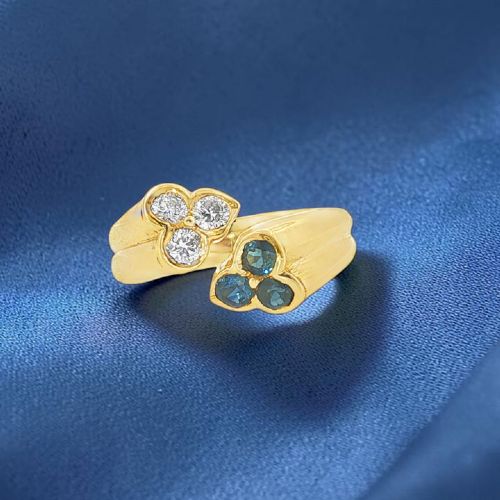
Coloured gemstones frequently accompany diamonds in toi et moi and cluster crossover styles. Deep blue sapphires and rich red rubies provide a striking chromatic contrast to white old-cut diamonds.
Pearls and turquoises also appear in specific Edwardian pieces, adding organic texture to the design.
How do I tell Edwardian from Art Deco examples?
Edwardian rings lean towards organic motifs, platinum-topped yellow gold, and delicate millegrain work around the stones. They often feature flowing lines and natural pearl or softer diamond pairings.
Art Deco pieces favour sharper geometric symmetry, crisp white gold or platinum settings, and precise sapphire accents.