
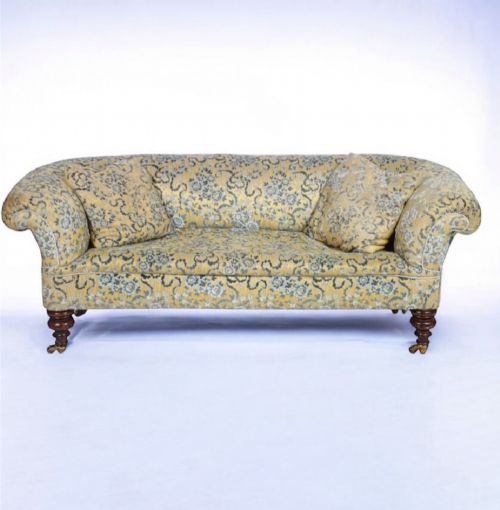


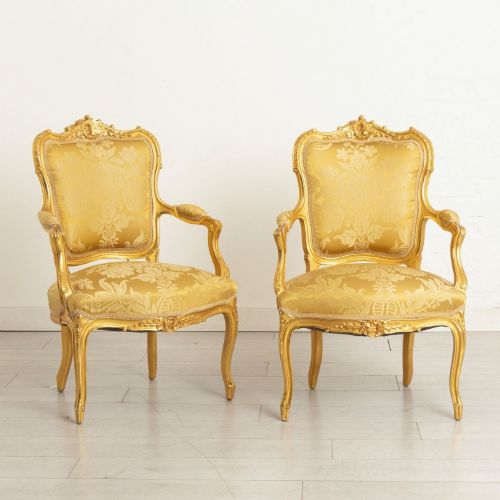


Gold Damask Seat
A gold damask seat brings rich textile texture and carved wooden framing together for formal rooms.
Gold Damask Seat
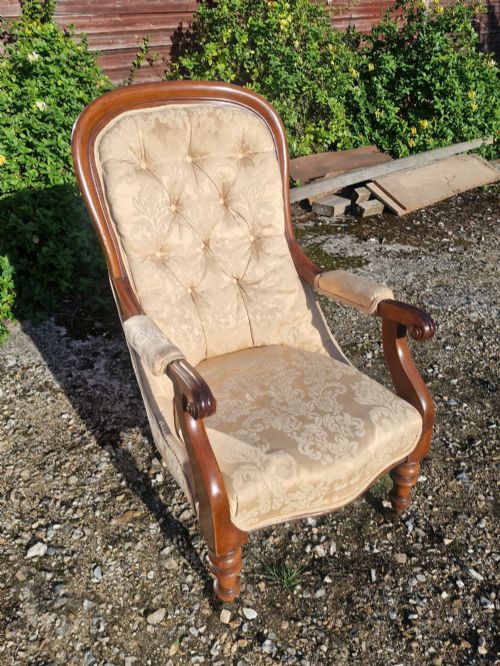
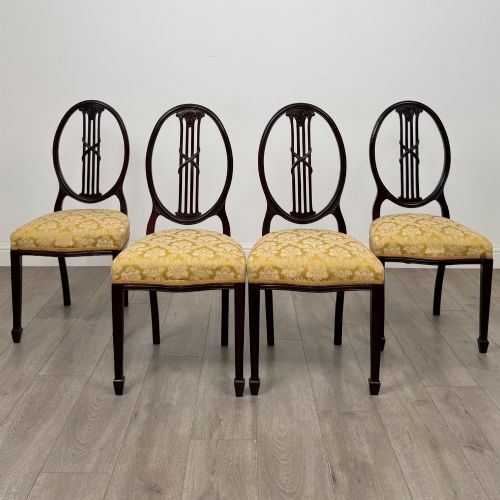
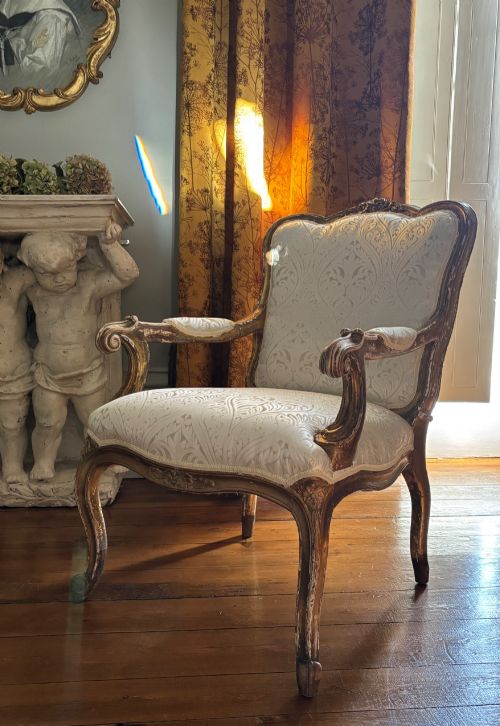
A gold damask seat is an item of upholstered antique furniture covered in patterned woven fabric, most often encountered on French revival armchairs, salon suites, and giltwood seating. These pieces span the eighteenth, nineteenth, and early twentieth centuries, drawing on Georgian, Victorian, and Louis styles.
The forms range widely from small footstools and dining chairs to deep library armchairs and multi-piece salon suites. Giltwood frames paired with silk damask dominate the surviving selections, alongside mahogany and walnut frames.
Buyers look for these seats to anchor a drawing room or bedroom with traditional pattern and period timber or gilded structure. The visual weight depends heavily on whether the frame is carved wood, polished mahogany, or bright gilt.
Materials and construction
Makers shaped these frames from solid timbers including mahogany, walnut, and beech before applying decorative carving, turning, or heavy gilding. Giltwood surfaces required skilled application of gold leaf over prepared grounds on carved wood.
Upholstery relied on natural textile weaves such as silk damask and patterned fabric secured over traditional stuffing and webbing. Brass detailing occasionally appeared on specific revival models to accent the timber or gilt framework.
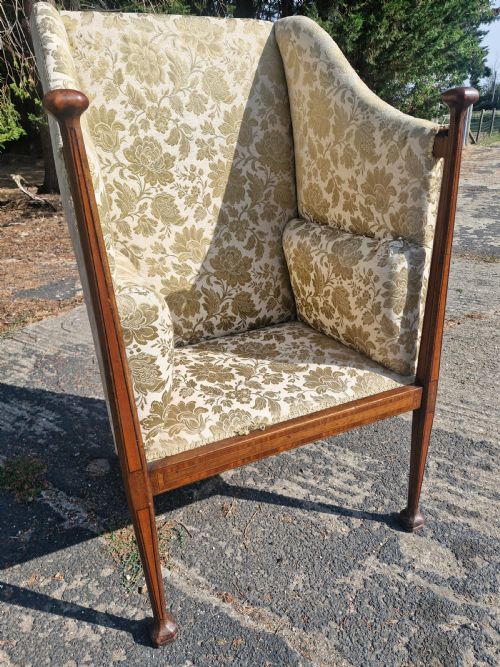
The forms span single dining chairs, footstools, and winged library armchairs alongside full three-piece salon suites.
Judgments of quality
Quality rests in the crispness of the wood carving and the depth of the gilding applied to the frame. Hand-carved details on walnut and giltwood display sharper relief and more fluid lines than later massed production.
The choice and execution of the textile upholstery define the finished presence of the piece. Woven damask with consistent metallic sheen and tight textile tension elevates the seating far above standard replacement fabric.
Blaise Maucuy·Howard and Sons
The Gold Damask Seat Glossary
- Damask
- A reversible figured fabric with patterns formed by contrasting warps and wefts. It provides the characteristic sheen seen on period formal seating.
- Giltwood
- Timber coated with gold leaf or powder over a prepared base. This finish defines many formal French and revival salon chairs.
- Bergere
- An enclosed upholstered armchair with wooden framing around the sides and back. It offers a solid formal silhouette for drawing rooms.
- Fauteuil
- An open-arm armchair with an exposed wooden frame, originating in France. The arms typically feature padded elbow rests.
- Canape
- A decorative French settee or sofa designed for formal entertaining. It mirrors the carved details and upholstery of matching armchairs.
Gold Damask Seat: Frequently Asked Questions
How do I place a gold damask seat in a modern room?
Pair the seating with neutral walls and minimal surrounding furniture to let the heavy textile pattern and carved timber stand out clearly.
Keep direct sunlight away from the silk damask areas to prevent fading over years of daily use.
Are these seats suitable for everyday sitting?
Most antique armchairs and salon suites handle regular sitting comfortably, provided the internal webbing and padding remain sound.
Delicate giltwood side chairs serve better as occasional accent pieces rather than primary lounge seating.
How do I tell nineteenth century pieces from earlier ones?
Nineteenth century revival pieces often imitate eighteenth century styles like Louis XVI or Georgian designs closely through machine assistance and heavier gilding.
Examine the tool marks on the timber frame and the wear patterns on the joints to gauge the actual age.
Can I clean the damask upholstery safely?
Vacuum the fabric gently using a low suction brush attachment to remove dust from the woven recesses without snagging the threads.
Professional textile cleaning is recommended for heavier marks to avoid damaging the delicate silk blend.