

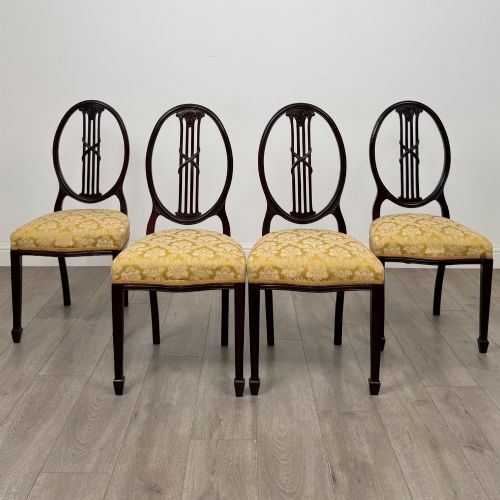
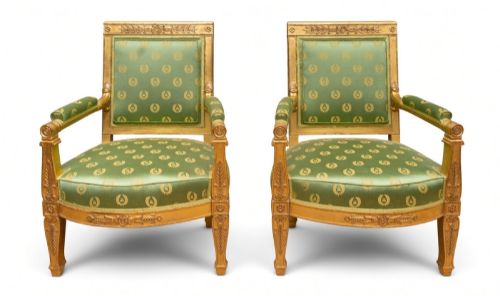
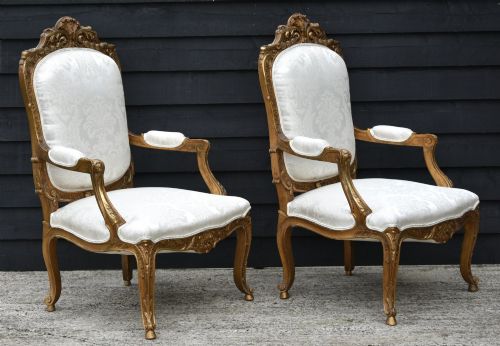
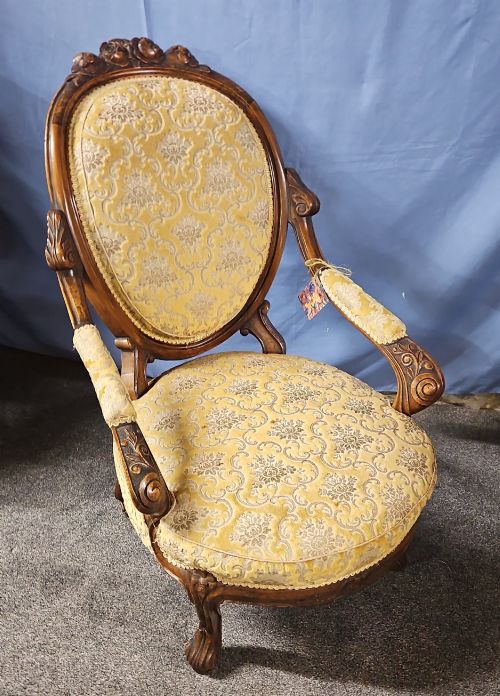
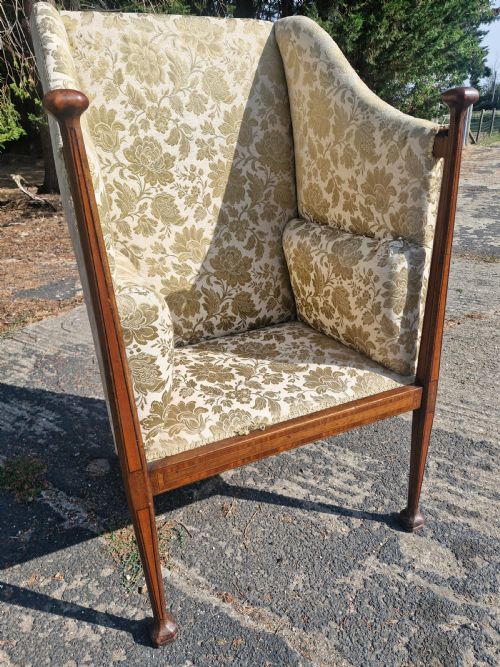
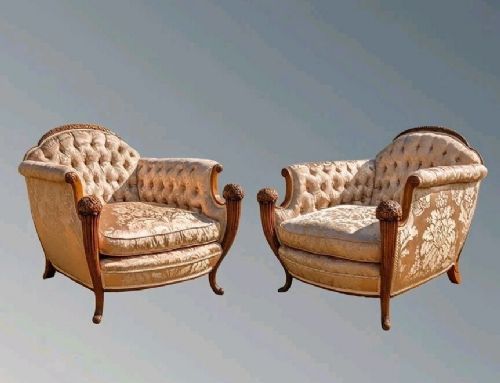
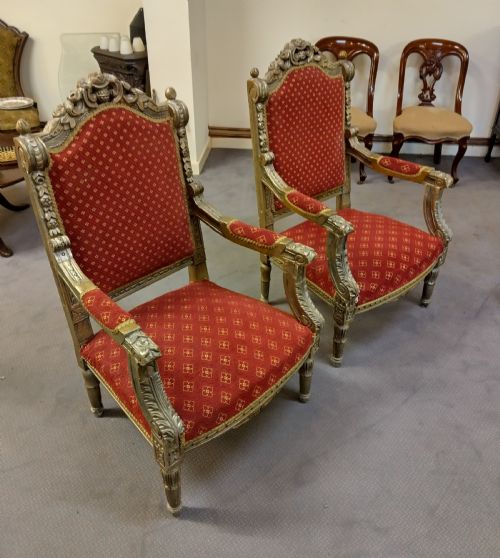
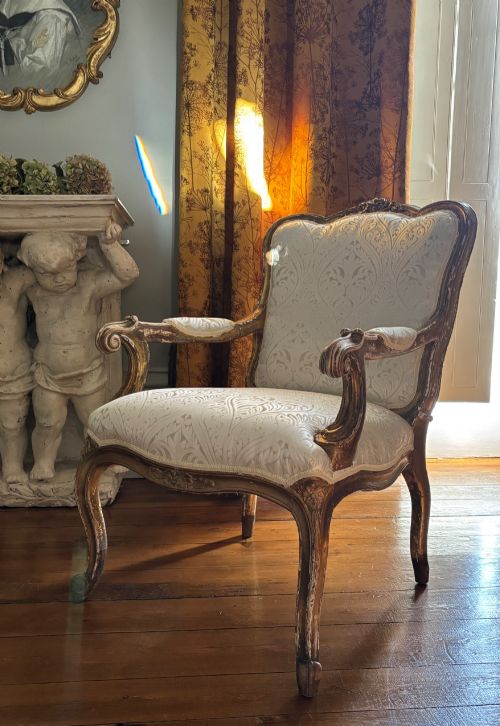

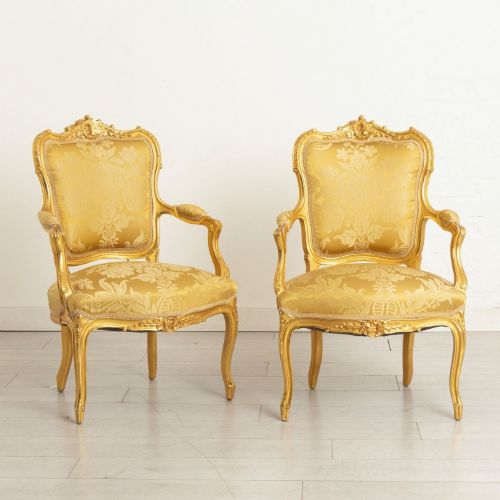


Gold Damask Chair
A gold damask chair brings together gilded woodwork and patterned textile, offering a seat designed for formal drawing rooms.
How they were made
Frames rely on hardwoods like mahogany, walnut, and structural timber, shaped through turning, joinery, and detailed carving.
Giltwood elements involve applying thin gold leaf to prepared wooden surfaces, while upholstery incorporates damask fabric, silk damask, and internal padding.
What varies in quality
The depth and crispness of the wood carving distinguish standard production from exceptional cabinet work.
The grade of the gilding and the quality of the woven damask fabric alter the visual presence of the seating.
The inventory covers 18th-century Georgian pieces alongside Victorian, Edwardian, and 1920s revival items.
Jacob-Desmalter·Blaise Maucuy·Howard and Sons
The Gold Damask Chair Glossary
- Damask
- A reversible figured fabric with patterns woven into the ground, historically produced in silk or wool. It provides the characteristic sheen seen on these seats.
- Giltwood
- Timber coated with gold leaf or powder over a prepared gesso base. This treatment gives the chair frame a bright metallic surface.
- Bergère
- An enclosed upholstered armchair with wooden framing around the sides and back. It usually includes a loose squab cushion over a webbed seat.
- Fauteuil
- An open-armed French armchair with exposed wooden armrests and upholstered back and seat. The style originates from court furniture traditions.
- Wingback
- An armchair featuring protective side panels attached to the backrest. This form developed in earlier centuries to block drafts in large rooms.
Gold Damask Chair: Frequently Asked Questions
How do I clean damask fabric?
Damask requires gentle surface brushing or specialist textile cleaning to protect the woven patterns.
Avoid using excessive water or harsh detergents on the delicate silk or standard threads.
Where were gilt armchairs placed?
These seats belonged in formal salons, withdrawing rooms, and reception spaces where visual display mattered.
Their metallic frames caught candlelight and daylight in grand domestic interiors.
Are these chairs comfortable for daily use?
Many salon and dining chairs prioritize upright posture and formal presentation over deep lounging.
Library chairs and armchairs offer deeper seating designed for longer periods of reading or relaxation.
How do I identify a revival style?
Revival pieces copy earlier 18th-century French and English designs during the 19th and early 20th centuries.
Look at the wood ageing, construction methods, and tool marks to separate original periods from later interpretations.