


Gold Crystal Wall Sconces
Gold crystal wall sconces bring interior illumination and decorative presence to a room, drawing the eye with shimmering glass and metal.
Gold Crystal Wall Sconces
When you search for gold crystal wall sconces, you encounter decorative light fixtures designed to mount directly onto vertical surfaces, combining reflective glass with metallic frames. These pieces originate primarily from the nineteenth and early twentieth centuries, spanning periods such as 1850, 1880, and the 1920s.
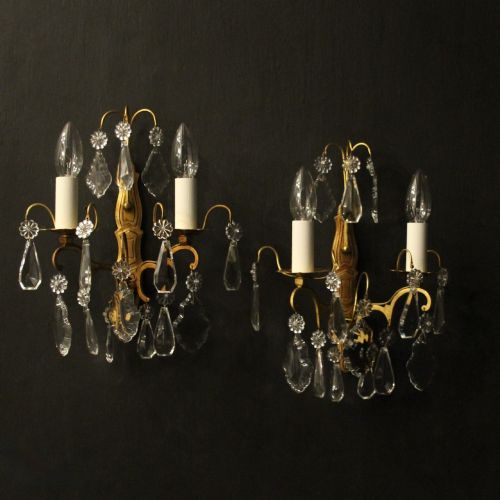
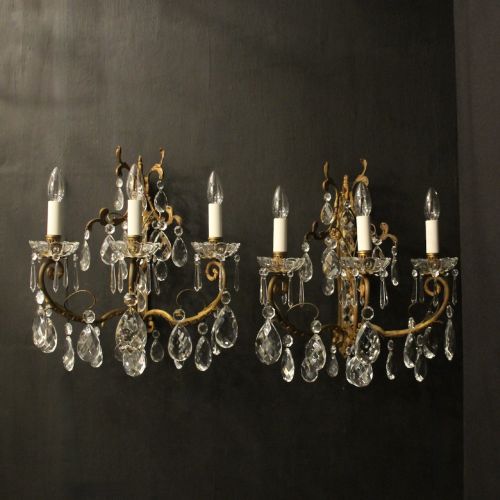
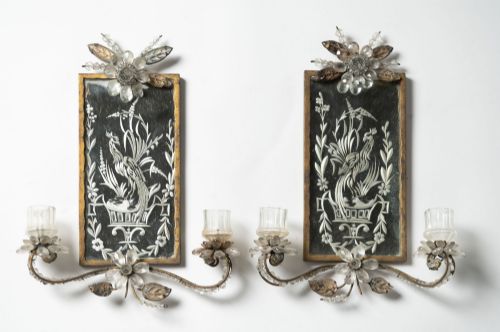
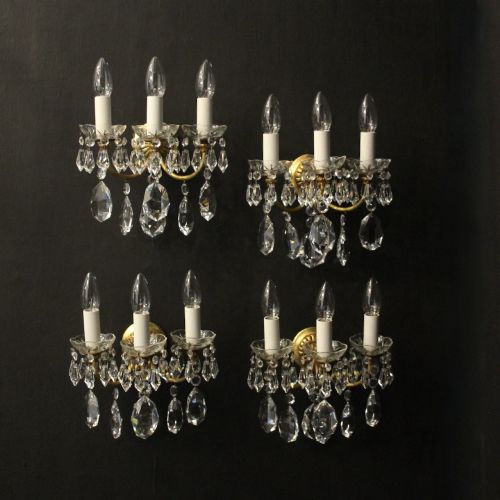
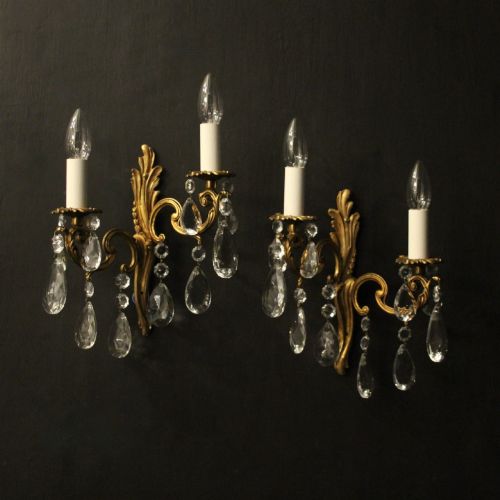
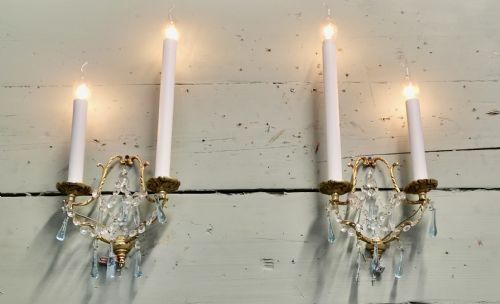
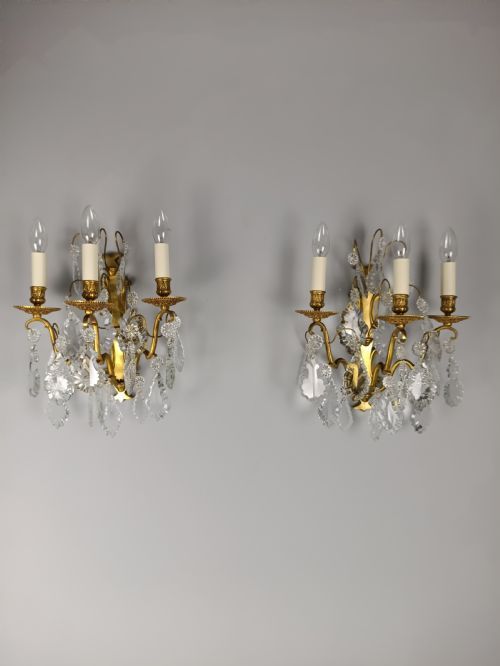
The version you are most likely to meet on this page is the French twin or triple arm wall light, frequently rendered in gilt bronze, brass, or gilded metal paired with crystal elements. Alongside these French forms, Italian and Florentine examples appear, featuring giltwood, carved leaves, and mirrored backs.
Makers such as Maison Baguès represent the specialised workshops behind these decorative luminaires. Designs range from French Baroque and Rococo Revival to Louis XV style, incorporating porcelain flowers, cherubs, and toleware alongside standard crystal drops.
Materials and Techniques
Makers constructed these fixtures using cast metals such as bronze, brass, and iron, applying surface treatments including gilding and ormolu. Gilt brass and gilded bronze provide the golden framework that supports the weight of glass components.
Cut glass and crystal form the hanging pendants, lustres, and beaded strands that refract light from the candle or electric arms. Skilled artisans assembled these elements by hand, wiring frames and suspending crystal droplets with delicate wire loops.
Design styles span French Baroque, Neoclassical, Rococo Revival, and Florentine aesthetics, with production dates concentrated around the 1920s.
Assessing Quality and Execution
The standard of metal casting and chasing dictates the initial grade of a fixture, separating sharp, detailed relief work on bronze and ormolu from softer, simpler forms. Heavier gauge brass and bronze provide structural integrity that lighter stamped metal frameworks lack.
The clarity, cut, and quantity of the crystal elements heavily influence the overall execution. Pieces featuring dense arrangements of faceted crystal glass and intact lustres project light differently than sparse or replacement glass configurations.
Maison Baguès
The Gold Crystal Wall Sconces Glossary
- Girandole
- A branched wall light or sconce, frequently featuring a mirror back to multiply the reflected candlelight. These decorative fixtures hang in pairs or sets along a wall.
- Ormolu
- A technique of applying finely ground high-carat gold to a bronze object using mercury. This process imparts a rich, durable golden finish characteristic of fine nineteenth-century metalwork.
- Lustre
- A cut glass pendant or hanging prism suspended from a light fixture to catch and refract illumination. Lustres hang in clusters from the arms and drip pans of sconces.
- Toleware
- Painted or lacquered sheet metal items popular in period decorative arts. These components add coloured floral or leaf motifs to the metal framework.
- Giltwood
- Wood that has been coated with a thin layer of gold leaf or powder. Florentine wall sconces frequently employ carved giltwood for their frames and leaf details.
Gold Crystal Wall Sconces: Frequently Asked Questions
What periods do these sconces come from?
The listings span from the nineteenth century up through the 1920s and 1930s. Pieces date across specific years including 1850, 1880, 1910, 1920, and 1930.
Victorian and Edwardian eras are represented alongside interwar French and Florentine designs. Each era brings distinct casting methods and decorative motifs to the metal and glass.
Are these sconces wired for electricity?
Some fixtures arrive freshly rewired for modern electrical standards, while others retain older wiring configurations or original candle sockets. Rewired examples integrate electrical cords through the metal arms.
Buyers should inspect the technical specifications of each individual piece to determine its current electrical setup. Professional installation by a qualified electrician is generally recommended for antique lighting.
How do I identify French versus Italian styles?
French examples frequently showcase Rococo, Baroque, or Louis XV influences with gilt bronze, crystal drops, and porcelain flowers. These tend to emphasise ornate metal casting and symmetrical arm arrangements.
Italian and Florentine pieces often feature carved giltwood, leaf motifs, and mirrored panels. Their aesthetic leans toward carved wooden frames and painted details rather than heavy cast bronze.