



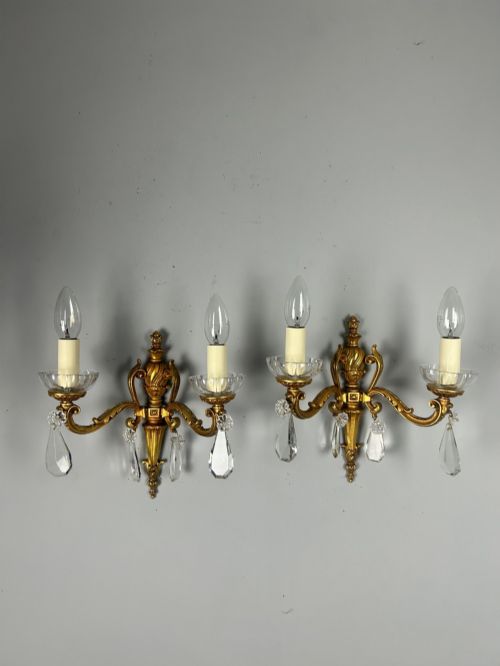

French Wall Chandeliers
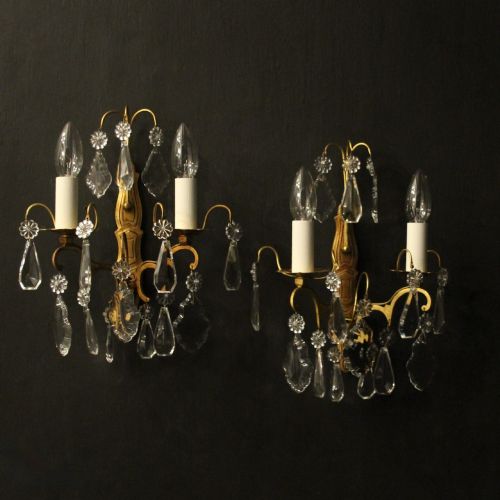
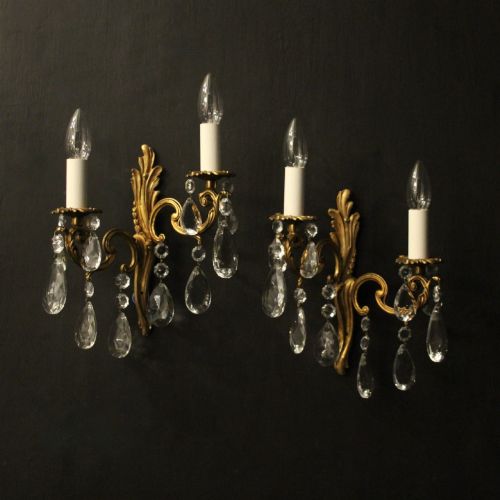
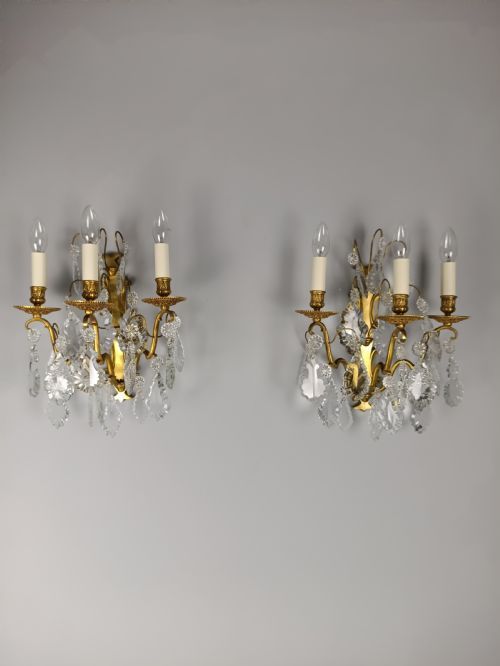
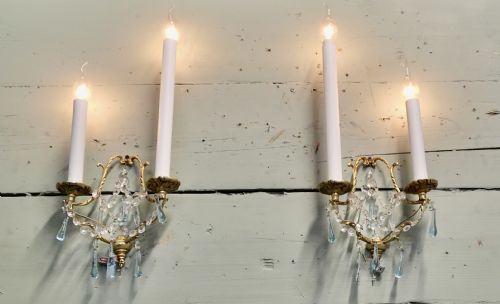
French wall chandeliers bring genuine decorative weight to a room, combining branching armatures with glittering crystal drops.
French Wall Chandeliers
The selections span distinct periods primarily from the late nineteenth century through the early twentieth century, specifically recording pieces from eighteen eighty, nineteen twenty, and nineteen thirty. These fixtures frequently arrive in matched pairs or larger sets, such as sets of four, making them suitable for flanking architectural focal points like fireplaces or mirrors.
Stylistically, the inventory draws heavily upon continental traditions, featuring French Rococo, French Baroque, French Neoclassical, and Louis XV style expressions, alongside occasional Italian Rococo examples. Forms range from dark framed twelve-light arrangements and basket chandeliers to designs adorned with delicate porcelain flowers.
How they were made
The construction of these pieces relies heavily on metalwork frameworks shaped from gilt brass, gilded bronze, gilt metal, and dark frames, providing the structural backbone for the branching arms. Artisans cast or forged these metal bases to create elaborate scrolls and structural supports suited for supporting multiple lighting points.
Pendants, beads, and cascading elements cut from crystal and glass are suspended from the metal armatures to refract the light produced by the bulbs or candles. Additionally, specialised decorative touches such as integrated porcelain flowers appear within the fabrication, adding organic texture to the metallic and glassy components.
French Wall Chandeliers Retail Price Guide 2026
Typical asking prices for french wall chandeliers among the pieces listed under this phrase on Sellingantiques today, from the lower quarter to the upper quarter. They describe what is for sale here now, not the wider market.
Listings incorporate materials such as crystal, glass, gilt brass, gilded bronze, and gilt metal across the eighteen eighty to nineteen thirty period.
What varies in quality
Quality differences emerge in the substance of the metalwork, distinguishing solid gilded bronze and heavy brass castings from lighter gilt metal alternatives. Heavier frameworks provide greater durability and a more substantial presence on the wall.
The standard of the glass and crystal components also dictates the overall grade of the piece, where precision-cut crystal prisms produce sharper light refraction than simpler moulded glass drops. Furthermore, the complexity of the style, from simple twin-arm configurations to elaborate twelve-light or basket constructions, reflects the ambition of the original maker.
The French Wall Chandeliers Glossary
- Wall Appliqué
- A decorative lighting fixture mounted to a wall, functioning similarly to a wall sconce or branch light.
- Gilt Bronze
- Bronze metal coated with a thin layer of gold, providing a rich and enduring metallic finish on antique hardware.
- Basket Chandelier
- A lighting form where crystal drops hang in a tightly clustered, enclosed basket shape beneath the frame.
- Louis XV Style
- A decorative aesthetic characterised by asymmetrical curves, natural motifs, and ornate Rococo influence originating in France.
French Wall Chandeliers: Frequently Asked Questions
Can these antique wall lights be rewired for modern homes?
Many surviving examples have already undergone professional rewiring to meet contemporary electrical standards while preserving their historical framework. It is common to find listings that note recent electrical updates.
Buyers should consult a qualified electrician to ensure proper installation and compatibility with modern wall circuits.
Where is the best place to mount them?
These fixtures are traditionally placed in pairs to create symmetry and balance within a room. Common placement includes either side of a mantelpiece, a large mirror, or a formal doorway.
They also function effectively in hallways and dining rooms to provide ambient secondary illumination.
How do I identify different stylistic periods?
Stylistic attribution relies on observing the decorative motifs present in the metalwork and crystal arrangement. Rococo and Louis XV examples typically display fluid, asymmetrical curves and organic leaf patterns, whereas Neoclassical pieces lean toward greater symmetry and geometric restraint.
Dates recorded in the evidence primarily cluster around eighteen eighty and the early decades of the twentieth century.