
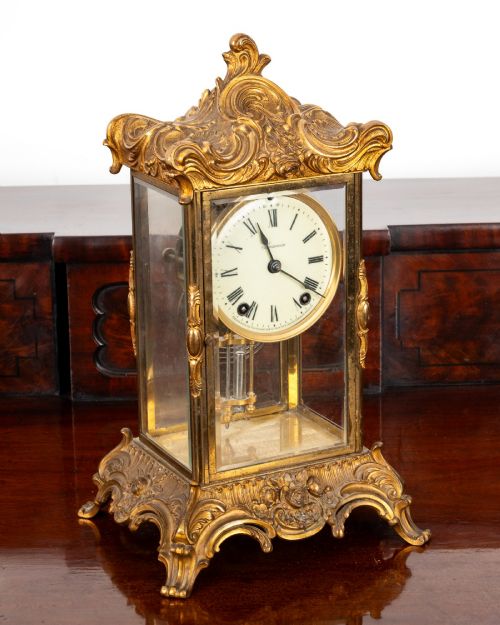


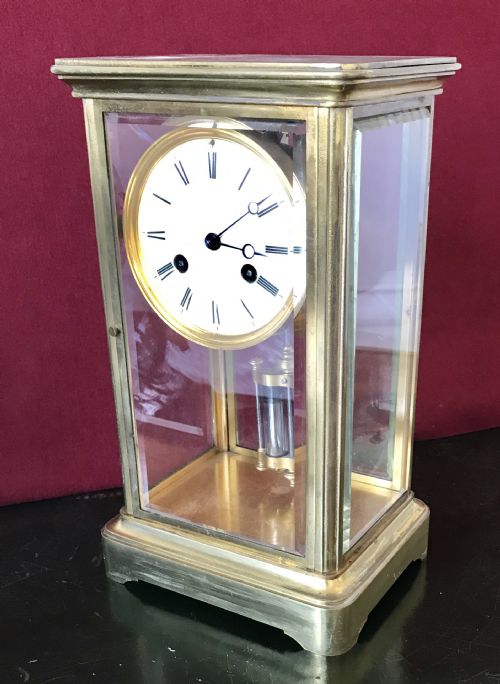
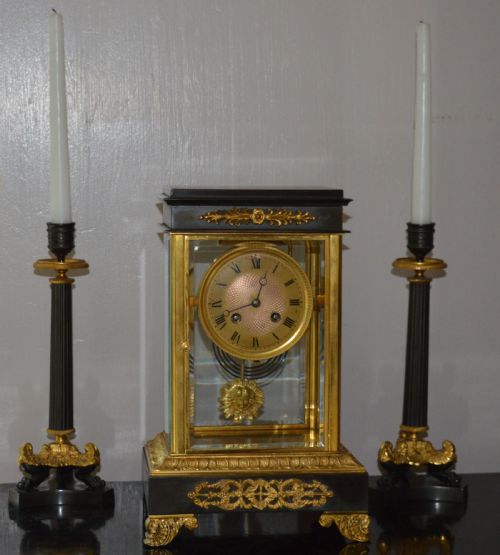
Gold Crystal Regulator Clock
A gold crystal regulator clock brings heavy glass and polished metal together to catch the light on a mantelpiece.
Gold Crystal Regulator Clock
A gold crystal regulator clock is typically a tall mantelpiece timepiece housed in a glazed brass or gilt bronze case that reveals the movement inside. These pieces date from the late nineteenth century, spanning periods from eighteen seventy through to nineteen hundred.
The most common versions on this page are French examples, often featuring bevelled glass panels held within gilt brass or ormolu frameworks. Makers such as Samuel Marti et Cie produced many of the notable pieces seen here alongside American firms like Ansonia New York.
Mantel clocks and four glass clock sets form the core of what is available, frequently incorporating decorative enamel panels on the dial or casing. Green onyx accents and Rococo Revival or Louis XVI styling appear regularly across these nineteenth century designs.
How they were made
Cases were constructed from heavy brass, gilt bronze, or ormolu, cast and chased to create ornate architectural or scrollwork frames. Bevelled glass panels were then fitted into the sides and front to enclose the mechanical movement entirely.
Dials frequently featured painted enamel chapters, sometimes set within matching panelled bezels that required delicate hand-painting and kiln-firing. Mechanical movements were built by specialist Parisian and international foundries, designed to sit visibly suspended between the front and back plates.
What varies in quality
The weight and thickness of the cast metal frame set the baseline for a superior piece, alongside the clarity and heavy bevelling of the surrounding glass panels. Finer examples display crisper chasing on the ormolu and more elaborate architectural detailing.
Signed movements by known makers like Samuel Marti elevate a piece above unmarked workshop productions. The presence of hand-painted enamel dial panels and matched mercury pendulums further distinguish the finer decorative standard.
Samuel Marti et Cie·Ansonia New York
The Gold Crystal Regulator Clock Glossary
- Crystal regulator
- A mantel clock housed in a glass-panelled case that allows the movement and pendulum to be viewed from multiple angles. These pieces rely on heavy brass or gilt frames to support the extensive glazing.
- Ormolu
- Finely ground high-carat gold applied to a bronze base using a mercury amalgamation technique, popular in French furniture and clockmaking. This finish provides a warm, lasting lustre across the metal mounts.
- Bevelled glass
- Glass with edges cut and polished at an angle to catch the light and create a decorative border. It is a defining feature of higher quality display cases from the nineteenth century.
- Enamel panel
- A fused glass surface applied to metal, often hand-painted with floral motifs or Roman numerals for clock dials. These panels require careful firing to achieve a smooth, glossy finish.
- Green onyx
- A decorative stone frequently used for bases and accent panels on late nineteenth century mantel clocks. Its varied banding adds natural colour and contrast to the polished metalwork.
Gold Crystal Regulator Clock: Frequently Asked Questions
What is a crystal regulator clock?
A crystal regulator clock is a mantel timepiece enclosed in a brass and glass case designed to display the movement from all sides. These pieces became popular in France during the late nineteenth century.
The design allows light to pass through the glass panels, highlighting the pendulum and the intricate gears within the brass framework.
Who made these French clocks?
Many of these clocks were produced by specialist Parisian foundries and movement makers during the Belle Epoque and Napoleon III periods. Samuel Marti et Cie is a prominent name frequently associated with these works.
American firms such as Ansonia also produced similar brass and glass mantel pieces during the same timeframe.
How do I date a crystal regulator?
Dating relies on stylistic clues such as Louis XVI revival details, the presence of green onyx accents, and specific maker signatures on the brass movement plates. Most examples date from between eighteen seventy and nineteen hundred.
The materials, including heavy gilt brass and bevelled glass, also point towards late nineteenth century manufacturing standards.
Where should I place a four glass clock?
These clocks are traditionally designed for mantelpieces, sideboards, or prominent tabletops where light can enter the glass case from multiple angles. Because the movement is visible from the sides, placing them away from dark corners is ideal.
Stability is important given the weight of the brass and glass construction, so a level surface ensures the pendulum swings evenly.