



Gold Cluster Brooch
A gold cluster brooch brings together precious stones and fine metals in a compact, decorative form suited to lapels and collars.
Gold Cluster Brooch
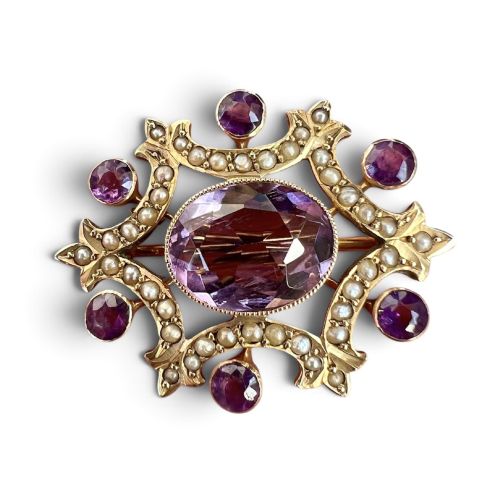
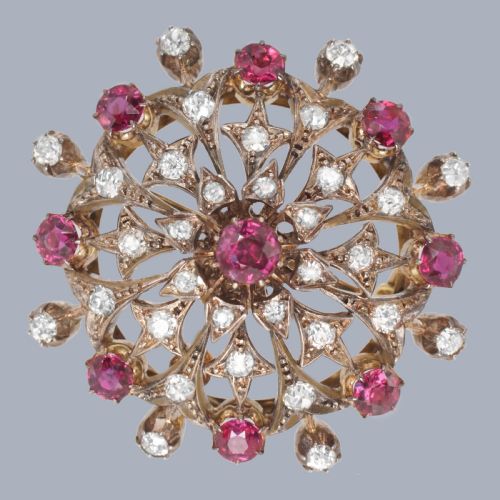
A gold cluster brooch gathers precious stones around a central focal point, creating a dense arrangement of colour and sparkle. You will encounter Victorian and Edwardian examples most frequently here, alongside Art Deco and Georgian designs.
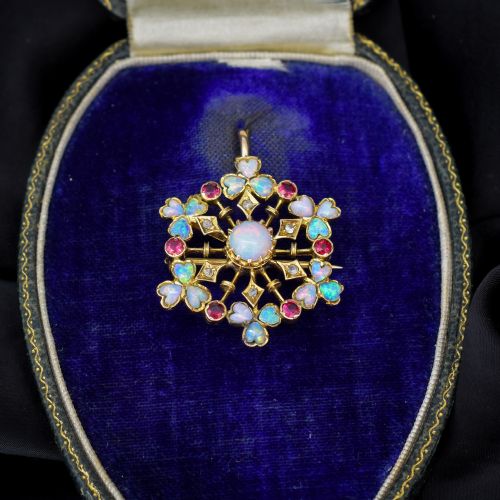
Many of these pieces double as pendants, offering versatility through hidden loops or detachable bails. The forms range from floral motifs and starbursts to geometric target arrangements.
Spanning the nineteenth and early twentieth centuries, these jewels reflect changing lapel fashions and evolving goldsmithing techniques across Britain, France, and Russia.
How they were made
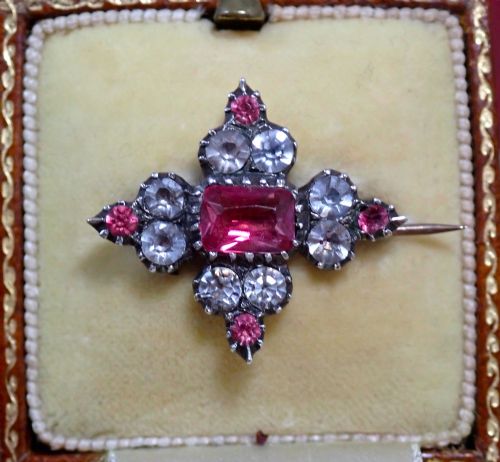
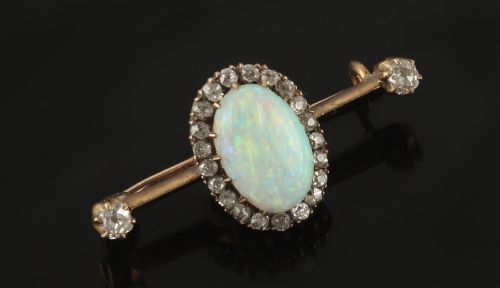
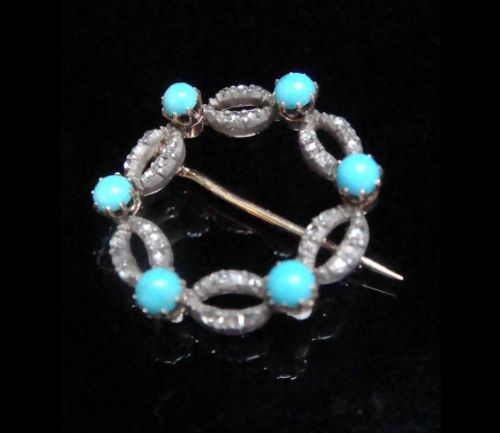
Goldsmiths combined yellow and white gold with silver settings, a technique often used in earlier periods to enhance the brilliance of diamonds against a dark foil or oxidized backdrop. Stones including amethyst, garnet, opal, and ruby were hand-set alongside rose-cut and old-cut diamonds.
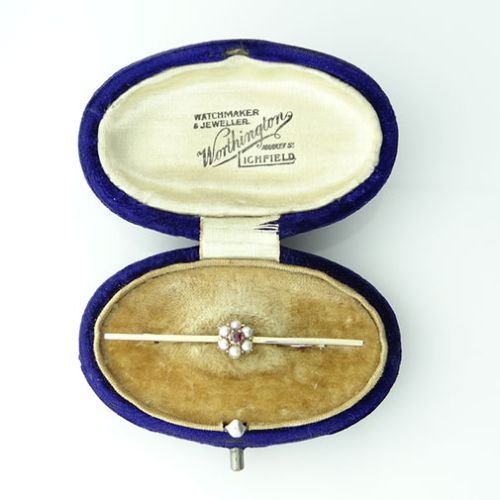
Makers utilised seed pearls and natural pearls threaded on silk or secured with tiny pegs, complemented by intricate collet settings and closed-back foils in Georgian and early Victorian pieces.
The listings on this site span the Victorian, Edwardian, and Art Deco periods, featuring yellow gold, white gold, and silver.
What varies in quality
The distinction between ordinary and exceptional work lies in the harmony of the stone selection and the precision of the setting. Master jewellers matched colour gradients carefully in multi-gem clusters and finished the reverse of the brooch with pierced or engraved goldwork.
Structural integrity also separates the tiers, seen in secure claw or collet settings that hold stones firmly without excess solder visible under magnification.
G. Colani
The Gold Cluster Brooch Glossary
- Cluster brooch
- A jewellery pin featuring a central gemstone surrounded by a ring of smaller stones. This format maximises visual impact by concentrating light and colour.
- Seed pearl
- A very small, naturally occurring saltwater or freshwater pearl, often drilled and strung in groups. They form delicate floral and geometric borders in Edwardian and Victorian pieces.
- Old-cut diamond
- A hand-faceted diamond shape predating modern brilliant cuts, characterised by a smaller table, higher crown, and open culet. These stones display a softer, candlelight shimmer.
- Collet
- A band of metal that holds a gemstone in place by enclosing its girdle. It represents a traditional stone-setting method found across Georgian and Victorian items.
- Rose-cut diamond
- A stone style featuring a flat base and a domed crown with triangular facets. This cut gives a subtle, translucent glow rather than sharp brilliance.
Gold Cluster Brooch: Frequently Asked Questions
How do I wear a brooch safely on modern clothing?
Secure the pin through a sturdy seam or incorporate a backing disc to distribute the weight across delicate fabrics.
Heavier pendant brooches sit best on structured wool coats or heavy linen lapels rather than thin silk blouses.
Can every brooch convert into a pendant?
Not every piece has a conversion mechanism, but many Victorian and Edwardian examples feature a fold-down loop or a detachable pin assembly.
Inspect the reverse for hinged bails or rings designed to accommodate a thin chain.
How do I date a gold brooch?
Examine the metal purity marks, pin mechanisms, and overall silhouette to establish the period of manufacture.
C-clasps and tubular hinges point towards Georgian and early Victorian eras, while safety catches appear later in the nineteenth century.
What is a target brooch?
A target brooch is a specific cluster design featuring concentric circles of contrasting gemstones around a central stone.
This concentric layout gained popularity during the Edwardian period for its clean, balanced geometry.