




Gold Casing Wristwatch
A gold casing wristwatch brings together mechanical precision and precious metal work from the middle decades of the twentieth century.
Gold Casing Wristwatch
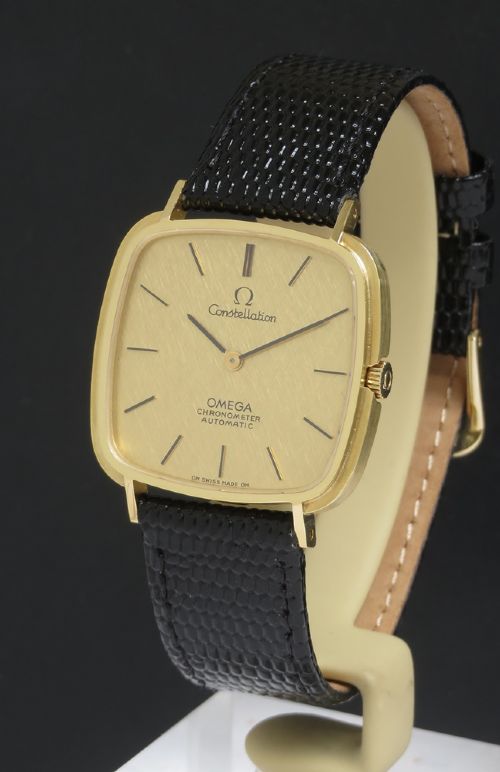
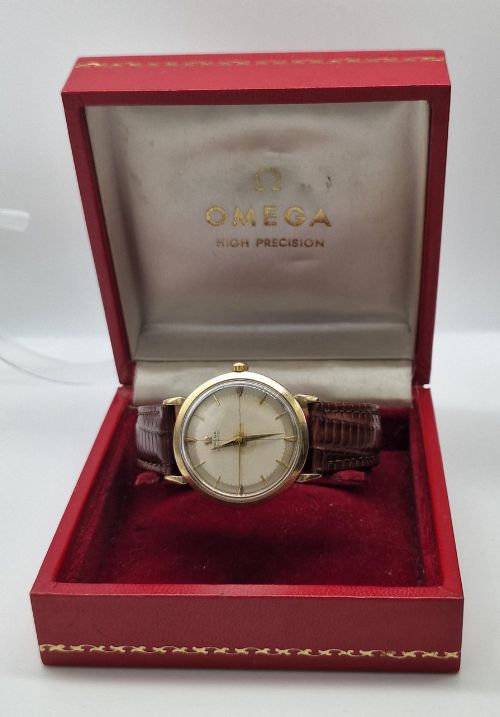
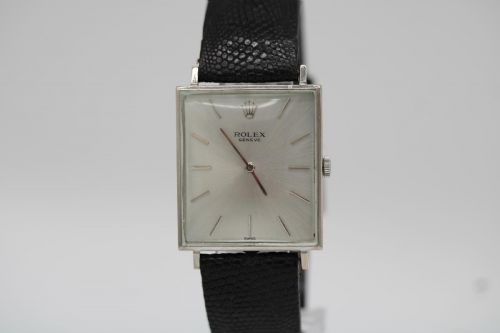
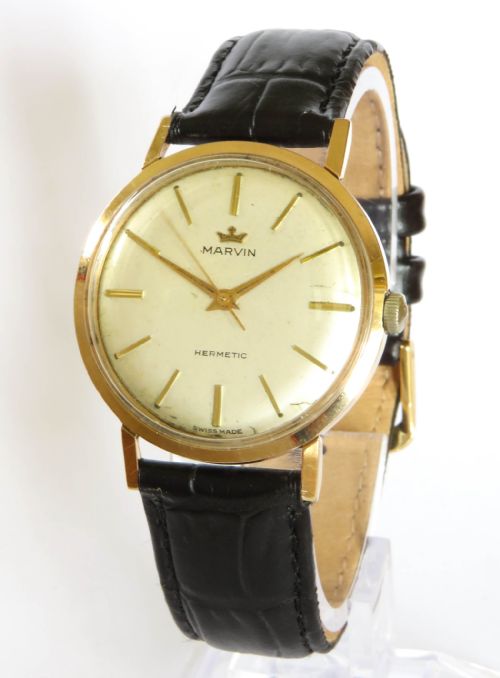
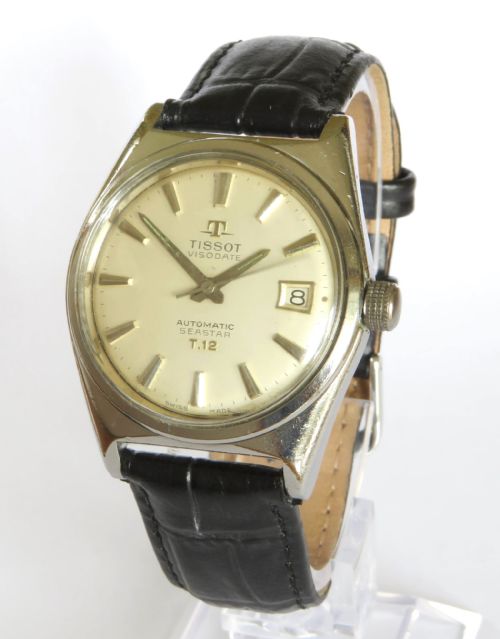
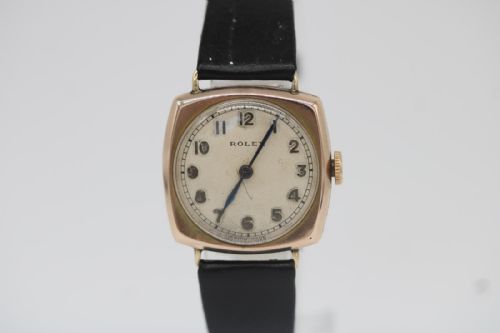
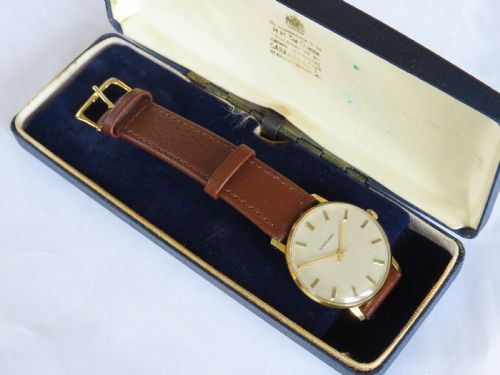
A gold casing wristwatch sits at the intersection of practical timekeeping and mid-century luxury. When collectors search for a gold casing wristwatch, they encounter pieces originating predominantly from the 1930s through to the 1960s. These items range from rectangular Art Deco dress pieces to round automatic models produced during the 1950s and 1960s.
The most common versions met on this page span the mid-century period, displaying styles such as Mid-Century Modern and Art Deco. Makers of the era housed mechanical movements inside cases fashioned from gold, gold plate, gold filled material, and solid 18ct gold. Dials are protected by glass or acrylic crystals and often paired with leather straps.
Forms vary from classic round dress watches to square chronograph models. Swiss and British firms dominate the selection, offering manual wind and automatic movements tailored for gentlemen. Each piece reflects the aesthetic preferences of its decade, from geometric 1930s forms to clean 1960s lines.
Materials and construction
Watchmakers utilised a variety of precious and base materials to construct the casing and exterior of each gold casing wristwatch. Solid 18ct gold, 9K gold, and white gold feature alongside gold filled and gold plate applications over base metals. Dials are fitted with glass or acrylic crystals to shield the hands and markers.
Movements inside these watches rely on intricate mechanical components driven by manual wind or automatic winding mechanisms. Straps are typically fabricated from leather, securing the metal case to the wrist. Exterior finishes incorporate brushed or polished surfaces suited to the prevailing style of the decade.
At least one timepiece on this page has been quietly ticking away for eighty-two years.
Evaluating the standard of execution
Quality in a gold casing wristwatch rests upon the purity of the metal used in the case and the complexity of the internal movement. Solid 18ct gold cases represent a higher standard of manufacture compared to gold plated or gold filled alternatives. The presence of original signed crowns, matching buckles, and fitted presentation boxes elevates the standing of an individual piece.
The sophistication of the calibre housed inside the case further separates examples. Chronograph complications and chronometer-grade movements demand greater skill in assembly and adjustment than standard three-hand manual wind mechanisms. The crispness of dial printing and the integrity of case geometry define the overall execution.
Omega·Rolex·Marvin·Tissot·Eterna-Matic·Smiths·Garrard·Felca·Mappin·Breitling·Ebana·Tudor·Le coultre·Bulova·Elgin·Longines
The Gold Casing Wristwatch Glossary
- Chronograph
- A watch equipped with a stopwatch function alongside its standard timekeeping display. These complications allow the wearer to measure elapsed intervals using dedicated sub-dials and pushers.
- Chronometer
- A precision timepiece that has passed rigorous accuracy tests conducted by an official rating organisation. Such movements maintain reliable timekeeping under diverse temperature and positional conditions.
- Manual wind
- A mechanical movement requiring the wearer to turn the crown by hand to tension the mainspring. This traditional method preceded the widespread adoption of self-winding automatic systems.
- Gold filled
- A manufacturing technique where a layer of solid gold is mechanically bonded to a base metal core. This method provides a thicker layer of gold than standard plating.
- Automatic
- A self-winding mechanical movement that uses a weighted rotor to tension the mainspring as the wearer moves their wrist. This system eliminates the need for daily manual winding.
Gold Casing Wristwatch: Frequently Asked Questions
How do I wind a vintage manual watch?
Rotate the crown clockwise between your thumb and forefinger until you feel gentle resistance. Stop turning immediately once you meet this resistance to avoid damaging the internal mainspring.
Perform this action at approximately the same time each day to maintain consistent tension and reliable timekeeping throughout its operation.
What is the difference between gold plate and gold filled?
Gold plate involves applying a very thin chemical or electrical layer of gold over a base metal. Gold filled uses heat and pressure to bond a substantially thicker sheet of gold to the underlying metal core.
Because of this heavier application, gold filled cases offer greater durability and resistance to wear over decades of use.
Can I wear my vintage watch every day?
Many collectors wear their vintage timepieces regularly, provided the movement has been recently serviced by a qualified professional. Regular wear keeps the internal oils distributed properly across the mechanical components.
However, most vintage pieces lack modern water resistance standards and should be kept away from moisture, swimming pools, and heavy impacts.
How do I identify the production decade?
Examine the stylistic cues of the dial, case geometry, and typography. Art Deco pieces with stepped rectangular cases typically point to the 1930s, while clean minimalist round dials often signal the 1960s.
Serial numbers engraved on the inside or outside of the case back provide more precise dating when checked against maker records.