

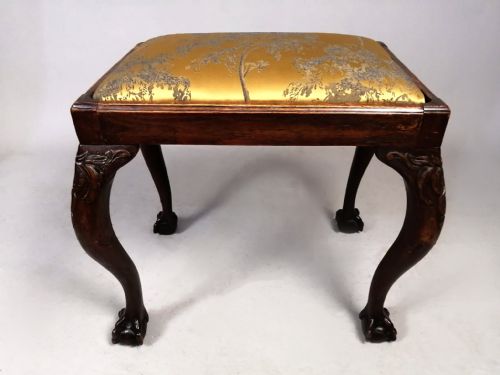
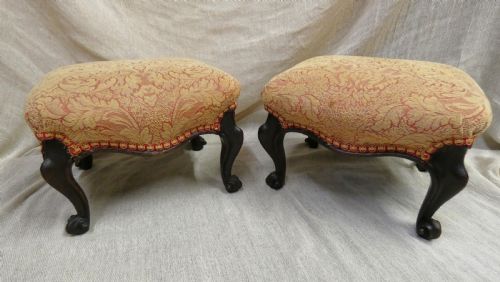
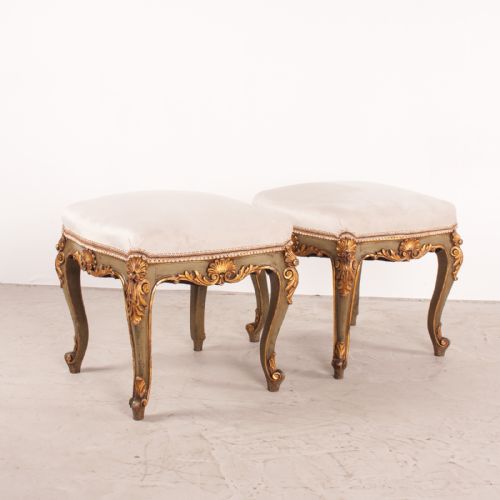
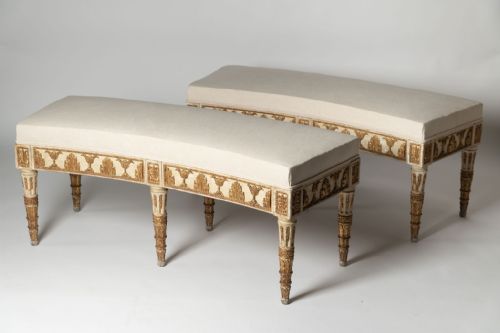


Gold Carved Wood Stool
These gold carved wood stool examples bring centuries of Continental and British craftsmanship straight to your interior.
Gold Carved Wood Stool
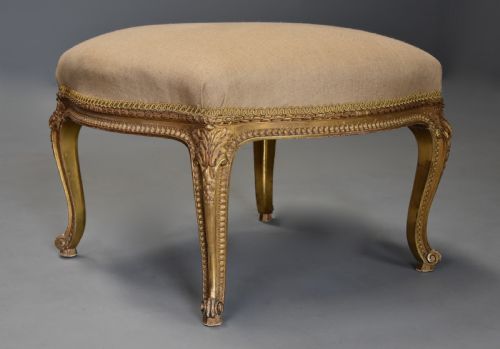
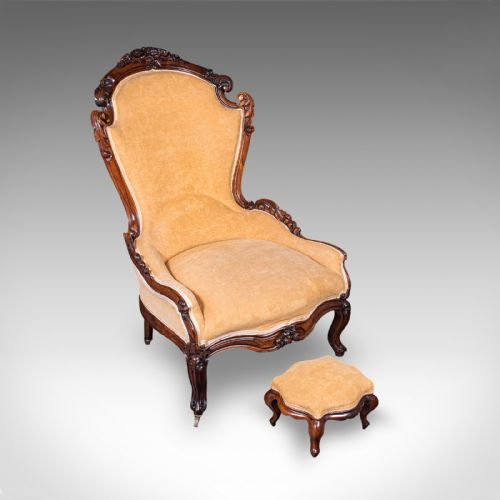
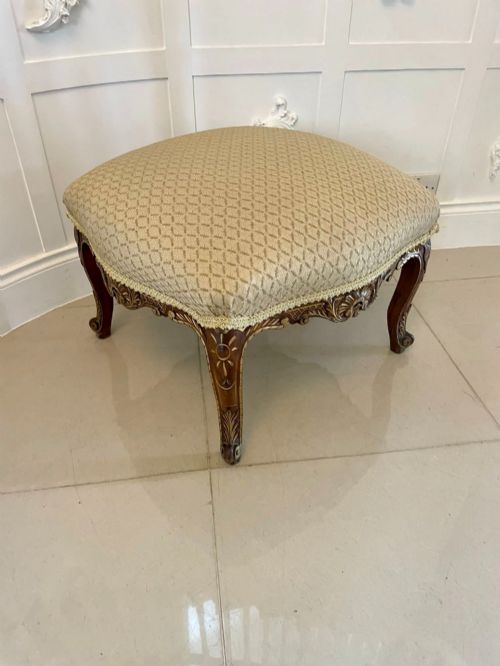
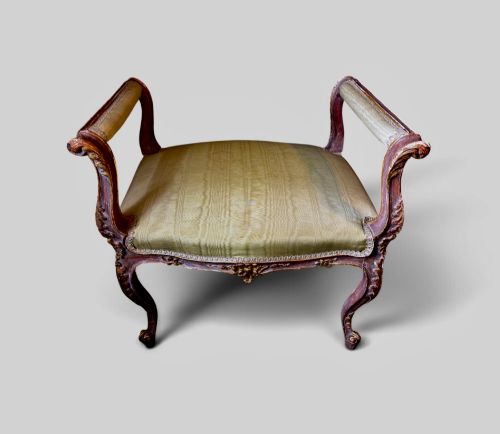
When you search for a gold carved wood stool, you encounter a varied selection of seating spanning the eighteenth century through to the early twentieth century. The forms range widely from simple footstools and dressing stools to grand window seats, centre stools and curved curule designs.
Victorian examples sit alongside French Neoclassical, Louis XV Revival, Louis XVI style, Rococo Revival and Queen Anne Revival pieces. You are most likely to meet nineteenth-century giltwood and gesso pieces influenced by French and Italian design traditions.
Makers utilised walnut, mahogany, elm and pine as foundational woods, applying rich layers of gilding, paint and gold leaf over carved surfaces. Many of these items served intimate boudoirs, grand reception rooms and dressing chambers.
How they were made
Cabinetmakers shaped solid timbers like walnut, mahogany and elm using traditional joinery methods before handing the frames to specialist carvers. These artisans cut deep relief patterns, floral motifs and scrolls directly into the wood.
Workers applied gesso preparations to smooth surfaces prior to gilding with gold leaf or painting. Upholsterers then finished the seats using traditional stuffing techniques covered in silk, linen, fabric or period textiles.
Gold Carved Wood Stool Retail Price Guide 2026
Typical asking prices for gold carved wood stool among the pieces listed under this phrase on Sellingantiques today, from the lower quarter to the upper quarter. They describe what is for sale here now, not the wider market.
Materials recorded across the current inventory include giltwood, walnut, mahogany, elm, silk, linen and gesso.
What varies in quality
Depth and crispness of the hand carving separate standard commercial seating from masterworks produced in established European workshops. Sharp relief work on acanthus leaves, cabriole legs and moulded rails shows superior skill.
The integrity of the underlying timber frame and the richness of the original gilding dictate the overall distinction of the piece. Surviving maker stamps or atelier marks further elevate the standing of an individual stool.
Loidrault Freres Paris
The Gold Carved Wood Stool Glossary
- Giltwood
- Wood that has been coated with gold leaf or gilt paint. This finish defines the bright, reflective appearance seen on many revival period items.
- Gesso
- A plaster-like mixture applied to wood frames to create a smooth base for gilding. It holds fine detail carved prior to finishing.
- Curule stool
- An ancient Roman stool shape featuring crossed legs forming an X-form profile. Nineteenth-century makers revived this classical geometric form for formal interiors.
- Parcel gilt
- A decoration method where only specific raised portions of a carved surface receive gold leaf. The remaining areas show painted wood or natural grain.
- Cabriole leg
- A furniture leg that curves outward at the knee and inward at the ankle, ending in a pad or scroll foot. This shape dominates eighteenth and nineteenth-century revival seating.
Gold Carved Wood Stool: Frequently Asked Questions
How were these stools used?
These low seats functioned primarily as moveable footstools, boudoir dressing seats, or window benches in formal rooms.
Their portable size allowed servants to place them near firesides or beside larger armchairs for resting feet.
How do I date a giltwood stool?
Dating relies on combining the underlying wood species, carving styles, and the specific composition of the gesso and gilt layers.
Revival pieces often borrow eighteenth-century motifs like Rococo scrolls while retaining nineteenth-century construction traits.
Where should I place one?
A small gilt stool works effectively as an accent piece in a hallway, bedroom, or living space.
Avoid placing antique giltwood furniture in direct sunlight or damp areas to protect the delicate gold leaf finish.
What is the difference between French and English styles?
French styles like Louis XVI and Rococo tend to feature exuberant, highly ornate carved motifs and extensive gilding.
English interpretations, such as Queen Anne Revival, often focus on cleaner wood lines, walnut frames, and subtle cabriole legs.