

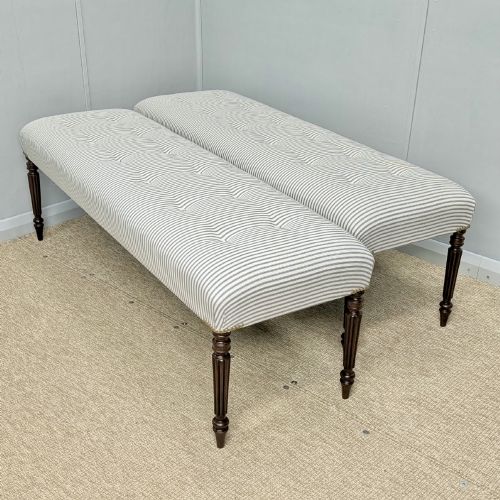
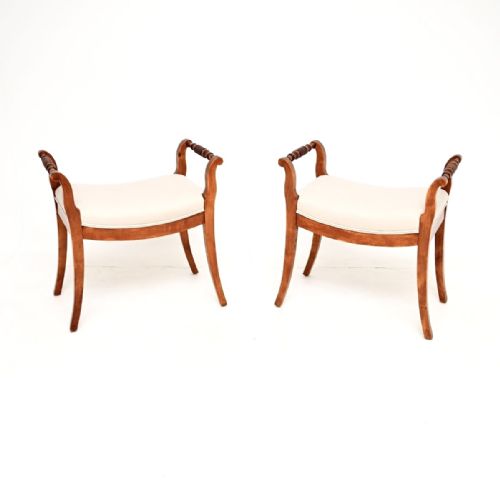
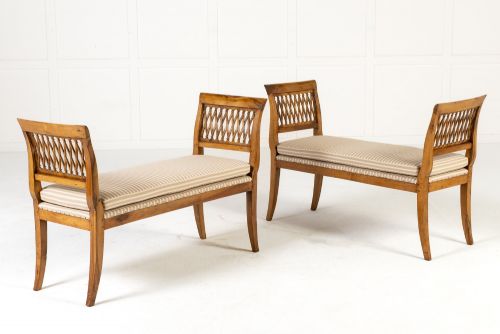
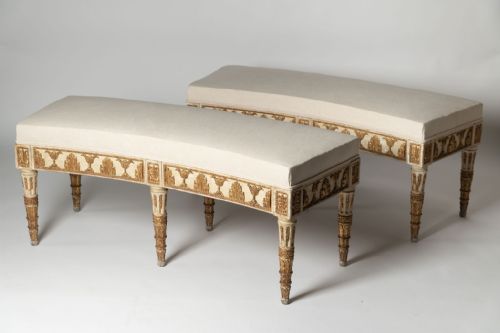

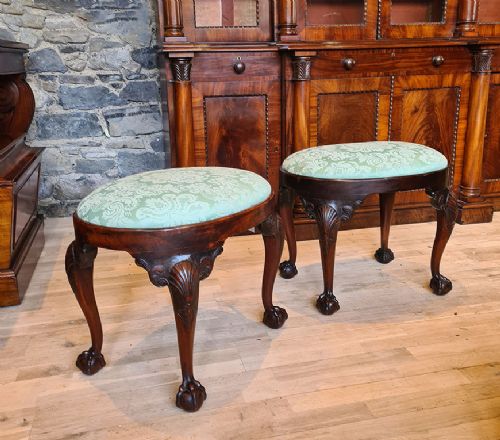


Pair Upholstered Window Seats
Pair upholstered window seats bring formal seating and long profiles to a room, offering matched upholstery across sturdy wooden frames.
Pair Upholstered Window Seats
When you search for pair upholstered window seats, you are looking at matched pairs of low benches designed for placement beneath windows or along hallways. These pieces appear in forms ranging from traditional stools and benches to dedicated window seats created across several eras.
The versions you are most likely to meet on this page hail from the eighteenth and nineteenth centuries, including Georgian, Regency, and Victorian periods. Makers from these eras utilised robust timber frames paired with textile, leather, or fabric upholstery to finish the seating surface.
Origins vary widely across the inventory, with pieces representing English, French, Italian, Swedish, and Irish traditions. Alongside standard window seats, the selection includes long benches and stools functioning in identical capacities within domestic interiors.
How they were made
The structural frames rely heavily on solid timbers such as mahogany, walnut, rosewood, and satin birch, shaped with traditional joinery. Artisans frequently added decorative detailing such as fluted legs or giltwood highlights to enhance the exposed woodwork.
Upholstery methods involved securing durable textiles, fabric, or leather over padding to create firm yet comfortable seating surfaces. Brass components occasionally appeared as structural or decorative fixings on specific nineteenth-century designs.
Pair Upholstered Window Seats Retail Price Guide 2026
Typical asking prices for pair upholstered window seats among the pieces listed under this phrase on Sellingantiques today, from the lower quarter to the upper quarter. They describe what is for sale here now, not the wider market.
Listings feature pieces spanning the eighteenth and nineteenth centuries, constructed from mahogany, walnut, rosewood, and satin birch.
What varies in quality
The distinction between standard examples and finer pieces rests in the selection of timber and the sophistication of the frame carving. Dense grain in mahogany or walnut and precise execution of details like fluted legs separate standard workshop output from superior commissions.
The integrity of the frame construction and the fidelity of the period style dictate the overall standard. Pieces retaining their original timber character and proportioned upholstery schemes represent the higher end of the range.
James Shoolbred
The Pair Upholstered Window Seats Glossary
- Mahogany
- A durable tropical hardwood prized for its deep reddish-brown colour and stable grain, frequently utilised in eighteenth and nineteenth-century furniture frames.
- Biedermeier
- A central European style spanning the nineteenth century characterised by clean lines, restrained ornamentation, and an emphasis on utilitarian comfort.
- Regency
- A British design period spanning the early nineteenth century noted for classical motifs, Grecian influences, and the use of dark woods.
- Giltwood
- Timber treated with a thin layer of gold leaf or metallic gilt pigment to create a decorative, reflective surface finish.
- Aesthetic Movement
- A late nineteenth-century design phase focused on artistic expression and visual refinement rather than strict historical revivalism.
Pair Upholstered Window Seats: Frequently Asked Questions
Where should I place pair upholstered window seats?
These matched pieces suit placement beneath low windows, along wide hallways, or at the foot of a bed. Their long profiles provide balanced seating across larger wall spaces.
Because they arrive as pairs, they work effectively flanking a fireplace or anchoring opposing corners of a formal reception room.
How do I identify a Regency window seat?
Regency examples typically exhibit classical restraint, drawing inspiration from ancient Greek and Roman forms. Look for architectural elements such as fluted legs and dark mahogany frames.
These pieces often incorporate leather or plain fabrics that reflect the neoclassical taste of the early nineteenth century.
What is the difference between a bench and a window seat?
Window seats historically fit specific architectural recesses beneath glazing, featuring low backs or simple upholstered tops. Benches provide general long seating without the specific spatial association to a window.
On this page, both forms share similar timber frames and upholstered surfaces suitable for multi-room utility.
How do I care for antique upholstery?
Protect antique textiles and leather by avoiding direct sunlight, which fades natural fibres and dries out historical hides. Regular gentle dusting with a soft brush preserves the surface pile.
Maintain stable indoor humidity levels to prevent timber frames from shifting and straining the surrounding upholstery fixings.