
Gold Carved Side Table
A gold carved side table brings architectural presence and gilded warmth to a room, drawing the eye with carved timber and polished stone.
Gold Carved Side Table
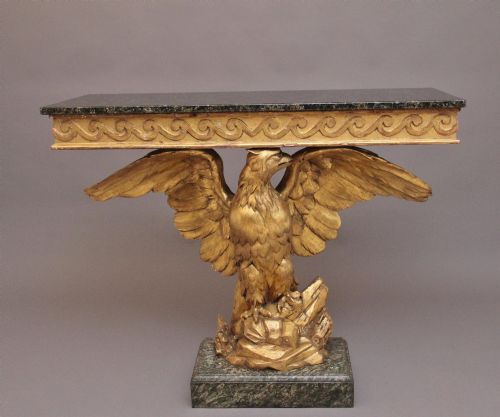
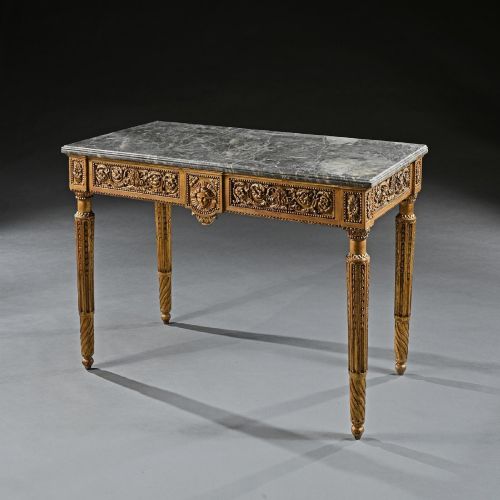
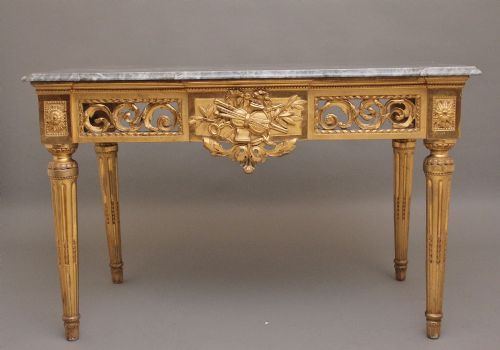
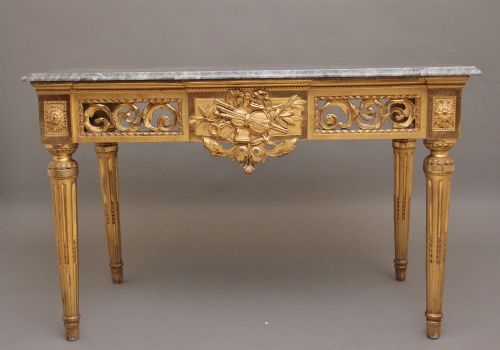
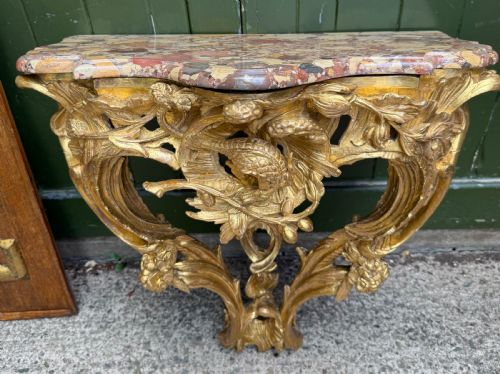
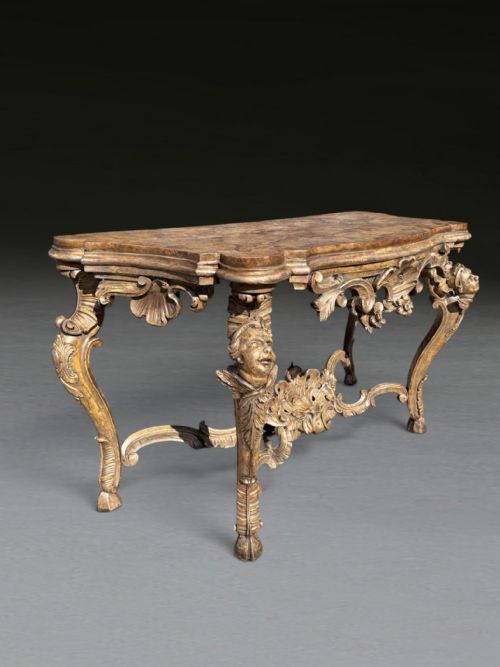
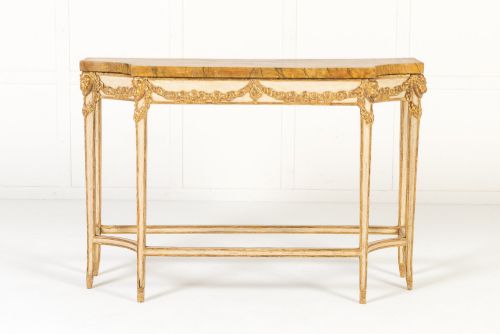
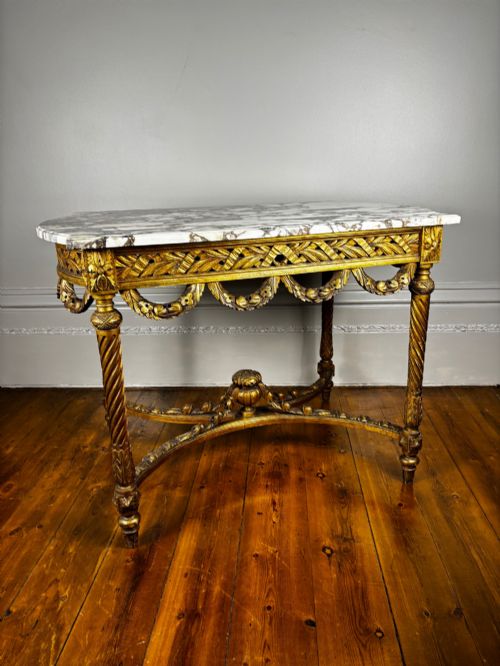
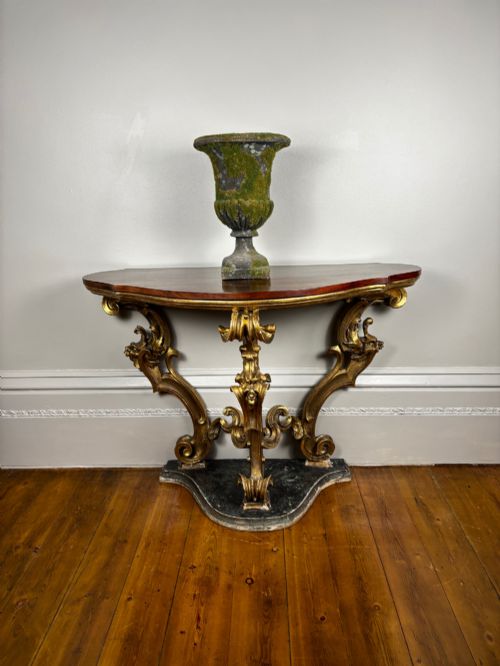
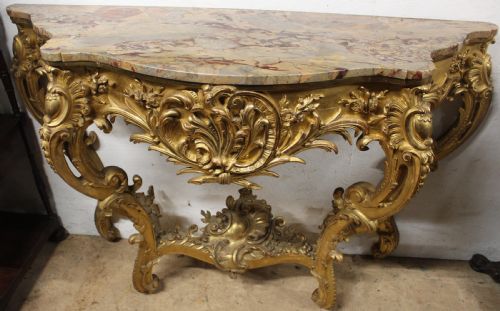
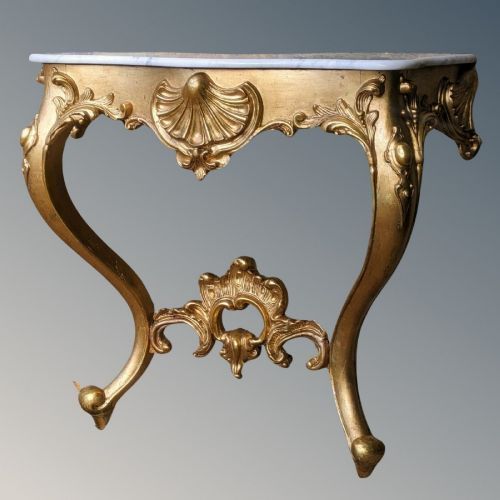
A gold carved side table encompasses console tables, occasional pieces, and centre tables originating predominantly from the eighteenth and nineteenth centuries. These furnishings often feature heavily carved wooden frames finished with gold leaf, gesso, or paint, frequently paired with inset marble tops in shades such as breccia, rouge, and green. Italian and French workshops dominate the older periods, producing ornate Baroque and Rococo designs intended to anchor formal interiors.
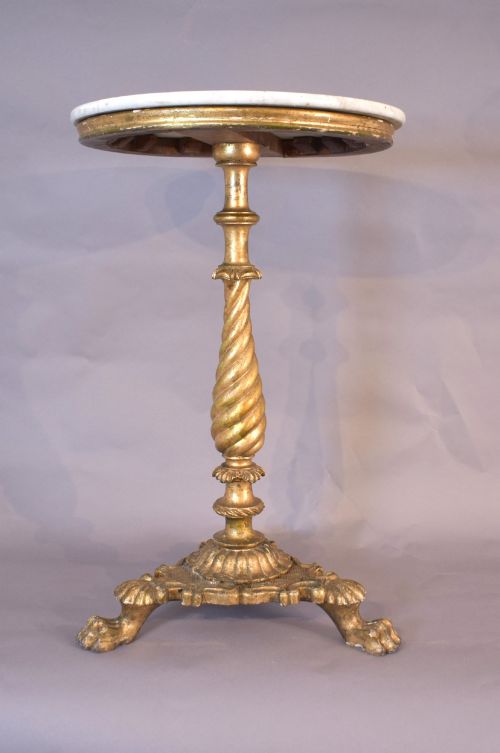
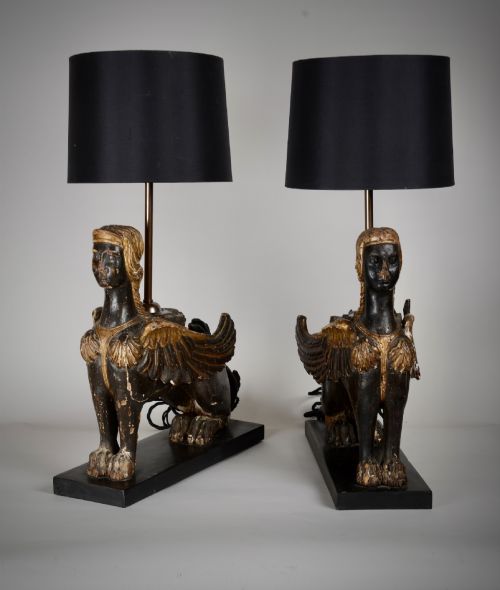
Buyers meet console tables designed to stand flat against a wall most frequently on this page, often accompanied by matching mirrors, tripod bases, and low coffee variants. The forms range from strict neoclassical symmetry to exuberant revival styles incorporating lions' paw supports, sphinxes, and swans. While eighteenth-century examples lean towards Venetian and Italian giltwood, later nineteenth-century pieces embrace Louis XV revivals and Regency influences.
Materials and construction
Craftsmen built the structural frames using native timbers including pine, lime wood, oak, and satinwood, applying a layer of gesso to smooth the carved details before gilding. Gold leaf was laid meticulously over the prepared surface, capturing the crisp lines of acanthus leaves, scrolls, and figurative motifs. Paint and silver gilt also appear on specific Italian and regional pieces, offering varied textural finishes.
Heavy marble slabs form the tops of many console and side tables, shaped to fit rectangular, circular, or bow-front frames. These stone surfaces, including breche d'alep, are polished smooth to contrast with the rich, reflective quality of the gilded wooden bases below.
Several tables feature carved swans and sphinxes keeping watch beneath the marble.
Distinctions in craftsmanship
The depth and crispness of the carving dictate much of the distinction between pieces, as master carvers achieved a three-dimensional fluidity that lesser workshops missed. Hand-applied gold leaf displays a subtle warmth and tonal variation that mechanical or modern substitutes fail to replicate.
The selection and thickness of the marble top also mark the grade of a piece, with figured and polished stones adding substantial weight and structural integrity. Integration between the carved wooden apron and the stone slab shows the level of bespoke tailoring applied during manufacture.
The Gold Carved Side Table Glossary
- Giltwood
- Timber coated with gold leaf over a prepared gesso base. This finish provides the characteristic metallic sheen seen on antique console tables.
- Console table
- A table designed to stand against a wall, frequently secured to it with brackets. These pieces usually feature decorative front legs and flat backs.
- Gesso
- A plaster-like mixture applied to wood to create a smooth surface for carving and gilding. It allows for sharp relief details.
- Breccia marble
- A composite stone made of angular fragments embedded in a fine-grained matrix. It provides varied, colourful patterns on table surfaces.
- Rococo
- An ornate artistic style characterised by asymmetrical scrolls, C-curves, and naturalistic motifs. It heavily influenced mid-eighteenth-century furniture design.
Gold Carved Side Table: Frequently Asked Questions
Where should I place a console table?
Console tables sit naturally against a flat wall in an entrance hallway, a drawing room, or beneath a large mirror. Their shallow depth allows them to occupy circulation spaces without blocking pathways.
Pairing a console with a matching mirror creates a cohesive focal point that draws the eye upward and reflects light across the room.
How do I care for a gilded surface?
Gilded wood requires gentle treatment to preserve the delicate layers of gold leaf and underlying gesso. Dusting with a soft, dry cloth prevents the accumulation of grit without harming the finish.
Avoid liquid cleaners, polishes, and abrasive cloths entirely, as moisture and chemicals can strip the metallic leaf from the carved timber.
What is the difference between a console and a side table?
Console tables are specifically designed to stand flat against a wall, frequently relying on structural wall brackets for additional stability. Their decoration concentrates on the front and sides visible to the room.
Side tables stand independently on four or three legs and can float anywhere within a room, offering all-round access and decoration.
How can I tell an eighteenth-century table apart from a later revival?
Eighteenth-century pieces display hand-cut joinery, aged timber patination, and organic wear patterns consistent with centuries of use. The carving tends to show subtle irregularities unique to individual makers.
Revival pieces from the nineteenth and early twentieth centuries often adopt heavier proportions, standardised machine-cut elements, and retrospective stylistic revivals like Louis XV or Baroque.