
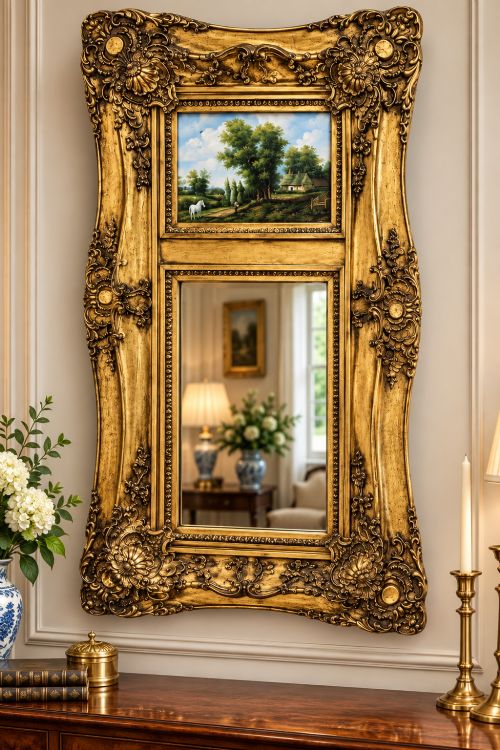
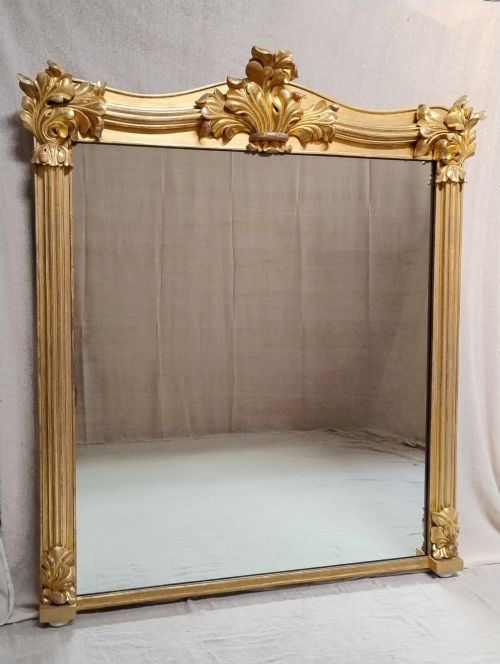
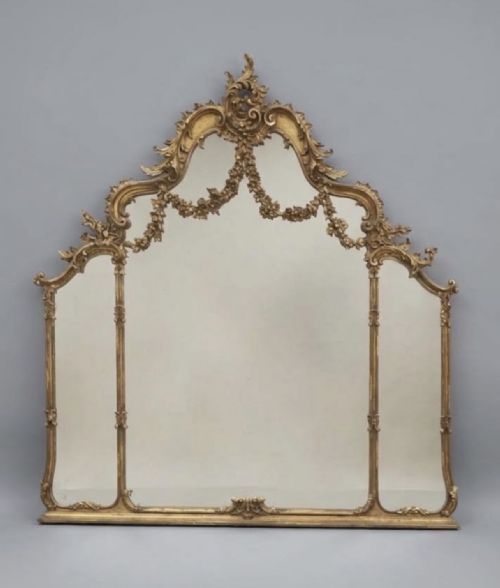
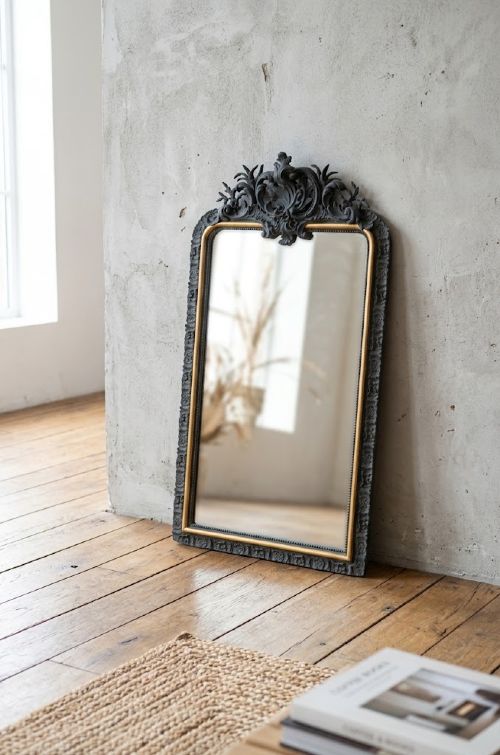


Gold Carved Overmantel Mirror
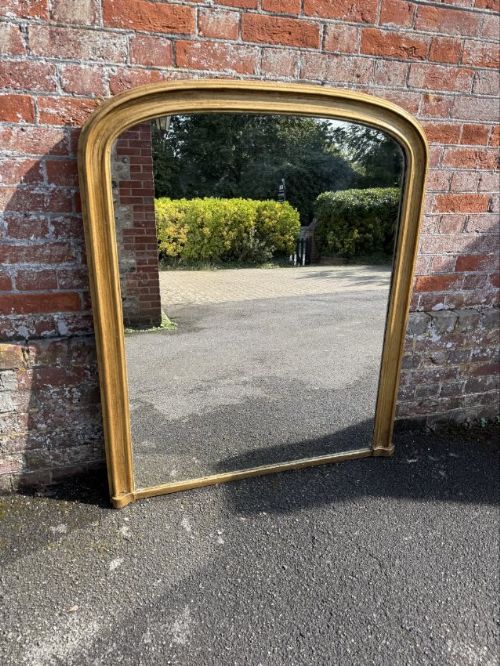
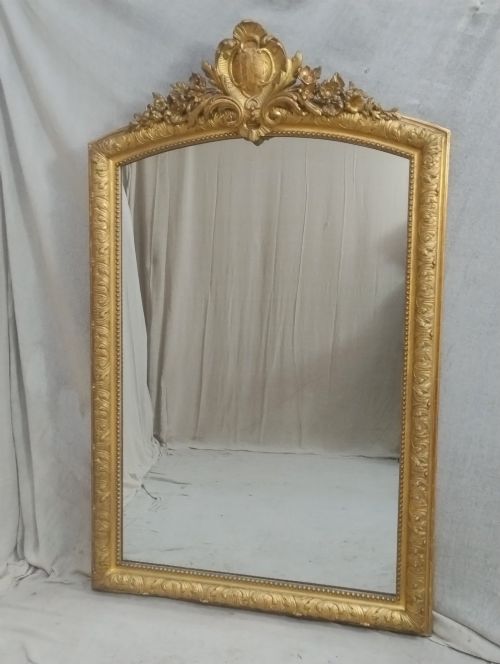
A gold carved overmantel mirror brings commanding scale, bright gilt surfaces, and traditional architectural presence directly to a chimney breast or grand wall.
Gold Carved Overmantel Mirror
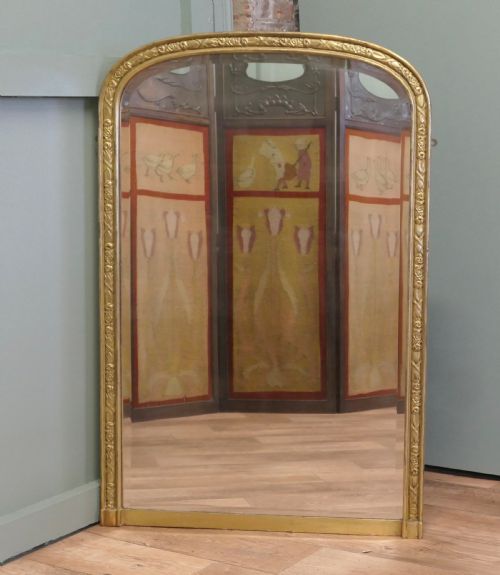
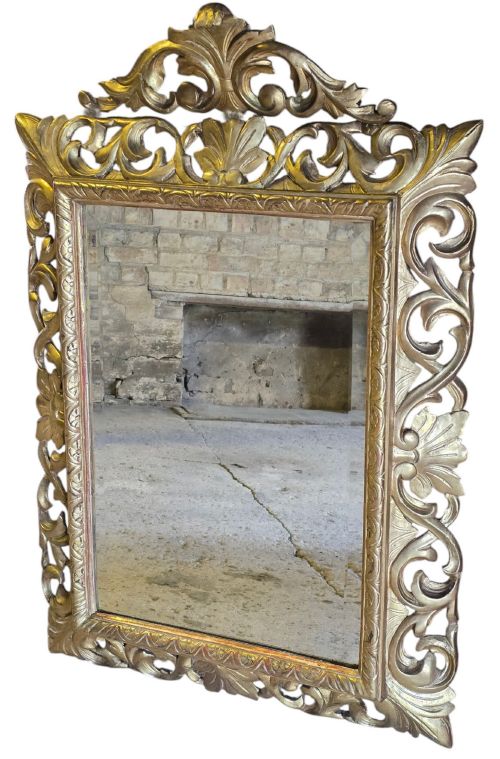
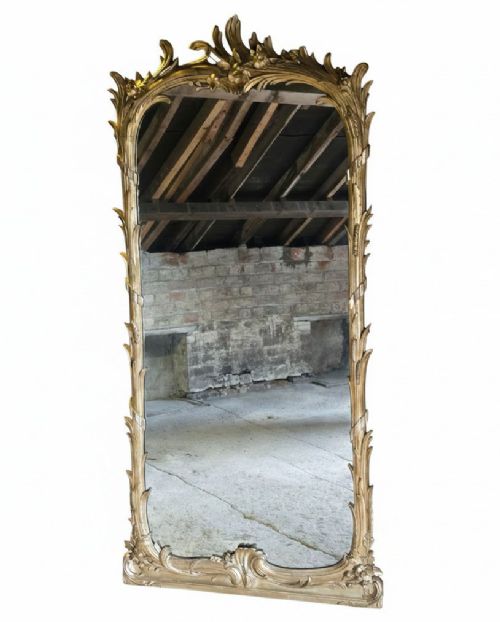
A gold carved overmantel mirror is a substantial rectangular or arched looking glass designed to sit above a fireplace mantel. These pieces span the eighteenth, nineteenth, and early twentieth centuries, drawing on French and English aesthetic traditions. The examples found here most frequently date from the nineteenth century, encompassing Victorian and Regency periods.
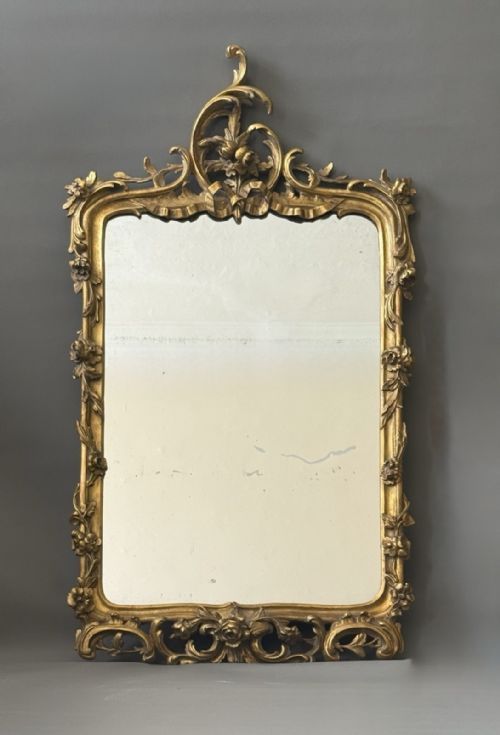
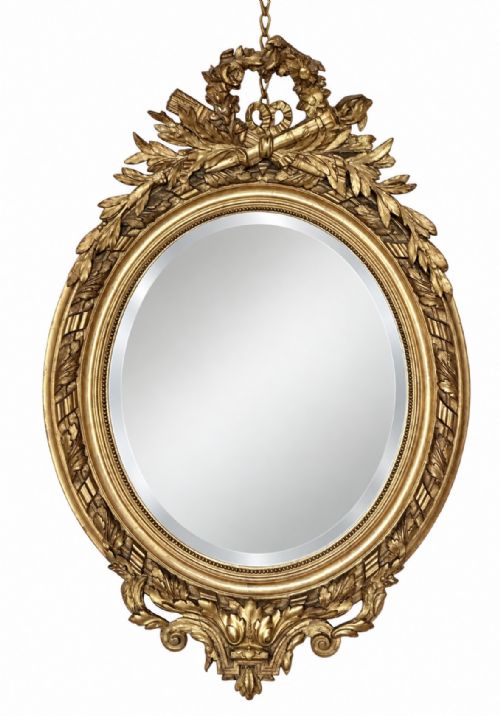
Makers and craftsmen of these periods produced architectural wall mirrors and pier mirrors alongside dedicated overmantel designs. Forms range from simple arched top frames to elaborate ribbon crests and mythological carvings. French influence appears strongly through Louis Philippe, Rococo Revival, and Napoleon III styles.
Scale remains a defining characteristic, with many pieces stretching well over a metre in height to dominate the room. Collectors encounter both English carved wood and gesso frameworks and continental European giltwood interpretations. The combination of heavy timber frames and reflective glass creates both a functional mirror and a primary decorative focus.
Materials and construction methods
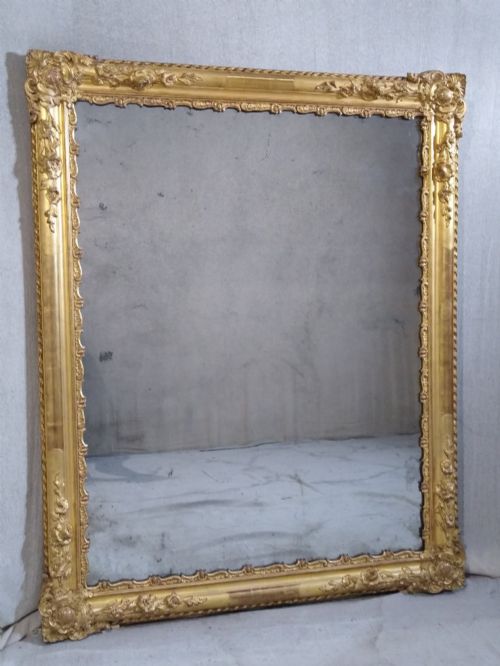
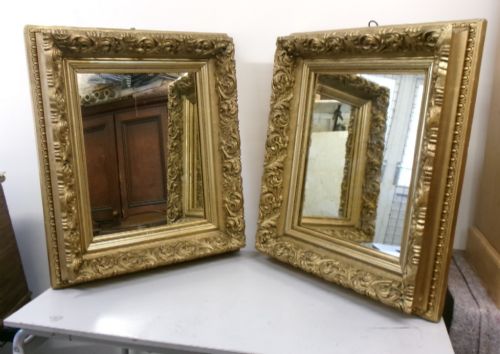
Carved wood and gesso form the primary structural foundation for these large frames, providing a stable base for intricate ornamentation. Artisans applied thin sheets of gold leaf or gilt paint over gesso layers to achieve a brilliant metallic finish. Composition ornament was frequently moulded and applied to timber bases to create repeating floral, scroll, and acanthus leaf details.
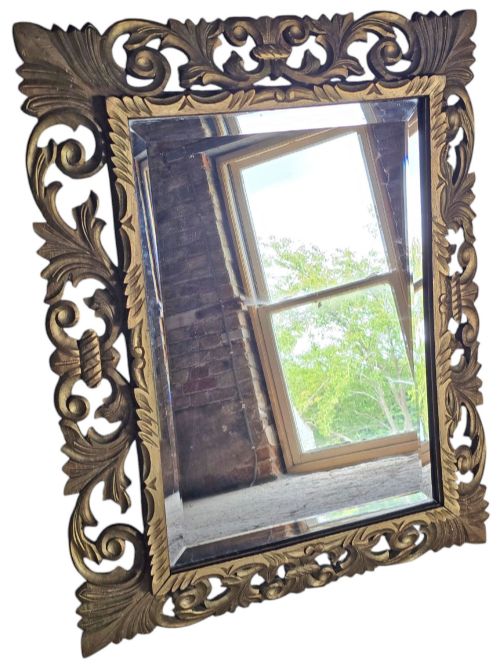
Mirror glass plates varied in age and manufacture, with older examples featuring antique plate, foxed mercury glass, or bevelled edges. Heavy wooden backboards and pegged joints typically secure the frame and glass together to support the immense weight. Rope twist borders, ribbed mouldings, and pierced wooden crests demonstrate the manual dexterity required in period workshops.
Listings feature eighteenth-century, nineteenth-century, and twentieth-century periods alongside materials like giltwood, gesso, and mercury glass.
Evaluating craftsmanship and condition
The depth and crispness of the hand-carved wood ornamentation separate ordinary joinery from superior examples. Sharp definition in acanthus leaves, floral garlands, and mythological motifs indicates skilled carving rather than repetitive moulding. Original gilding that retains its warm, unpolished patina holds greater appeal than heavy modern regilding.
The integrity of the frame joints and the originality of the mirror plate heavily influence the standing of a piece. Mirrors retaining their original antique or mercury glass plates offer historical continuity. Heavy structural weight handled through robust pegged construction ensures the large frame hangs securely without warping.
The Gold Carved Overmantel Mirror Glossary
- Giltwood
- Wood that has been coated with gold leaf or gold paint. This finish gives the frame its characteristic metallic sheen.
- Gesso
- A plaster-like mixture applied to wood frames to create a smooth surface for carving or gilding. Artisans model intricate relief details directly into this material.
- Overmantel
- A large mirror or painting designed specifically to hang on the wall directly above a fireplace mantel. These pieces anchor the visual weight of the hearth.
- Pier glass
- A tall mirror designed to hang on the wall space between two windows. They share similar decorative framing techniques with overmantel mirrors.
- Mercury glass
- Older mirror glass produced using a tin and mercury amalgam behind the glass plate. It develops a characteristic mottled or foxed appearance over time.
- Rococo Revival
- A nineteenth-century design style mimicking the asymmetrical curves, scrolls, and natural motifs of the eighteenth-century French Rococo period.
Gold Carved Overmantel Mirror: Frequently Asked Questions
How do I secure a heavy overmantel mirror safely?
These large framed mirrors require sturdy wall anchors fixed directly into structural studs or solid masonry to bear the heavy load safely. Professional hanging hardware distributes the immense weight evenly across the frame.
Matching the hanging method to the construction of the wall ensures the mirror remains secure above a mantelpiece without shifting over time.
Can I place an overmantel mirror directly on a mantel?
Many nineteenth-century overmantel mirrors were built to rest their weight directly on the timber or stone shelf of the fireplace. Secure wall fixings are still essential to prevent the tall frame from tipping forward.
Checking the base of the frame ensures it sits level and stable against the breastwork of the chimney.
How do I clean antique gilt frames and glass?
Giltwood and gesso surfaces require gentle dusting with a soft, dry brush to protect the delicate gold leaf layer. Moisture and chemical cleaners can strip or discolour antique metallic finishes.
Glass cleaner applied sparingly to a cloth rather than directly onto the glass prevents liquid from seeping behind the antique plate and damaging the backing.
How do I tell Victorian mirrors apart from Regency pieces?
Regency mirrors often display classical architectural influences, such as rope twists, columns, and gilt ball details. Victorian examples tend towards heavier, more exuberant floral carvings, acanthus leaves, and Rococo revival curves.
Examining the underlying construction materials, backboards, and fastener types helps clarify the manufacturing period.