
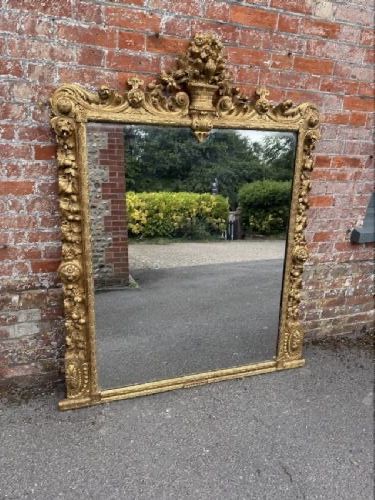
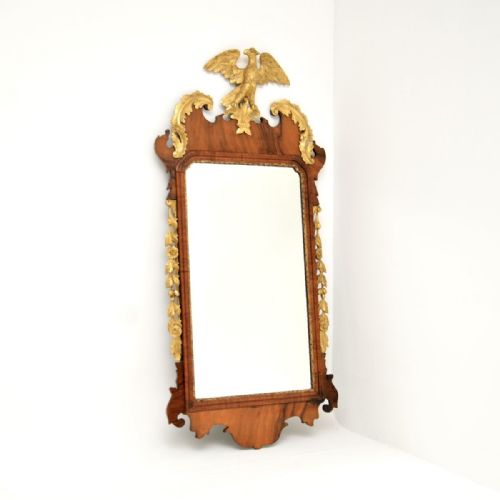
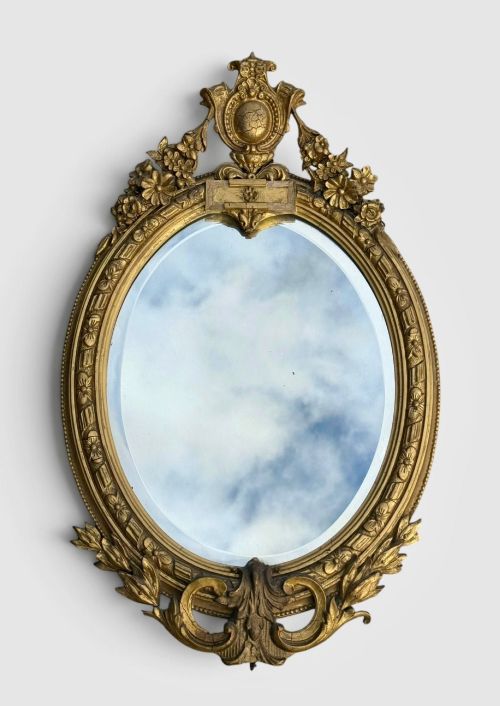
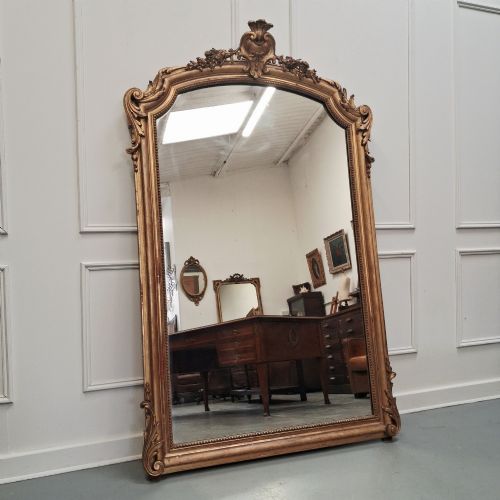
Gilded Crest Wall Mirror
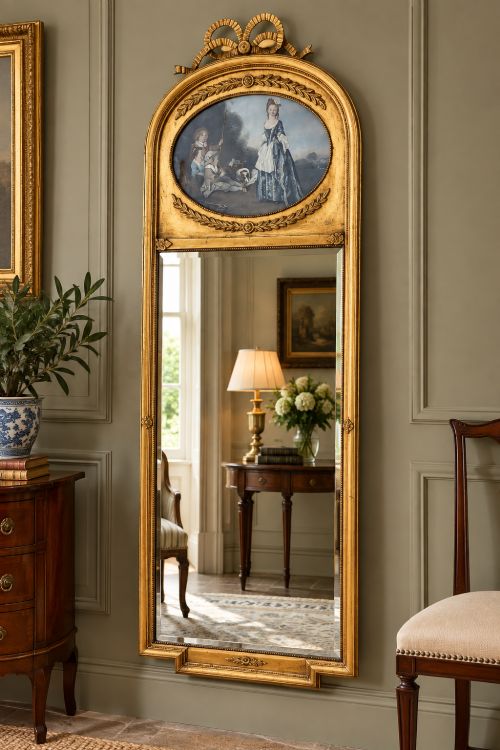
These gilded crest wall mirrors bring period presence and reflected light to a room, combining carved ornamentation with gold leaf.
Gilded Crest Wall Mirror
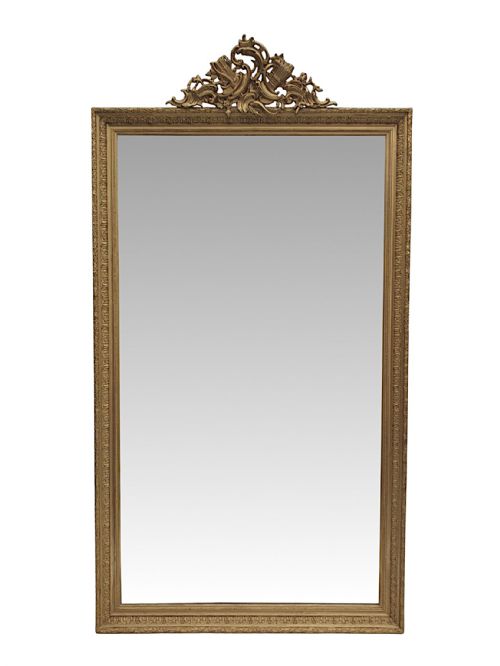
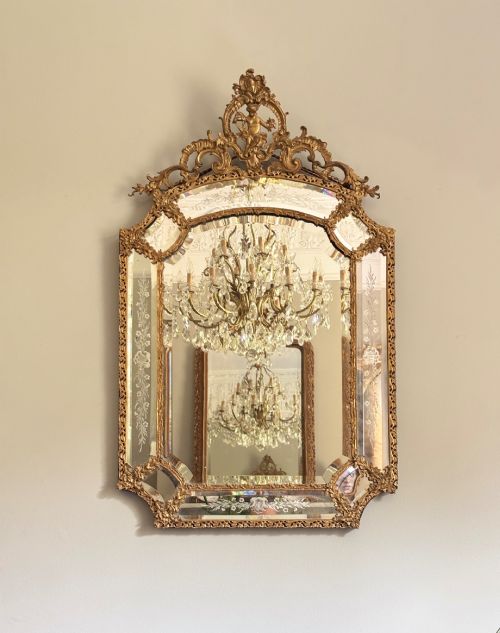
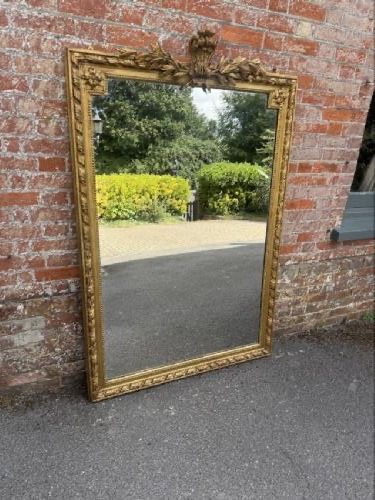
A gilded crest wall mirror brings decorative architecture to a room, functioning as both a functional looking glass and a carved wall sculpture. The pieces on this page span the 18th century, 19th century, Regency, and Victorian periods, originating from English and French workshops.
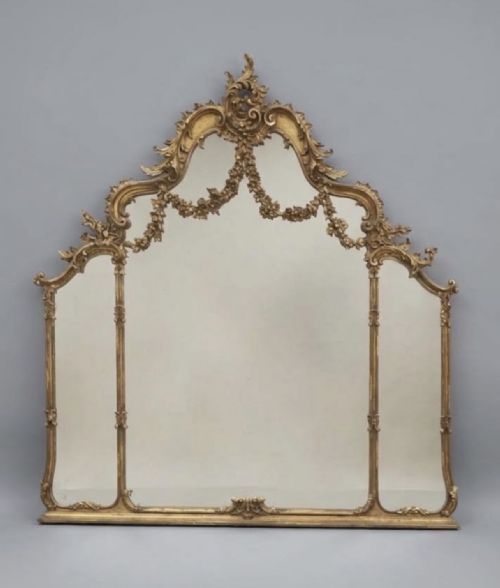
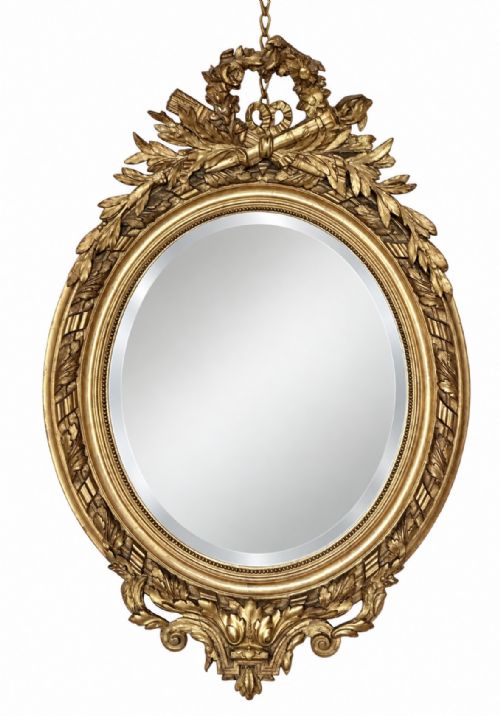
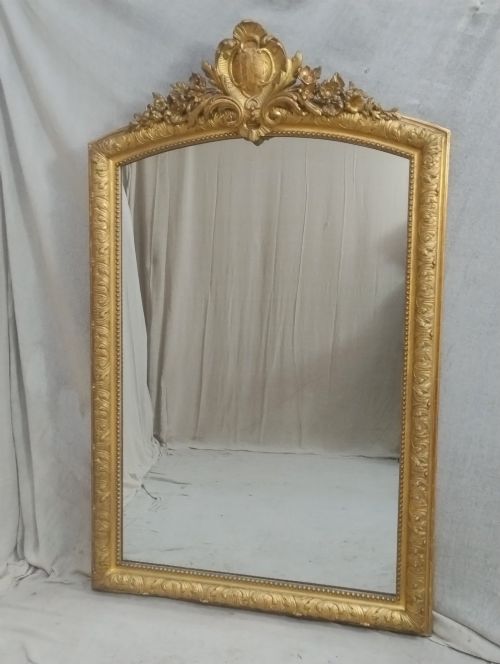
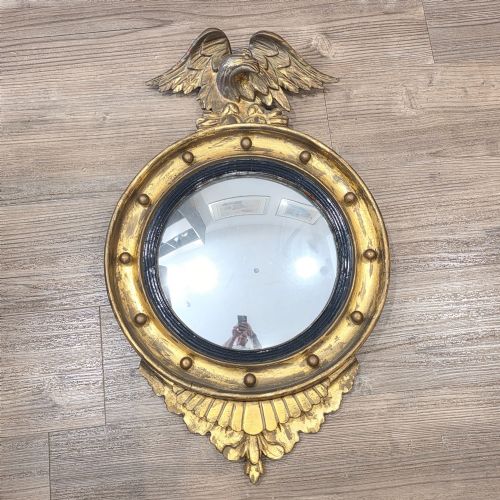
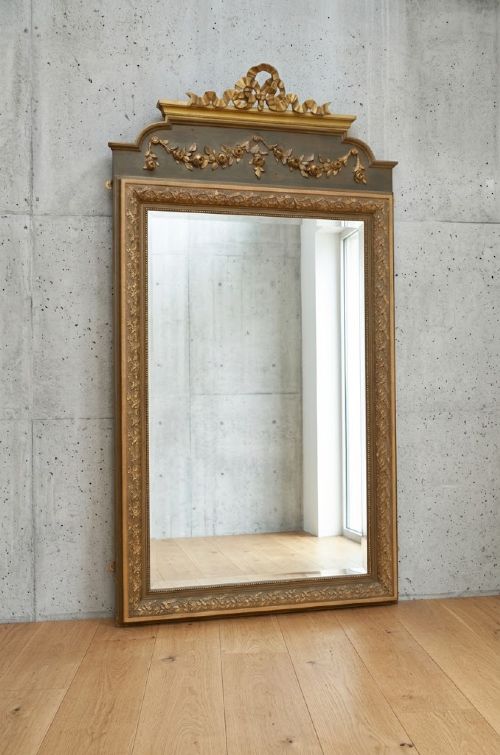
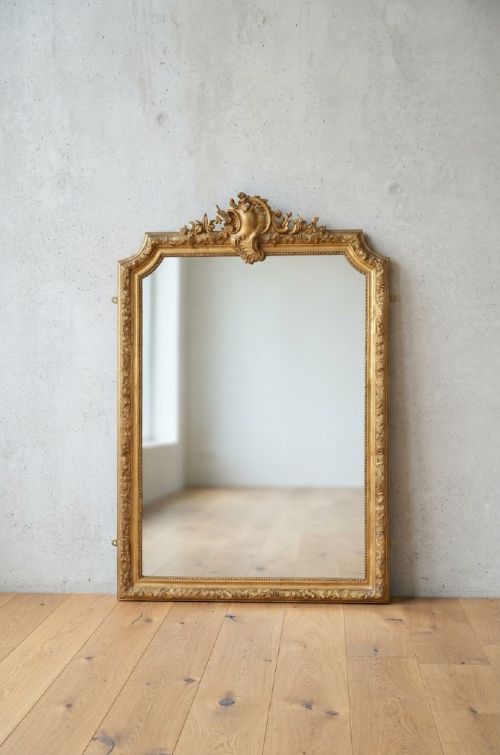
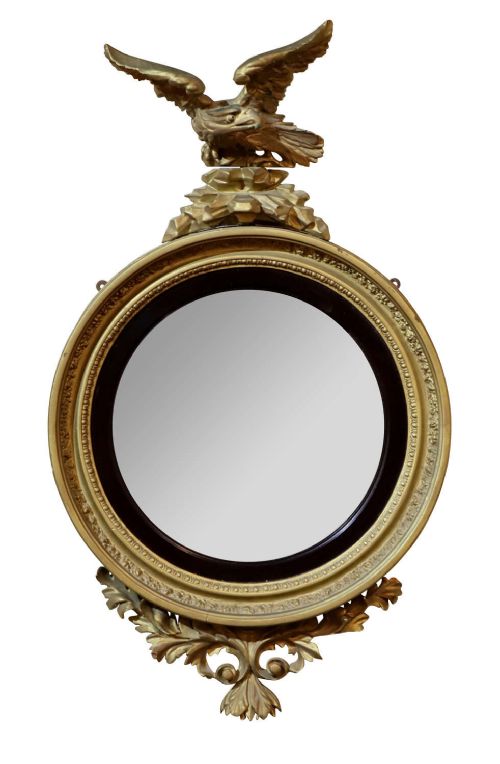
The form ranges from circular convex glasses surmounted by eagles to grand overmantel mirrors and tall pier mirrors designed to stand between windows. Many feature prominent crests, including spread eagles, ribbons, and rococo scrollwork.
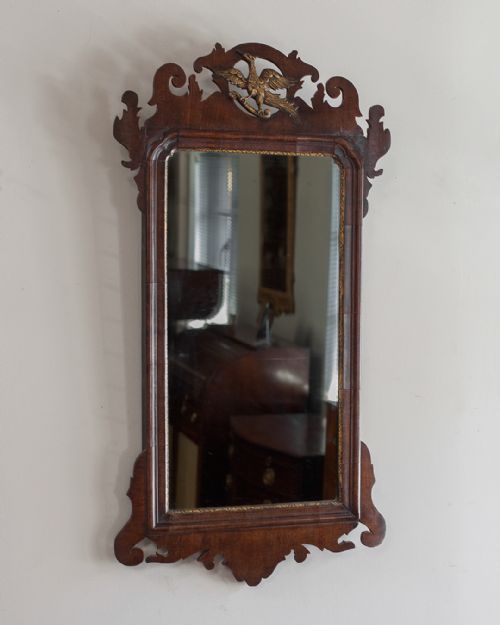
French examples lean towards Louis XV and Louis XVI styles with ornate giltwood and gesso frames, while English pieces often show Georgian mahogany fretwork or Regency convex designs.
How they were made
Makers shaped the timber frames from wood such as mahogany or softwoods, applying layers of gesso to build up intricate surface details for carving. Craftsmen then laid gold leaf or silver-gilt over the gesso ground, burnishing the metallic surface to catch the light.
Mirror plates in older examples often consist of mercury glass with characteristic foxing and silvering loss, while later 19th-century pieces utilise original bevelled glass.
Frames incorporate structural joinery suited to their weight, supporting heavy crests like spread birds or carved pelmets above the main glass plate.
Several mirrors include perched eagles and ho-ho birds surveying the room from atop their carved crests.
What varies in quality
The depth and crispness of the hand-carving in the wood and gesso separate standard production from master craftsmanship, particularly around delicate crest elements like birds, ribbons, and foliage. Superior pieces retain their original gilding without excessive overpainting, showing natural burnishing and wear that align with their age.
The integrity of the mirror plate itself influences the character, where original foxed glass or heavy bevels add authenticity compared to modern replacements. Heavier architectural overmantels rely on robust underlying wooden construction to support the considerable weight of the frame and crest without sagging.
Gillows Of Lancaster
The Gilded Crest Wall Mirror Glossary
- Giltwood
- Wood that has been coated with gold leaf or powder over a prepared gesso ground. This technique creates a luminous metallic finish characteristic of high-status period frames.
- Gesso
- A plaster mixture applied to wood frames to provide a smooth surface for carving and gilding. It allows craftsmen to model sharp decorative reliefs.
- Convex mirror
- A circular looking glass with a curved surface that reflects a wide-angle, distorted view of the interior. These pieces frequently feature eagle surmounts.
- Overmantel mirror
- A wide mirror specifically designed to hang above a fireplace mantelpiece. They often mirror the horizontal proportions of the hearth below.
- Foxing
- Age-related spots and discoloration appearing within the mirror glass plate. This chemical breakdown of the silvering creates a mottled, atmospheric reflection.
Gilded Crest Wall Mirror: Frequently Asked Questions
How do I hang a heavy overmantel mirror safely?
These large framed pieces require secure fixing directly into wall studs or masonry using heavy-duty brackets. The weight must be distributed evenly across the structure rather than relying solely on the picture wire.
Professional installation is recommended due to the substantial combined weight of the wood, gesso, and glass plate.
What is the difference between an overmantel and a pier mirror?
An overmantel mirror is built wider to sit horizontally above a fireplace, whereas a pier mirror is tall and narrow. Pier mirrors were traditionally placed on the narrow wall space between two windows.
Both forms utilise dramatic crests to draw the eye upward and maximise reflected light in a reception room.
Why do some mirror plates look cloudy?
Cloudiness and dark spots are usually foxing, caused by the gradual oxidation of the reflective backing over centuries. This chemical ageing process is welcomed by collectors as proof of genuine antique age.
Replacing the glass with modern material removes this historical character and diminishes the authenticity of the piece.