
Gold Carved Hall Table
A gold carved hall table brings monumental presence and reflective light to an entrance hall through centuries of European craftsmanship.
Gold Carved Hall Table
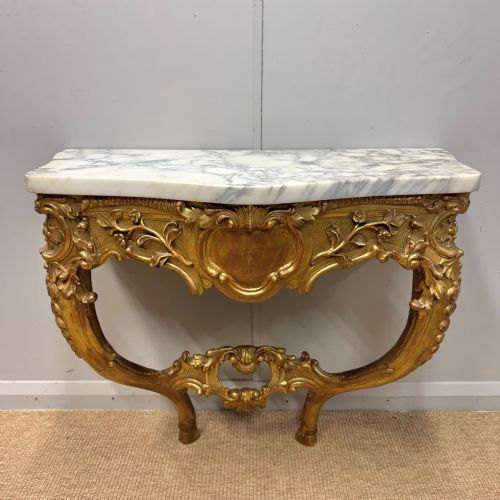
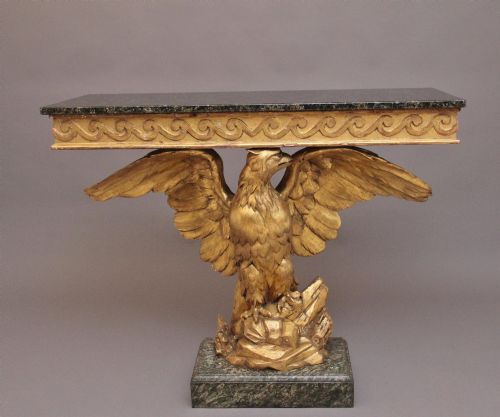
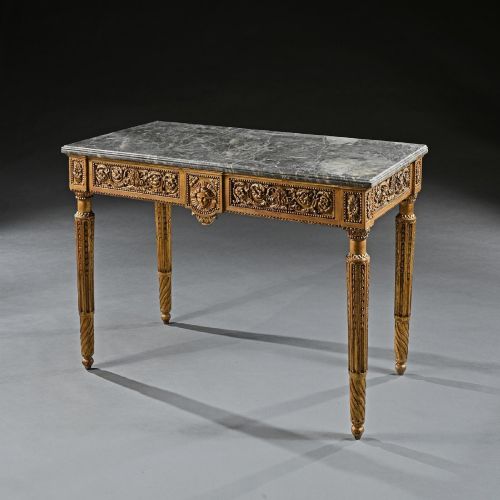
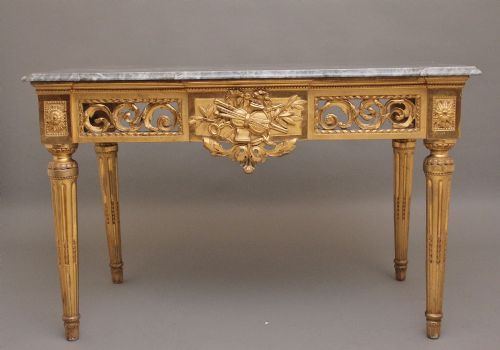
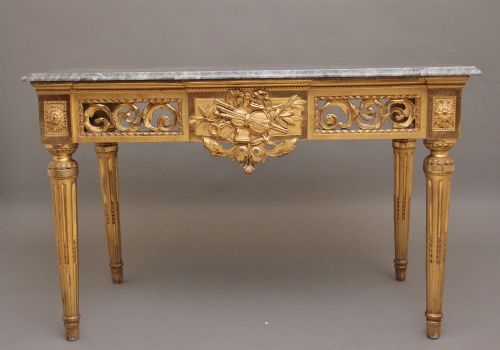
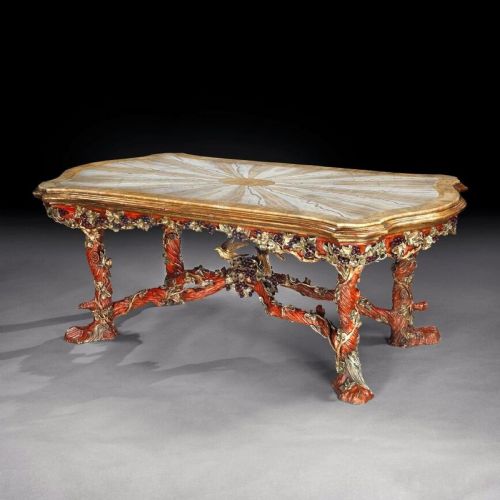
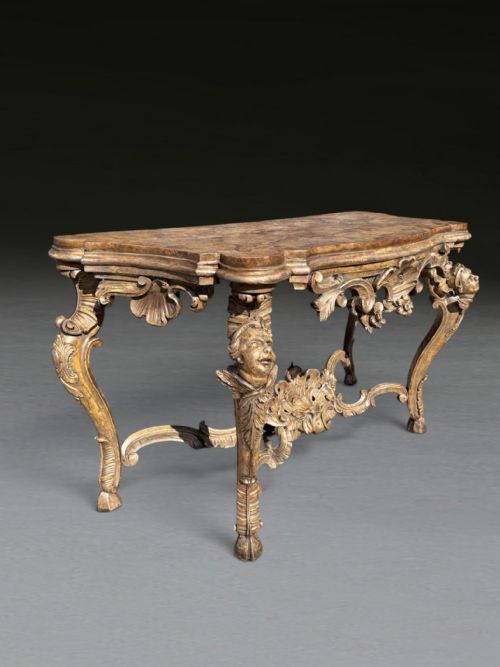
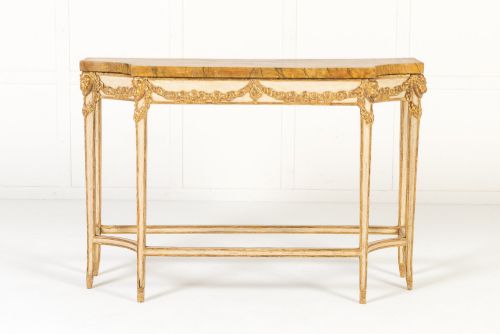
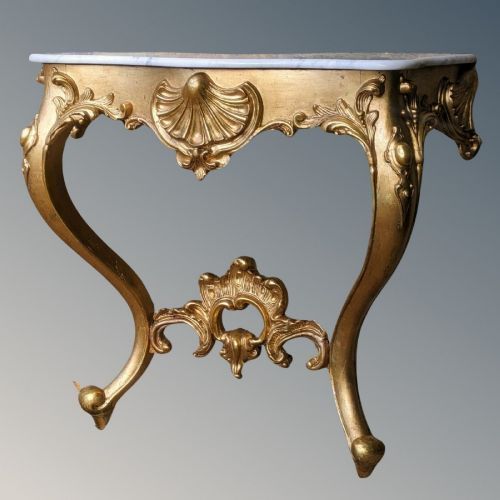
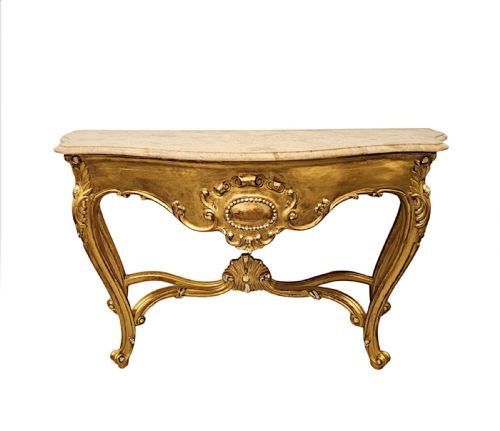
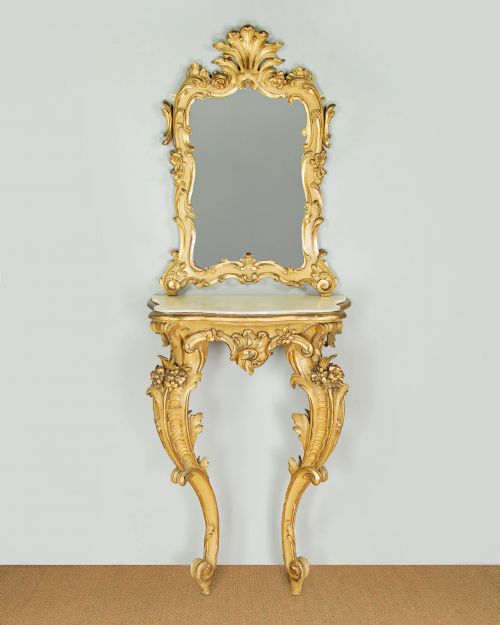
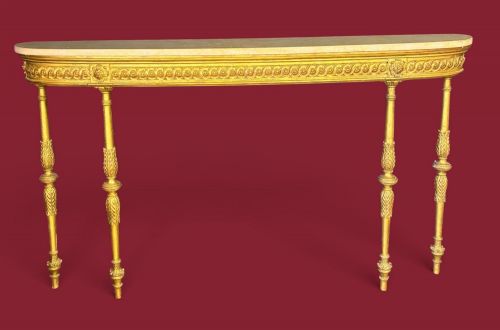
A gold carved hall table serves as a striking focal point in an entrance, typically taking the form of a console table designed to sit flat against a wall or function as a freestanding centre table. These pieces often incorporate matching mirrors or stone tops, drawing on classical and continental design traditions.
The versions most commonly met on this page span the eighteenth, nineteenth, and early twentieth centuries. They frequently arrive from Italian and French workshops, displaying elaborate carvings derived from the Baroque, Rococo, and Neoclassical styles.
How they were made
Carvers shaped timber such as wood or mahogany before applying gesso as a smooth preparation layer for gilding. Artisans then applied gold leaf or paint to achieve a brilliant reflective surface.
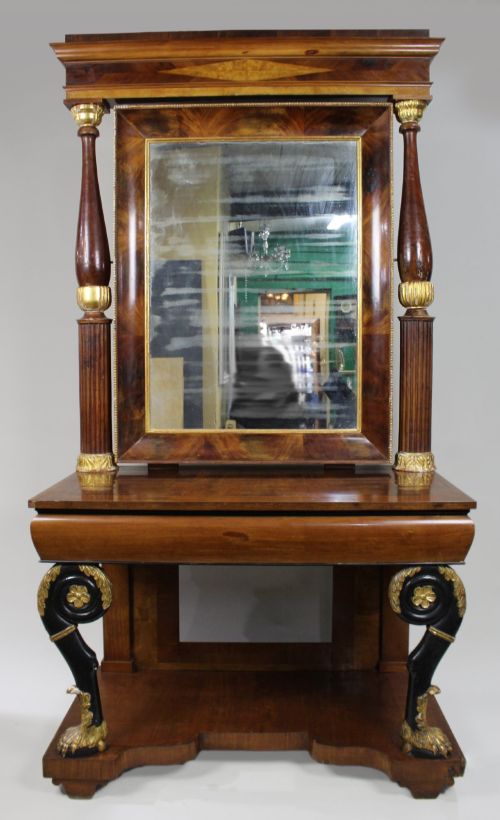
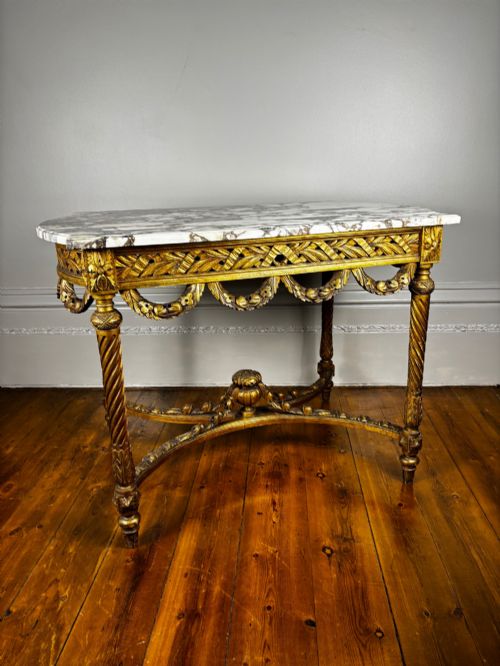
Heavy slabs of marble, onyx, or breccia stone were fitted to the upper framework to provide a durable and luxurious surface. Workshops frequently paired these carved wooden bases with glass mirrors to complete large console sets.
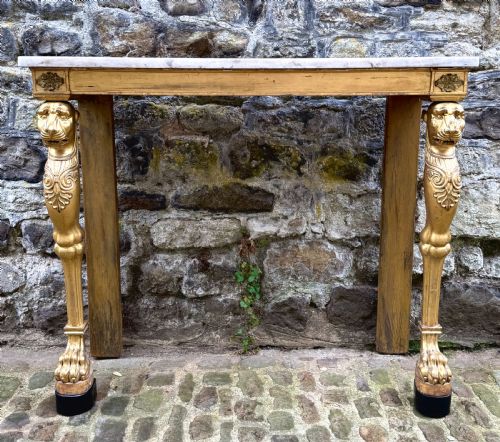
Several tables feature watchful carved lion paws waiting patiently beneath heavy slabs of Italian marble.
What varies in quality
The depth and definition of the carving separate standard examples from superior pieces, as master carvers achieved sharper undercut details and more naturalistic floral or figurative motifs. The crispness of the gesso layer beneath the gold leaf dictates how sharply the ornamentation catches the light.
The choice of upper surface also influences the distinction between pieces, ranging from simple painted timber to thick slabs of figured marble or onyx. Furthermore, the integration of matching wall mirrors indicates a higher level of original commission.
Amleto Bertoni·Holland + Son
The Gold Carved Hall Table Glossary
- Console table
- A table designed to be fixed against a wall, frequently supported by decorative brackets or front legs rather than standing entirely on its own four corners.
- Giltwood
- Timber that has been coated with gold leaf or gold paint, creating a lustrous metallic finish across carved decorative surfaces.
- Gesso
- A plaster-like mixture applied to wood surfaces to provide a smooth base for subsequent gilding and painting.
- Breccia marble
- A type of marble composed of broken fragments cemented together in a fine-grained matrix, creating a variegated patterned surface.
- Pier mirror
- A large tall mirror designed to hang on the wall space between windows, often matched with a console table placed directly beneath it.
Gold Carved Hall Table: Frequently Asked Questions
Where should a console table sit?
A console table is traditionally positioned in an entrance hall or against a prominent wall in a reception room. Because many examples are designed to rest flat against a wall rather than stand freely, they suit narrow transitional spaces.
Pairing the table with a matching wall mirror helps to balance the visual weight of the carved base and amplify natural light within the hallway.
How do I identify a Rococo style table?
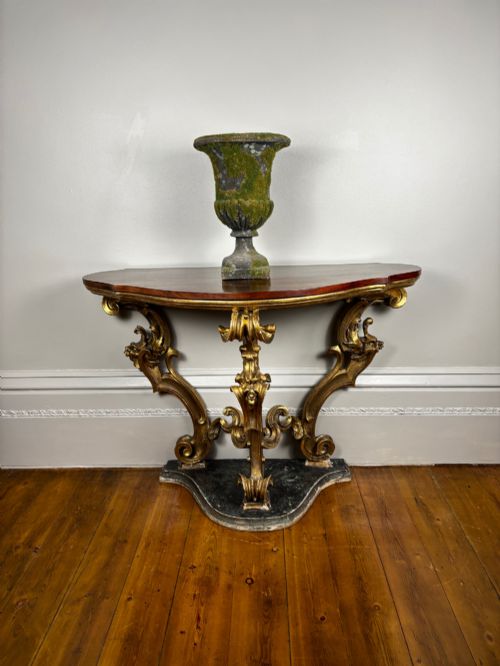
Rococo style tables are characterised by asymmetrical scrolls, C-scrolls, and naturalistic shell or floral motifs. The carving on these pieces avoids rigid symmetry in favour of flowing, serpentine lines.
Originating in eighteenth-century France and later revived in the nineteenth and early twentieth centuries, these tables emphasise theatrical movement and decorative exuberance.
What is giltwood?
Giltwood refers to timber, such as pine or oak, that has been decorated with a very thin application of gold leaf over a prepared gesso ground. This technique gives the appearance of solid gold while utilising a supportive wooden structure beneath.
Over time, the gold leaf may show subtle wear that reveals the warm red or white gesso layers underneath, adding depth to the surface.
Are these tables freestanding?
While centre tables are finished on all sides and meant to stand in the middle of a room, traditional console tables are often designed to anchor against a wall. Many antique console tables rely on wall fixings or front legs for stability.
It is important to check whether a specific piece is a true centre table or a wall-mounted console before deciding on its placement in a room.