

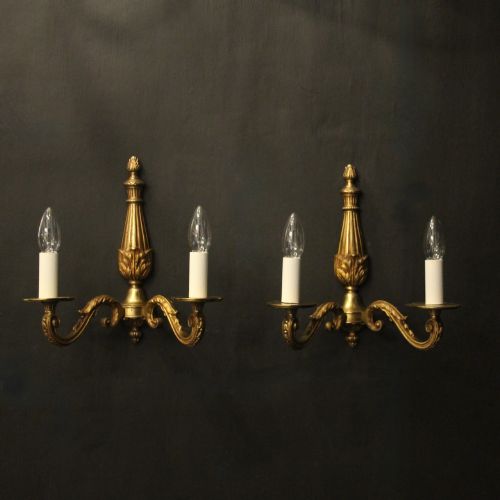
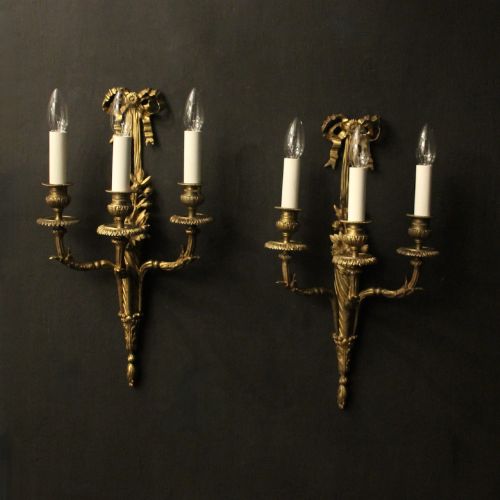
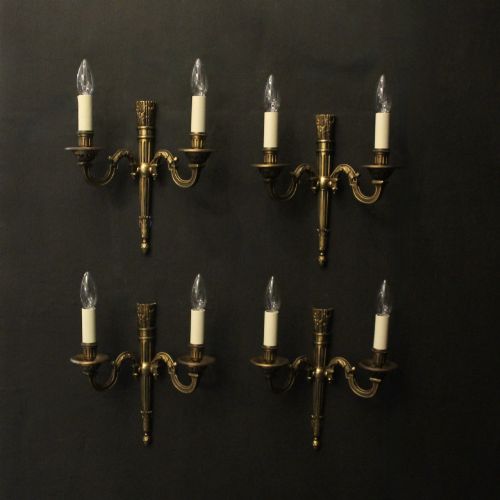
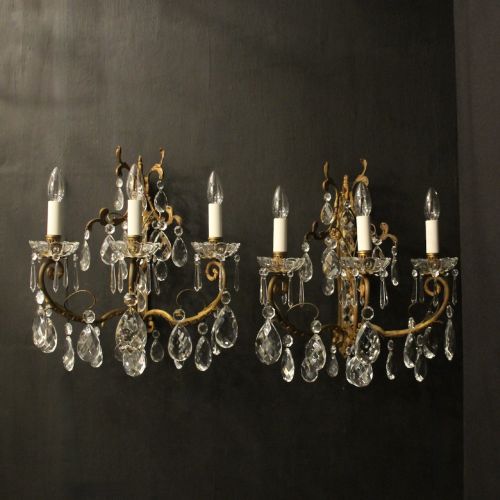
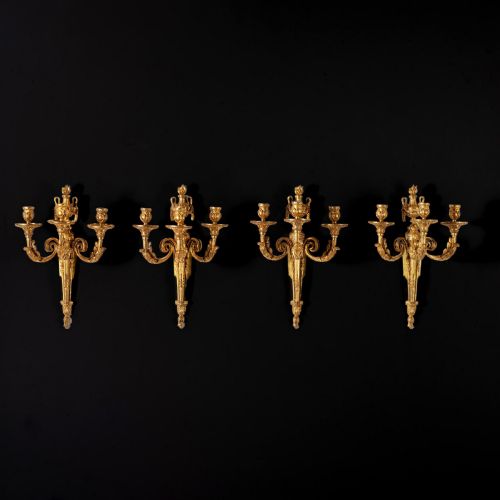
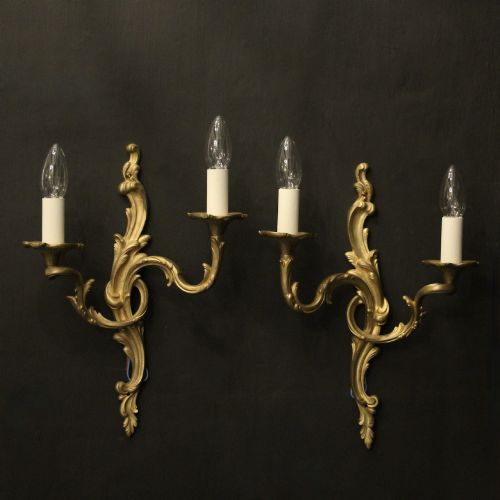
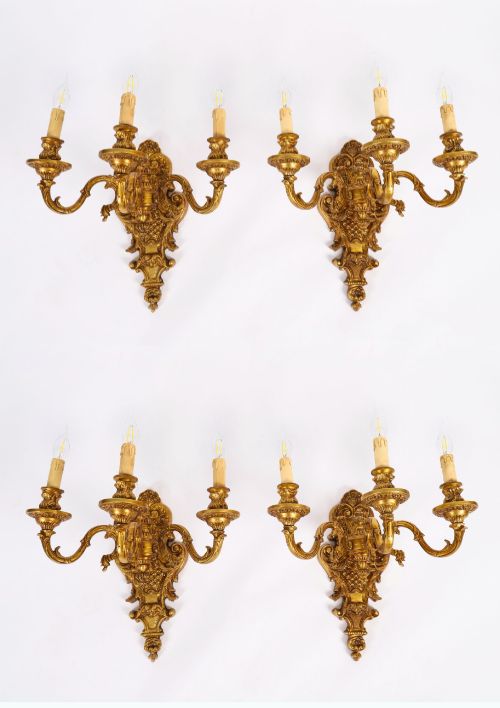
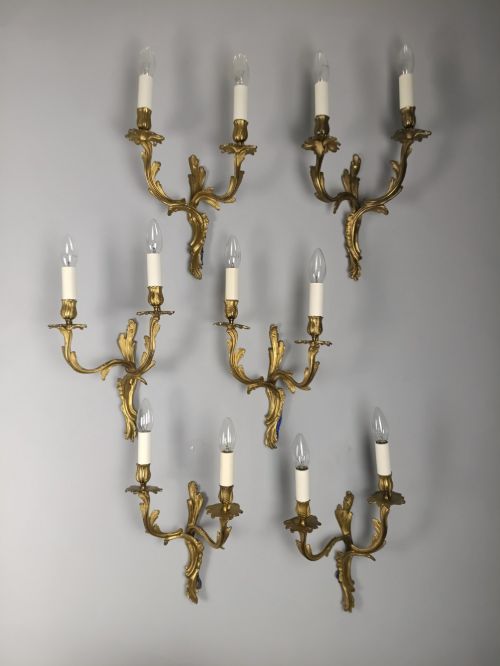
Gold Bronze Wall Appliques
Gold bronze wall appliques bring warmth and period illumination to interiors through cast metal ornamentation.
Gold Bronze Wall Appliques
When buyers search for gold bronze wall appliques, they encounter decorative lighting fixtures designed to mount directly onto interior walls, often referred to as wall sconces or candelabras. The listings span periods from the eighteenth century through to the early twentieth century, capturing centuries of decorative metalwork design. French origins dominate the selection, bringing distinct stylistic periods into homes.
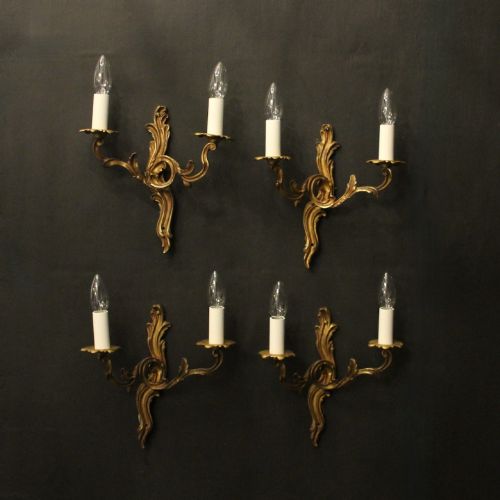
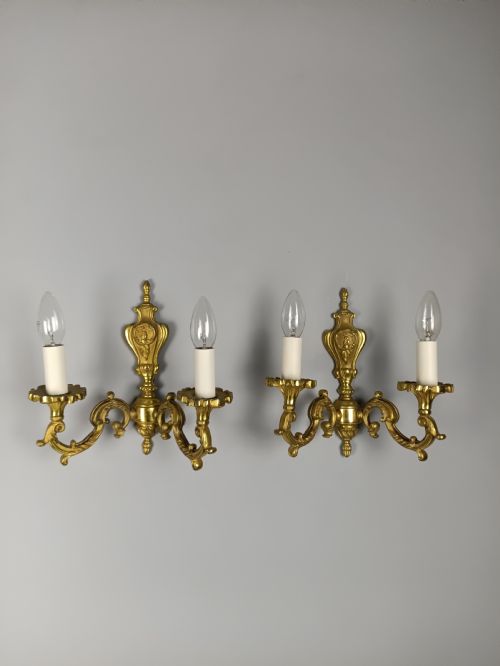
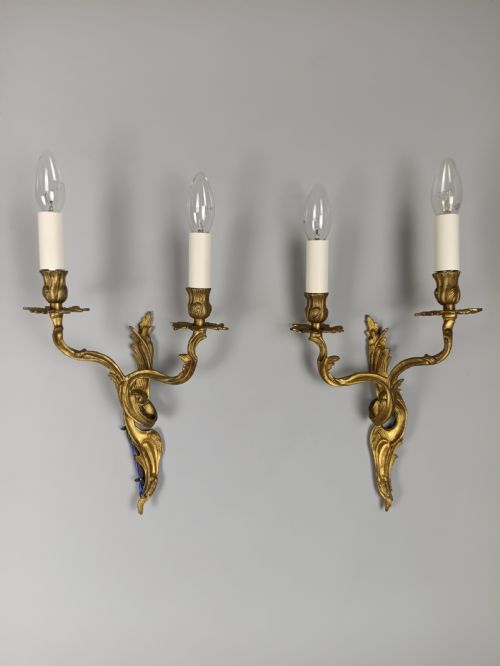
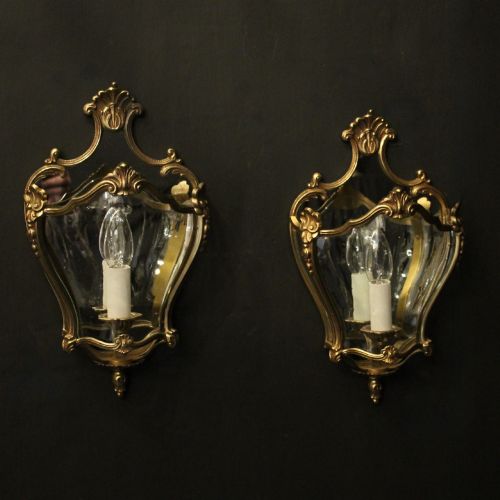
The most common forms on this page include twin-arm and triple-arm wall lights alongside single-arm sconces and sets of four or more matching fixtures. These pieces typically derive from French workshops adhering to established decorative traditions such as Rococo, Empire, and Louis styles. Buyers regularly select them to flank mirrors, fireplaces, or architectural doorways.
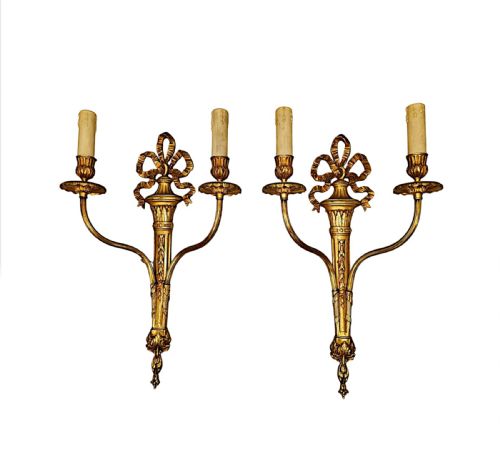
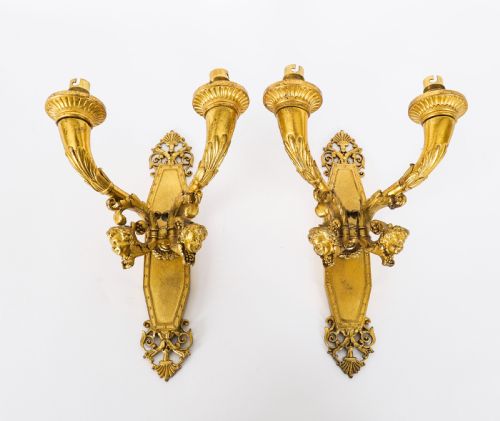
Construction relies heavily on cast bronze, brass, and gilt metals formed into elaborate scrollwork, ribbons, and torch motifs. Many examples incorporate crystal drops or glass elements to enhance the diffusion of candlelight or early electric illumination. Pairs and larger sets provide symmetrical balance for formal rooms and hallways.
How they were made
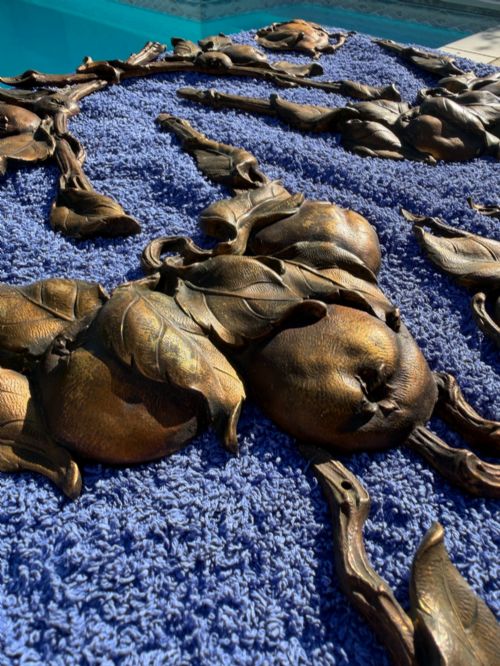
Maker workshops utilised traditional sand-casting techniques to form the heavy bronze and brass bodies of these wall lights, allowing for deep relief and intricate ornamentation. Artisans then chased the cooled metal surfaces by hand, sharpening acanthus leaves, floral swags, and scrollwork before assembly.
Gilding methods included mercury gilding for earlier ormolu pieces, which bonded a gold and mercury amalgam to the bronze base through heat, alongside later electroplating techniques. This surface treatment provided a durable golden lustre that required minimal polishing while resisting tarnish across decades of use.
Several pairs of wall lights come equipped with ribbon motifs tied tightly into gilded bows that have held firm against passing interior design trends.
What varies in quality
The distinction between ordinary production and superior craftsmanship lies principally in the crispness of the hand-chased surface detail following the initial casting process. Top-tier pieces exhibit sharply defined acanthus foliage and deep relief work that catches light dynamically, whereas lesser examples present softer, shallower contours from worn moulds.
Substantial gauge metalwork and heavy bronze components separate high-quality appliques from lighter brass alternatives that lack structural presence. Furthermore, the articulation of multi-branch designs and the integration of original crystal drops indicate a higher standard of original commission.
Poix Blin
The Gold Bronze Wall Appliques Glossary
- Ormolu
- Gilded bronze, typically produced by applying a gold-mercury amalgam to cast bronze and firing it to drive off the mercury. This technique created a rich, durable golden surface characteristic of fine French decorative arts.
- Applique
- A decorative wall-mounted light fitting or sconce designed to hold candles or electric lamps. The term is frequently used interchangeably with wall light in continental European pieces.
- Rococo Revival
- A nineteenth-century design movement that imitated the asymmetrical scrolls, shell motifs, and naturalistic curves of the eighteenth-century French Rococo style. It dominated ornate interior metalwork during the eighteen-hundreds.
- Candelabra
- A branched candlestick or multi-armed light fitting designed to hold several candles or bulbs simultaneously. In wall-mounted formats, these provide substantial illumination across larger reception rooms.
Gold Bronze Wall Appliques: Frequently Asked Questions
How were these wall lights originally used?
These fixtures served primarily to illuminate domestic interiors by holding candles mounted against reflective wall surfaces or mirrors. Their decorative metal arms directed light across formal reception rooms and corridors before the arrival of widespread electricity.
Over subsequent decades, many examples underwent rewiring to accommodate electric lamp holders while retaining their original decorative metal bodies. They continue to function as both practical wall lighting and sculptural interior ornaments.
How do I install antique wall sconces?
Installation requires securing the backplate directly to wall studs or appropriate wall anchors to support the weight of cast bronze and brass components. Because many period pieces feature historical wiring configurations, professional electrical installation ensures safety and compliance with modern standards.
Positioning typically depends on ceiling height and architectural context, such as placing them evenly on either side of a fireplace or mantelpiece. Ensuring adequate clearance from surrounding furnishings protects delicate crystal drops and protruding arms.
How can I tell the period of a wall light?
Dating relies on identifying the prevailing design vocabulary, such as the asymmetrical scrolls of Rococo Revival pieces or the strict symmetry of Empire neoclassical torches. Examining the construction methods, mounting brackets, and casting seams on the reverse side also provides clues to the era of manufacture.
Stylistic markers often align with specific revival periods during the nineteenth century or original eighteenth-century production dates. Comparing the weight of the metal and the method of gilding further helps distinguish nineteenth-century interpretations from twentieth-century reproductions.
How do I clean and maintain gilt bronze?
Maintenance requires only gentle dusting with a soft, dry brush to prevent the accumulation of dirt within intricate chased crevices. Harsh metal cleaners and abrasive cloths must be avoided, as they strip away historical gilt surfaces and ormolu finishes.
Preserving the metal involves keeping fixtures away from excessive moisture and direct heat sources that might destabilize older surface treatments. Periodic checks of the mounting hardware ensure the heavy fixtures remain securely attached to the wall.