



Gold Brass Vases
Gold brass vases bring warmth and weight to a room, ranging from ornate Victorian ewers to restrained Arts and Crafts twin-handled urns.
Gold Brass Vases
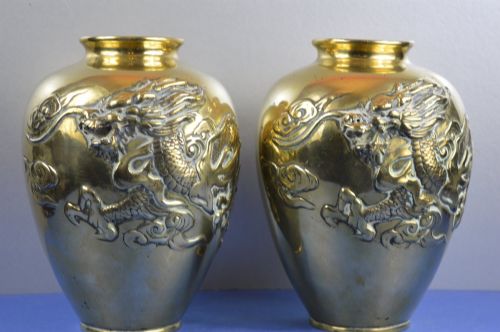
Gold brass vases encompass a diverse group of metal vessels, spanning late nineteenth-century Victorian pieces, Edwardian examples, and early twentieth-century designs. Buyers exploring gold brass vases will encounter everything from small decorative wall pockets to substantial pairs of dragon-decorated vessels.
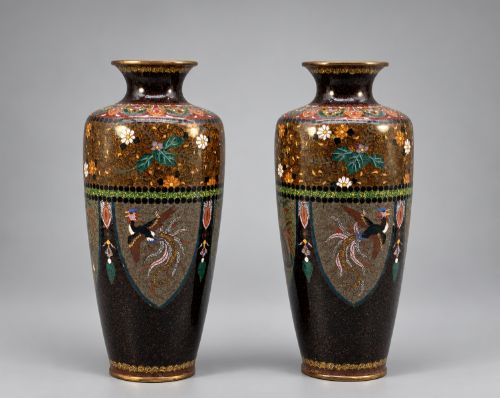
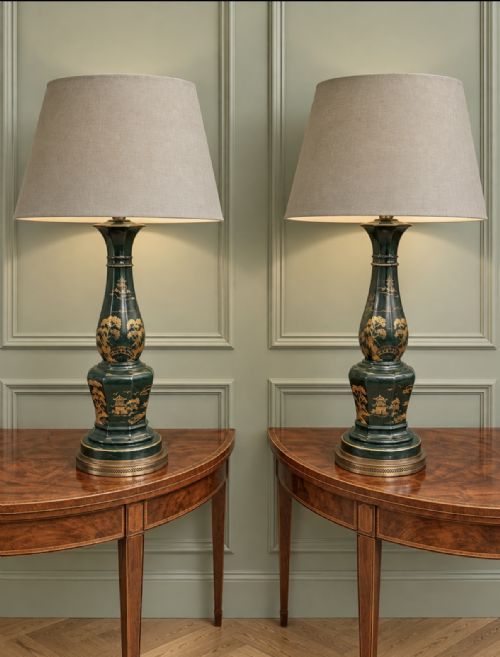
The selection frequently includes related forms such as gilt bronze table lamps, ewers, and cloisonné pieces alongside standard vase shapes. Many items reflect distinct international influences, notably Chinese export styles and Japanese Meiji period bronze work.
Materials and construction
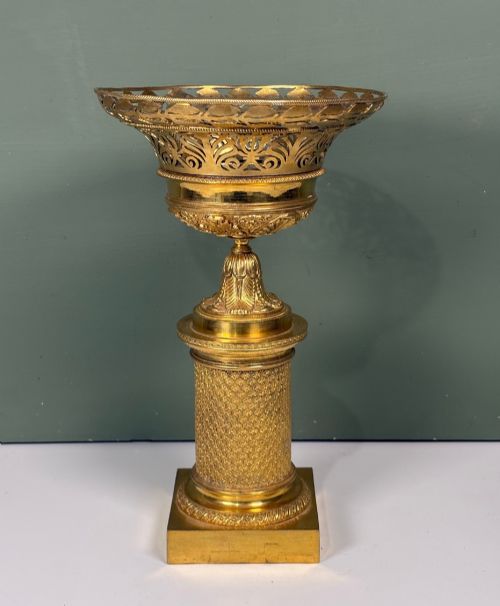
Makers utilised brass, bronze, and gilt bronze as primary metallic mediums, often finishing surfaces with rich gilding or ormolu to achieve a bright golden appearance. Pierced work, floral casting, and applied dragon motifs demonstrate the technical skill involved in shaping these heavy metal forms.
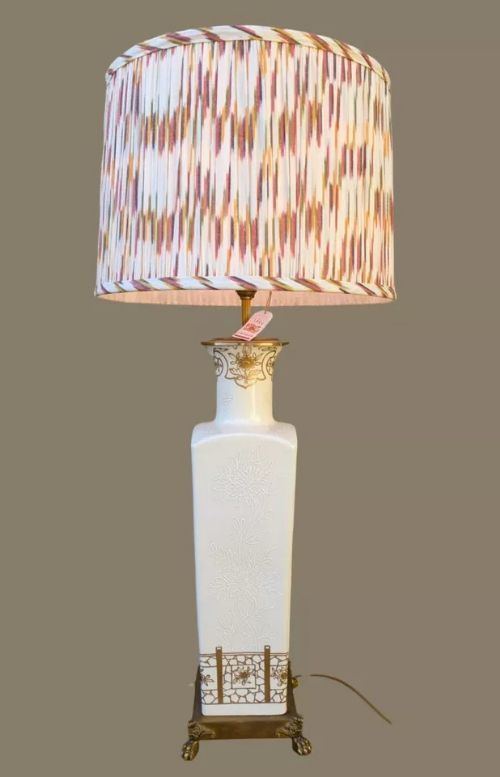
Certain pieces incorporate contrasting materials, pairing metal bodies with delicate porcelain sections, enamel detailing, or fabric elements. This combination of metals and subsidiary materials defines the construction across both European revival styles and Asian export pieces.
Gold Brass Vases Retail Price Guide 2026
Typical asking prices for gold brass vases among the pieces listed under this phrase on Sellingantiques today, from the lower quarter to the upper quarter. They describe what is for sale here now, not the wider market.
Listings feature items spanning the Victorian era through the 1930s, utilising brass, gilt bronze, porcelain, and enamel.
Evaluating quality and execution
Quality in these vessels rests upon the crispness of the casting and the depth of the chased or pierced decoration. Superior examples display sharply defined motifs, such as intricate dragon scales or clean floral relief, rather than soft or blurred edges.
The weight of the metal and the integrity of the gilding further distinguish finer items from simpler production pieces. Substantial construction and careful finishing separate standard decorative objects from truly accomplished metalwork.
Charles Korschann
The Gold Brass Vases Glossary
- Ormolu
- Finely ground high-carat gold applied to a bronze base, creating a bright golden surface finish. This technique was widely utilised in nineteenth-century decorative metalwork.
- Cloisonné
- Enamel work where coloured pastes are fired within wire compartments soldered to a metal body. It frequently appears on decorative vases from the early twentieth century.
- Ewer
- A large pitcher with a wide spout and curved handle, often produced as a decorative pair alongside traditional vases. Victorian examples frequently feature elaborate relief ornamentation.
- Wall pocket
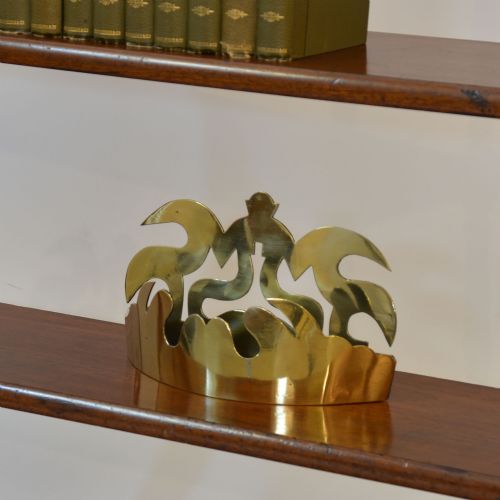
- A flat-backed vessel designed to hang directly on a wall for holding floral arrangements. These pieces often showcase ornate brass casting or crown motifs.
Gold Brass Vases: Frequently Asked Questions
How do I clean antique brass?
Antique brass requires gentle dusting with a soft, dry cloth to preserve its historic surface finish and any original gilding. Avoid harsh chemical polishes that can strip away patination and age.
Leaving the natural patina intact generally maintains the character and historical value of nineteenth-century and early twentieth-century metalwork.
Are these vases watertight?
Many older metal vessels were created purely for decorative display and may not hold water securely due to construction methods or age. Using a discreet internal glass liner protects the interior from moisture.
Checking the base and seams helps determine if a vessel is suitable for fresh floral arrangements or better kept dry.
How do I date a brass vase?
Dating relies on stylistic clues, manufacturing techniques like casting marks, and the specific decorative vocabulary of periods such as the Victorian era or Arts and Crafts movement. Comparing surface patination and weight provides further context.
Documented design traits from periods like the Meiji or Qing dynasties offer additional chronological markers.
Where should I display them?
Sturdy surfaces such as sideboards, mantelpieces, or large tables support the considerable weight of heavy bronze and brass vessels safely. Placing them away from direct moisture prevents surface corrosion.
Wall pockets require secure fixings suited to their specific weight and metal composition.