
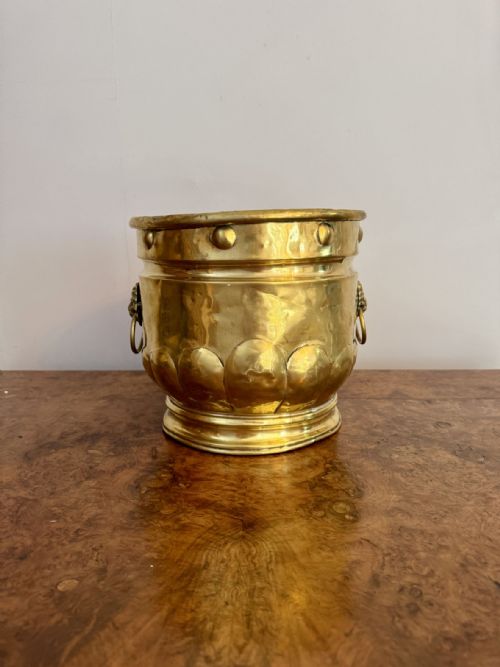
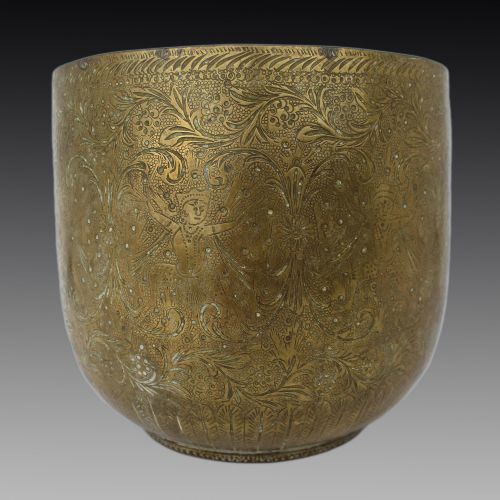
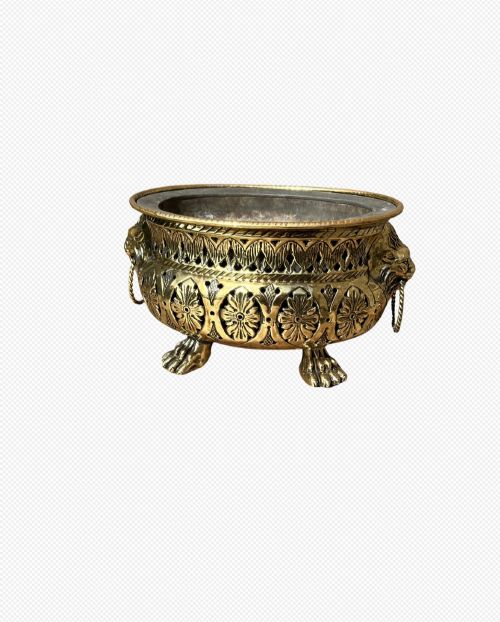
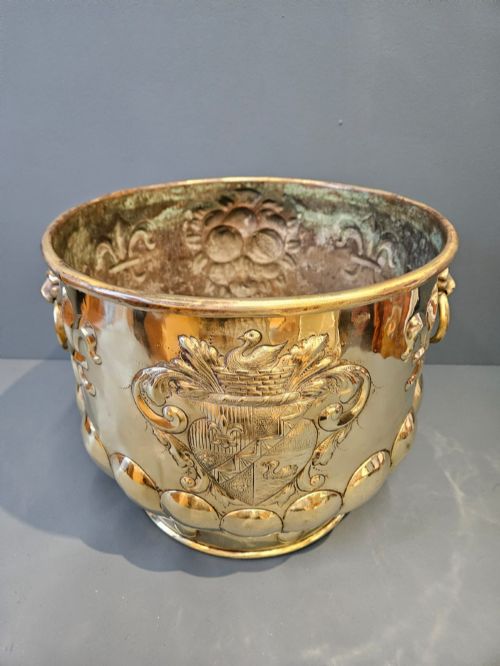


Gold Brass Plant Pot
A gold brass plant pot brings warmth and texture to a room, offering a functional vessel for greenery shaped by Victorian and Edwardian hands.
Gold Brass Plant Pot
When searching for a gold brass plant pot, buyers encounter jardinieres, cachepots, and planters spanning the late nineteenth and early twentieth centuries. These vessels served to house potted indoor plants while protecting surfaces from water and soil.
The pieces appearing on this page originate from diverse styles and regions, including Victorian and Edwardian workshops, Anglo-Indian makers, and French revival designs. Forms range from simple bowls to large planters and tall plant stands.
Buyers are most likely to meet mid-to-late nineteenth-century brass jardinieres and cachepots. These everyday ornamental items combine utility with the decorative tastes of the Victorian and Edwardian eras.
How they were made
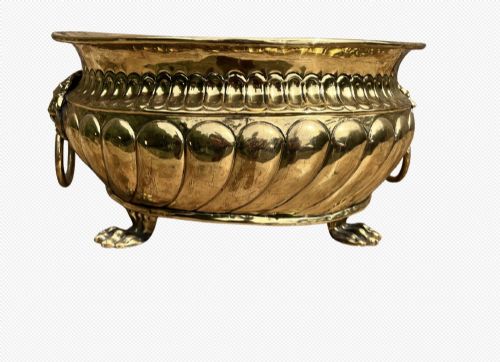
Makers shaped these vessels primarily from brass, bronze, and gilt bronze, often utilising polished brass or ormolu finishes to achieve a bright metallic lustre. Heavy metalwork required casting, spinning, or sheet manipulation by hand.
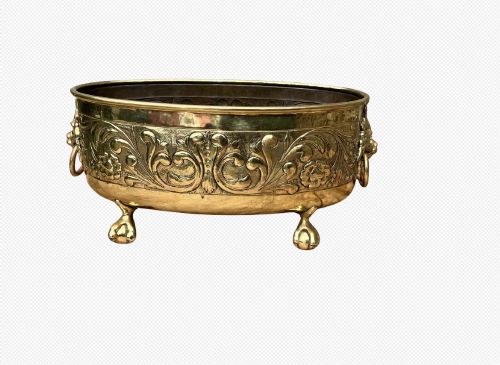
Techniques such as repoussé allowed artisans to hammer detailed patterns and animal heads into the metal from the reverse side. Piercing and applied crests added further texture and visual depth to the finished planter.
Several brass planters feature animal heads peering out from the repoussé work to watch over the ferns.
What varies in quality
The distinction between ordinary and superior examples lies in the crispness of the metalwork and the weight of the material. Heavy bronze and thick brass bodies demonstrate a more substantial physical presence.
Execution of decorative elements separates standard production from finer pieces. Hand-hammered repoussé work and cleanly pierced designs show greater artisan skill than simpler cast surfaces.
The Gold Brass Plant Pot Glossary
- Jardiniere
- An ornamental pot or stand for holding flowers or plants, typically made of metal or ceramic. These vessels form the majority of the metal plant holders in this collection.
- Cachepot
- A decorative pot used to conceal an ordinary flowerpot, preventing water damage to furniture. They share a similar purpose with jardinieres but usually lack drainage holes.
- Repoussé
- A metalworking technique where an artisan hammers a design from the reverse side to form a raised relief on the front. This method creates textured animal heads and floral motifs.
- Ormolu
- Gilded bronze used as a decorative finish on furniture and metal objects. It provides a bright golden appearance reminiscent of solid gold.
- Aesthetic Movement
- A late nineteenth-century design current emphasising visual beauty over narrative subject matter. Pieces from this movement often feature refined, understated forms.
Gold Brass Plant Pot: Frequently Asked Questions
How do I clean an antique brass planter?
Cleaning antique brass requires gentle methods to preserve the accumulated surface character built up over decades. Harsh chemical polishes can strip away appealing patination.
Use a soft cloth and mild soapy water, avoiding abrasive pads that might scratch the repoussé or cast details.
Where were these planters placed?
Victorian and Edwardian households positioned these metal pots on tabletops, windowsills, or dedicated plant stands. They brought living greenery into parlours and drawing rooms.
Larger jardinieres often stood on the floor or on low tables to accommodate substantial palms and ferns.
How do I date an antique brass pot?
Dating relies on stylistic clues, manufacturing techniques, and material choices recorded across the pieces. Victorian and Edwardian examples often feature distinct ornamentation like repoussé animal heads or pierced rims.
Comparative study of form and construction methods helps place a piece within its nineteenth or early twentieth-century context.