
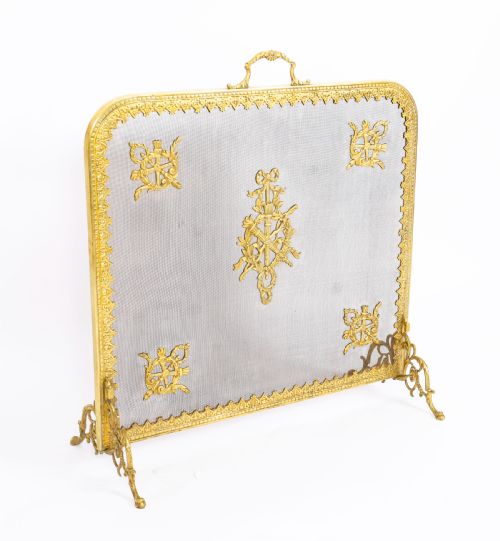
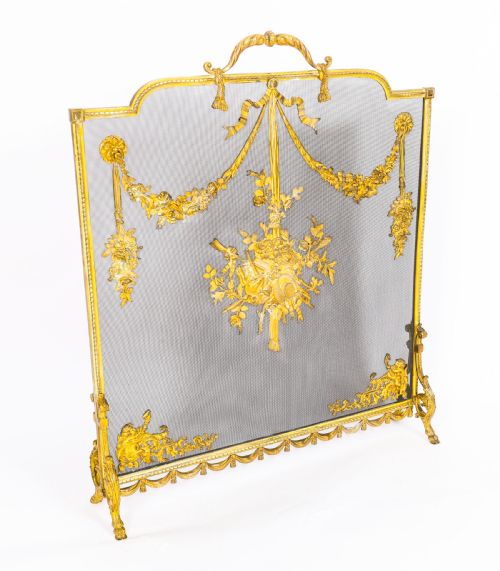

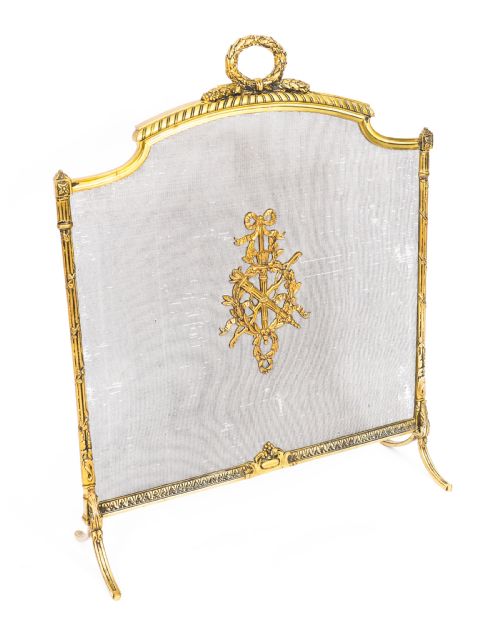
Gold Brass Hearth Screen
A gold brass hearth screen brings warmth and reflective shine to a room, acting as a decorative shield against stray embers.
Gold Brass Hearth Screen
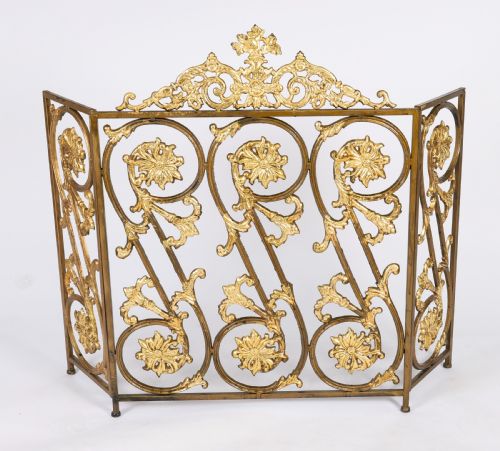
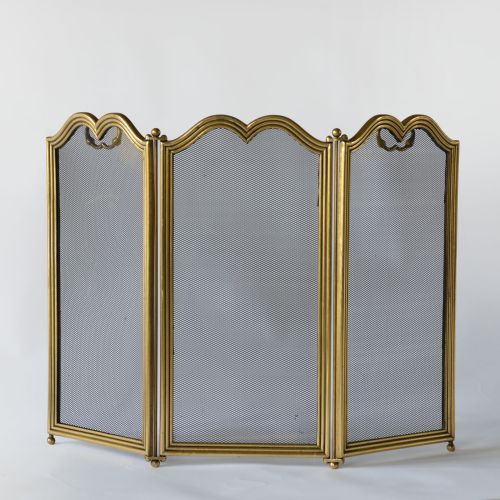
When you examine a gold brass hearth screen, you encounter pieces originating from the nineteenth century into the twentieth century, encompassing Victorian and Edwardian eras. These items serve primarily as fire guards, spark guards, or fan screens placed before an active fireplace.
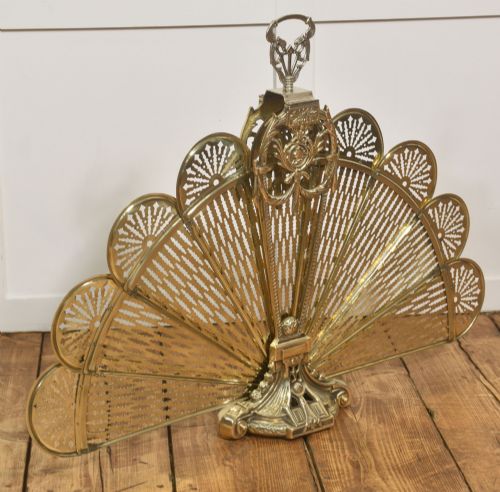
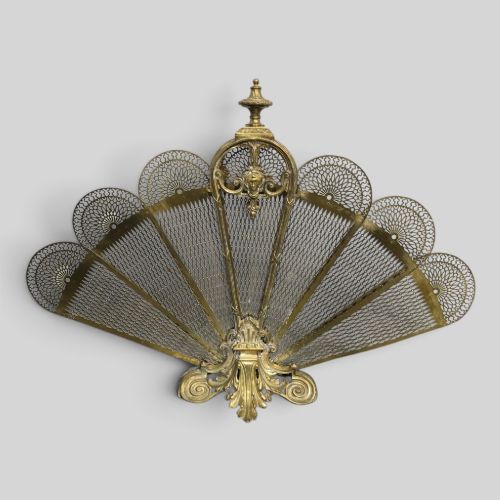
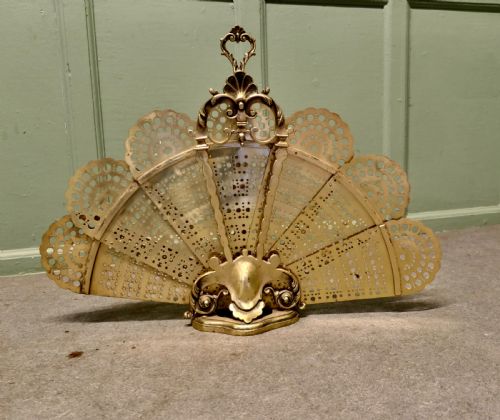
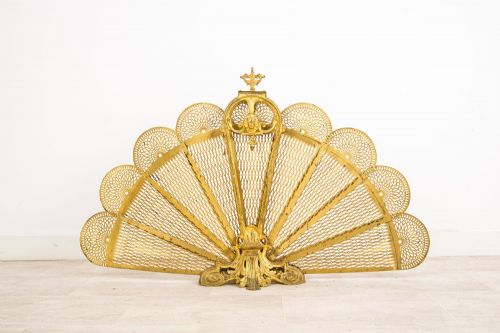
The selection ranges from simple folding wire mesh guards to ornate French Rococo revival and Empire revival designs. Many examples incorporate folding panels, tripartite frames, or expanding peacock fan formations.
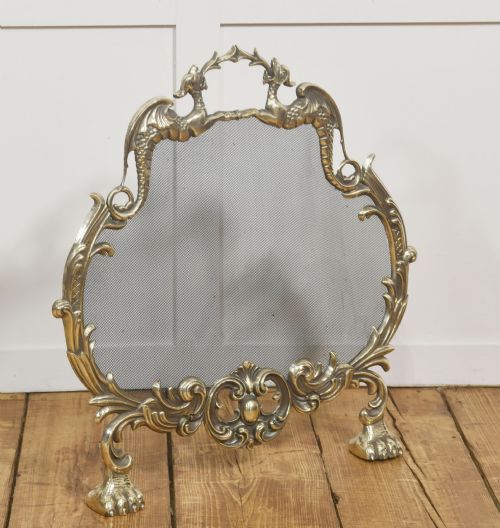
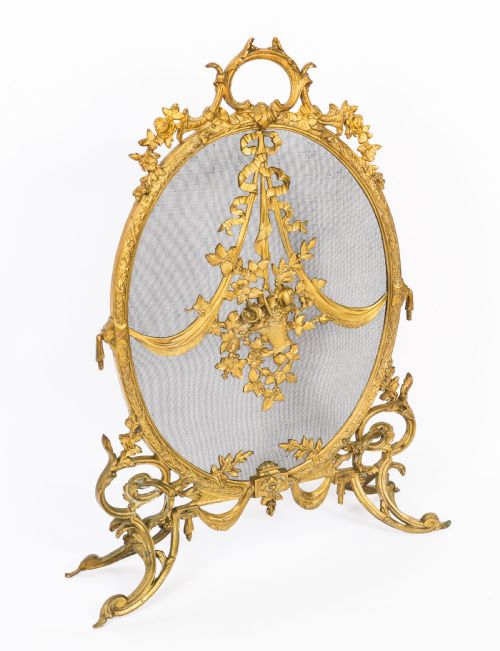
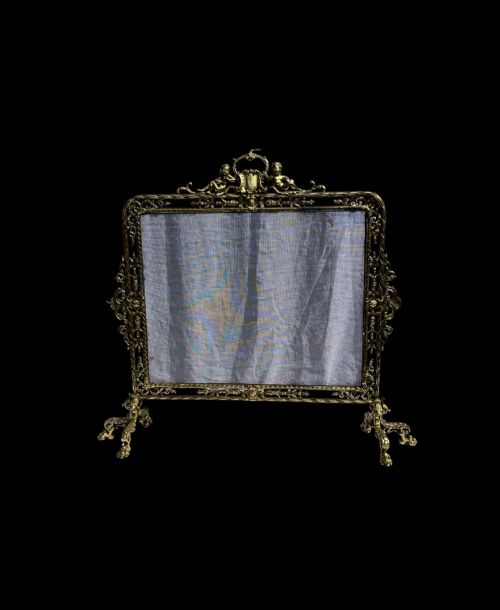
Originating predominantly from French and British workshops, these guards utilise various forms of brass, gilt bronze, and ormolu. Certain variants integrate glass, mirror plates, or embroidered panels within the metallic framework.
Materials and construction methods
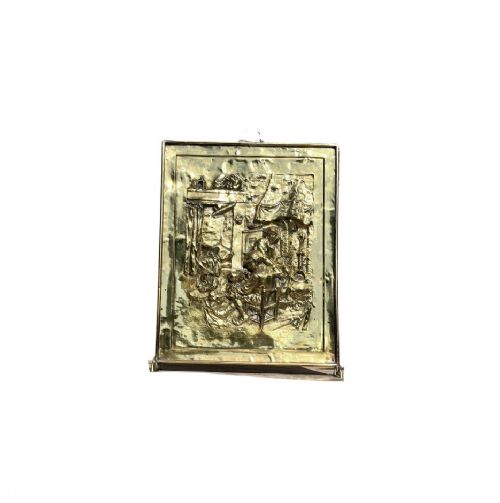
Makers constructed these screens using cast and sheet brass, gilt bronze, and iron mesh, often finishing surfaces with gilding to enhance the golden lustre. Structural rigidity relied on sturdy brass frames supporting intricate pierced grilles, wire mesh, or articulated fan blades.
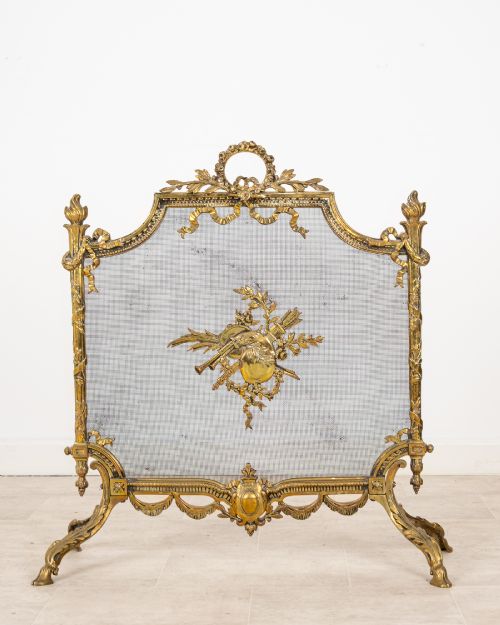
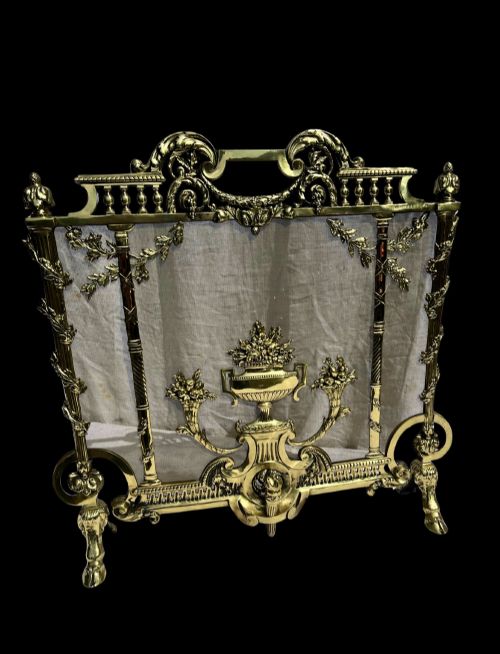
Decorative elements frequently involved elaborate casting and chasing, displaying classical motifs, musical trophies, floral arrangements, or asymmetrical Rococo scrolls. Folding mechanisms utilised hinges and pins to allow side panels or fan segments to expand and contract smoothly.
Several folding guards unfold into the exact shape of a peacock spreading its golden tail feathers before the hearth.
Distinctions in manufacture and design
The distinction between standard production and superior work lies in the depth of casting and the crispness of chased detail on the bronze or brass elements. Heavier gauge metalwork and substantial mounts indicate a higher standard of craftsmanship.
Artistry in the piercing and the complexity of revival styles, such as Louis XIV or Empire motifs, separate basic utilitarian fire guards from decorative drawing-room centrepieces. The integrity of folding hinges and the quality of original gilding further define the upper tier.
The Gold Brass Hearth Screen Glossary
- Gilt bronze
- An alloy of copper and zinc or tin treated with gold leaf or mercury amalgam to produce a rich metallic finish. This material is frequently found on French revival screens.
- Spark guard
- A fine wire mesh screen designed to contain flying embers while allowing heat to radiate into the room. They appear in both folding and rigid configurations.
- Peacock fan
- A folding hearth screen composed of overlapping metal blades that fan outwards resembling a tail. These typically date from the late Victorian and Edwardian periods.
- Ormolu
- A term applied to gilded bronze ornaments and mounts used extensively in French decorative arts. It provides a bright golden surface on nineteenth-century frames.
- Pole screen
- An adjustable screen mounted on a vertical stand, designed to shield the face from radiant fireplace heat. These often feature embroidered panels or glass inserts.
Gold Brass Hearth Screen: Frequently Asked Questions
How do I use a folding screen?
Place the screen directly in front of the fireplace opening when a fire burns low to catch stray sparks and embers. Expand the side panels or fan blades to the appropriate width to cover the hearth space securely.
Fold the units flat against the wall or store them to the side when the hearth is not in use. Ensure the feet or base rest evenly on a flat surface to maintain stability.
What periods do these screens date from?
The available selection spans the nineteenth century and early twentieth century, including Victorian, Edwardian, and Regency periods. Many pieces reflect revival aesthetics popular during these decades.
French Rococo, Louis XIV, and Empire revival styles dominate the decorative output of this era. Construction dates commonly cluster around the eighteen-eighties to nineteen-twentieths.
How do I clean brass and gilt surfaces?
Dust the metal gently with a soft, dry cloth to remove surface particles. Avoid harsh chemical cleaners or abrasive polishes that can strip original gilding or patina.
Consult a specialist conservator if the piece requires deep cleaning or restoration of the gilt bronze surface. Preservation of the original finish maintains the character of the metal.
Can I use these with a modern fireplace?
These guards fit hearths of varying dimensions, particularly where a decorative period accent is desired. Measure the width and height of your fireplace opening before selecting a rigid or folding screen.
Ensure the mesh or solid barrier provides adequate coverage for safety standards while complementing the surrounding room decor. Many historical designs adapt well to contemporary interior settings.