
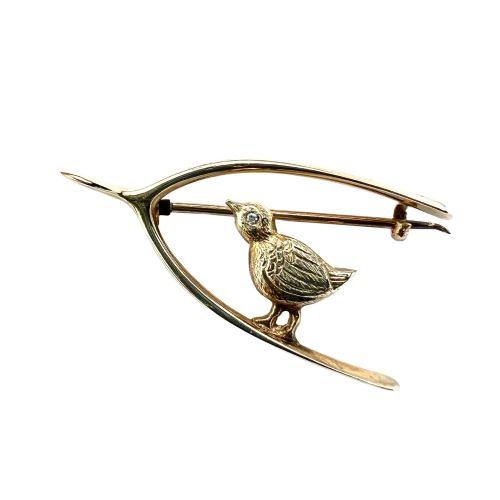


Gold Bird Pin
A gold bird pin is a charming antique brooch that brings character and craftsmanship to any lapel.
Gold Bird Pin
A gold bird pin encompasses antique and vintage brooches depicting avian forms, most frequently rendered as swallows, ducks, chicks, and cockerels. These charming ornaments serve as dress clips and lapel adornments, capturing the natural grace of birds in precious metal.
Buyers browsing this selection will most commonly encounter Edwardian and Victorian examples, alongside mid-century novelty pieces. Swallows and ducks dominate the available forms, often fashioned from nine-carat or fifteen-carat gold and accented with gems.
How they were made
Goldsmiths shaped these pieces from nine-carat, fifteen-carat, and eighteen-carat gold, occasionally mounting settings in silver or platinum to enhance the brilliance of the stones. Metalwork techniques involved casting, chasing, and fabricating bar brooches and crescent frames.
Artisans embellished the gold plumage with rose-cut diamonds, rubies, pearls, and polychrome enamel to render realistic feather details and colourful accents. Many avian bodies feature delicate enamel work or pavé-set gemstones that catch the light.
Listings feature Edwardian, Victorian, and mid-century periods utilising gold, silver, enamel, diamonds, rubies, and pearls.
What varies in quality
The degree of artistic refinement in the bird's form and plumage separates standard examples from exceptional ones. Master jewellers achieved lifelike postures and detailed feather engraving, whereas simpler pieces rely purely on plain polished metal.
The choice and integration of gemstones also distinguish the pieces, with well-matched diamonds and fine rubies elevating the overall design. Intricate enamelling that survives intact adds substantial merit to an antique brooch.
Ben Rosenfeld
The Gold Bird Pin Glossary
- Bar brooch
- A horizontal pin featuring a slender metal shaft, often decorated with a central motif like a bird or insect. This form was exceptionally popular during the Victorian and Edwardian eras.
- Rose-cut diamond
- An antique diamond cut featuring a flat base and a domed crown with triangular facets. This style produces a soft, starry sparkle rather than the brilliant flash of modern stones.
- Novelty brooch
- A whimsical piece designed to represent a specific object, animal, or character with a touch of humour. Mid-century examples often embraced this playful aesthetic with textured gold.
- Enamel
- A durable coloured substance made from fused glass powder, applied to metal and fired in a kiln. It provides vibrant colour to represent bird feathers and realistic plumage.
Gold Bird Pin: Frequently Asked Questions
What periods do these bird pins come from?
The pieces span the Victorian and Edwardian eras, extending into mid-century novelty designs from the nineteen-sixties.
Each period brings distinct materials and stylistic traits, from romantic diamond swallows to whimsical ducklings.
How were gold bird pins worn historically?
Victorians and Edwardians pinned these ornaments to lapels, collars, cravats, and hats as daily decorative accents.
They functioned both as ornamental jewellery and as sentimental tokens, with birds like swallows symbolising affection and safe return.
What gemstones are commonly found on them?
Jewellers frequently set these avian brooches with pearls, rubies, and rose-cut diamonds.
Enamel is also common, used to add realistic colour to the wings and bodies of ducks, chicks, and cockerels.
Are these brooches suitable for everyday wear?
Antique pins require mindful handling due to their delicate construction and age, particularly pieces set with pearls or enamel.
Securing them properly on sturdy fabrics ensures they remain safe during regular use.