




Gold Bench Seat
A gold bench seat brings warmth and architectural presence to a room, offering a functional seat with rich historic character.
Gold Bench Seat
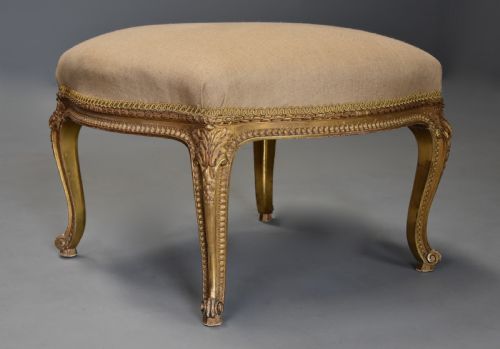
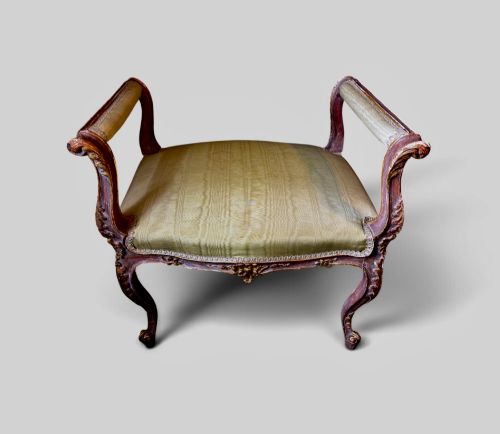
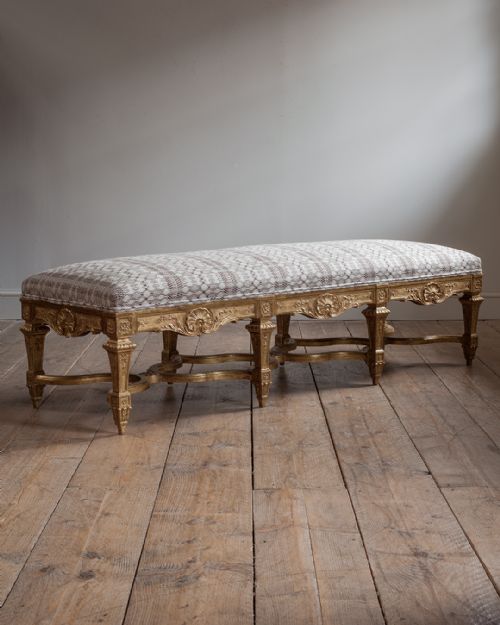
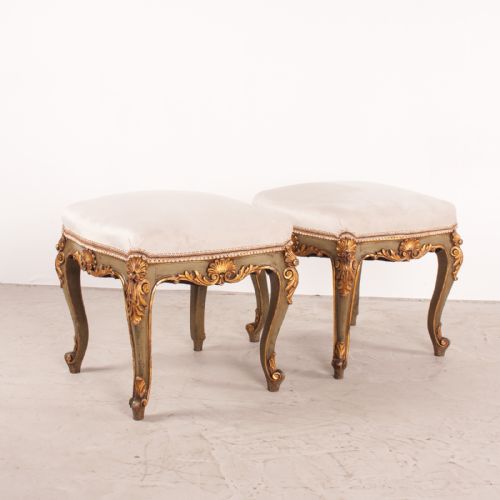
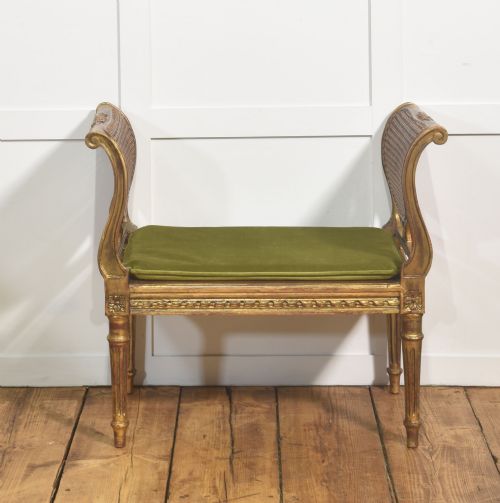
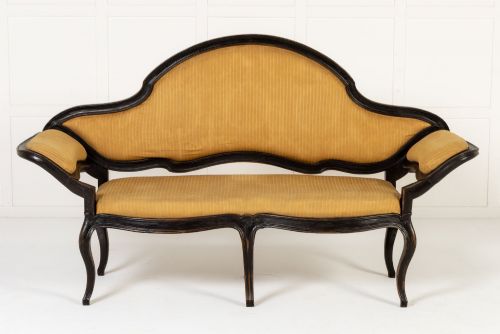
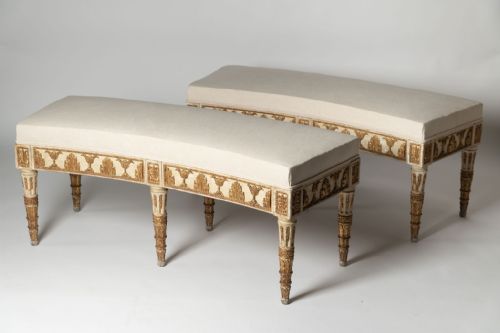
A gold bench seat encompasses various forms such as window seats, long stools, and double-seaters finished in gilding or parcel gilt. These pieces date from the eighteenth century through to the early twentieth century, spanning periods like the Victorian era and the Edwardian years.
The aesthetic is heavily rooted in continental design, with French and Italian influences appearing frequently in styles like Louis XV, Louis XVI, and Rococo Revival. Buyers will regularly encounter carved giltwood frames paired with upholstered elements designed for salons, boudoirs, or window recesses.
Makers and workshops across Europe produced these seating arrangements in diverse shapes, including low stools, curule forms, and duets. The selection balances sturdy mahogany and walnut frames with lighter fruitwood and ebonised structures highlighted by gold leaf.
Materials and construction methods
Frames are constructed from hardwoods such as walnut, mahogany, and fruitwood, often coated in gesso before receiving an application of gold leaf or paint. Carving is executed by hand, creating intricate relief work along the rails and cabriole legs.
Upholstery relies on traditional textiles including silk, velvet, and various woven fabrics, sometimes secured with deep buttoning or cane panels. Joinery techniques reflect the period of origin, utilising pegged mortise and tenon joints to ensure long-term structural stability.
Gold Bench Seat Retail Price Guide 2026
Typical asking prices for gold bench seat among the pieces listed under this phrase on Sellingantiques today, from the lower quarter to the upper quarter. They describe what is for sale here now, not the wider market.
Makers occasionally hid their stamps under the seat rails, leaving a tiny signature for future finders to discover.
Distinctions in craftsmanship
Quality rests in the crispness of the hand-carved detail on the wooden frame and the integrity of the original gilding. Finer pieces demonstrate deeper relief work and smoother transitions along curved rails, whereas simpler examples show broader, less defined cutting.
The survival of original surface finishes and period textiles elevates a piece. Workshop stamps, such as maker marks on French frames, provide documentary value that distinguishes standard production furniture from superior studio output.
LOIDRAULT FRERES PARIS
The Gold Bench Seat Glossary
- Giltwood
- Wood that has been coated with gold leaf or gold powder over a prepared gesso ground. This finish defines the reflective surface of many period seats.
- Cane
- Woven rattan material used to form supportive panels on seats and backs. It provides a lightweight, flexible surface common in window stools.
- Curule stool
- An ancient Roman seat form featuring intersecting curved legs shaped like an X. Later neoclassical revivals adopted this profile for formal seating.
- Canape
- A French upholstered sofa designed for multiple occupants with an exposed wooden frame. These pieces often feature ornamental crest rails and carved cabriole legs.
- Parcel gilt
- A decorative treatment where only specific carved details or raised elements are highlighted in gold against a painted or dark wood ground.
Gold Bench Seat: Frequently Asked Questions
How do I clean a giltwood frame?
Dust the surface gently with a soft, dry brush to prevent accumulation. Avoid commercial polishes and water, which can damage fragile gold leaf.
Test any maintenance approach on a hidden underside before proceeding. Professional conservators should handle repairs to flaking gesso or damaged gilding.
Where should I place a window seat?
Position the piece beneath a large window or at the foot of a bed to create an intentional focal point. These seats fit well in hallways and drawing rooms where extra informal seating is required.
Keep upholstered textiles away from direct, prolonged sunlight to prevent fading. Ensure the room humidity remains stable to protect the underlying wooden frame.
How do I identify a Louis XVI style frame?
Look for straight, fluted legs, symmetrical geometric proportions, and classical motifs such as acanthus leaves or beaded moulding. These elements separate the style from the earlier, more curving Rococo aesthetic.
Frames from this tradition often utilise giltwood or painted finishes with restrained ornamentation. Construction details and joinery help confirm whether a piece is eighteenth-century or a later revival.
What is the difference between a settee and a sofa?
Settees generally feature lighter wooden frames with partially or fully upholstered seats and backs designed for two people. Sofas offer broader proportions and can accommodate multiple sitters with more substantial cushioning.
Both forms serve similar social functions in historic interiors. The terminology often reflects regional preferences and the specific decorative scheme of a salon.