

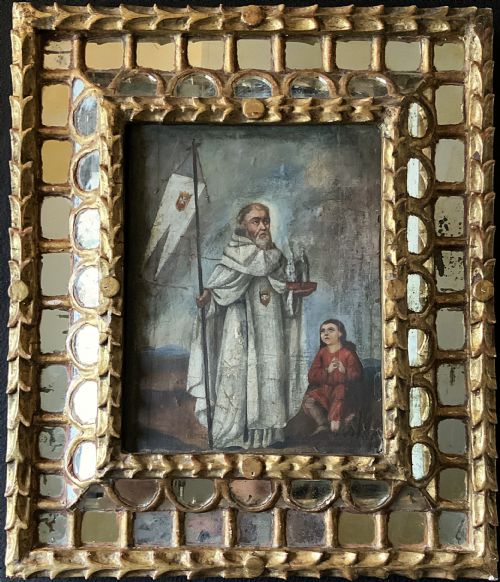


Gold Baroque Wall Mirror
A gold baroque wall mirror brings monumental Italian and French presence into a room through heavy carving and luminous gilt surfaces.
Gold Baroque Wall Mirror
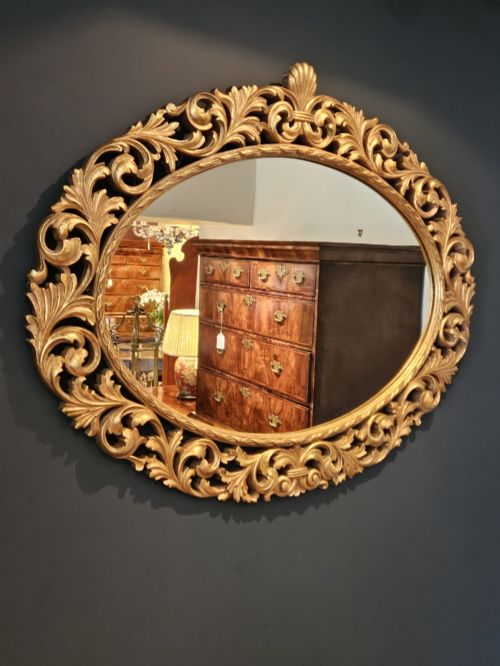
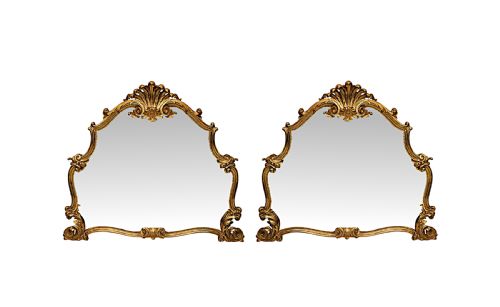
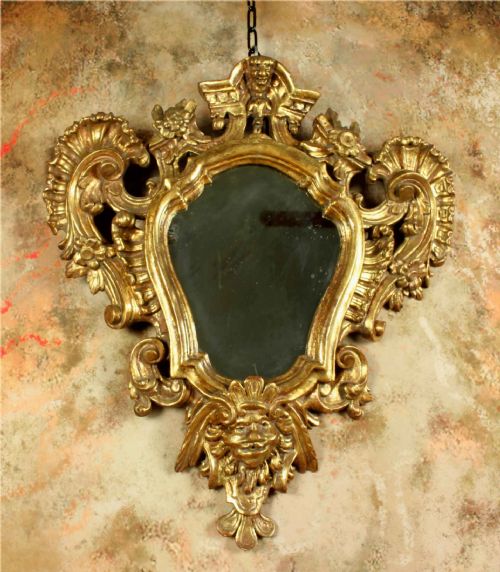
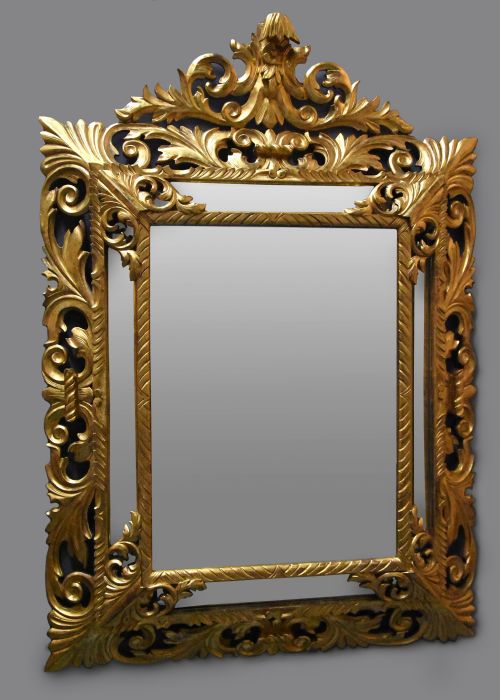
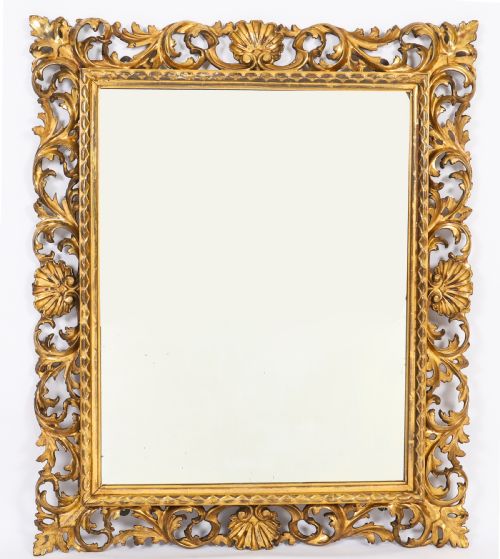
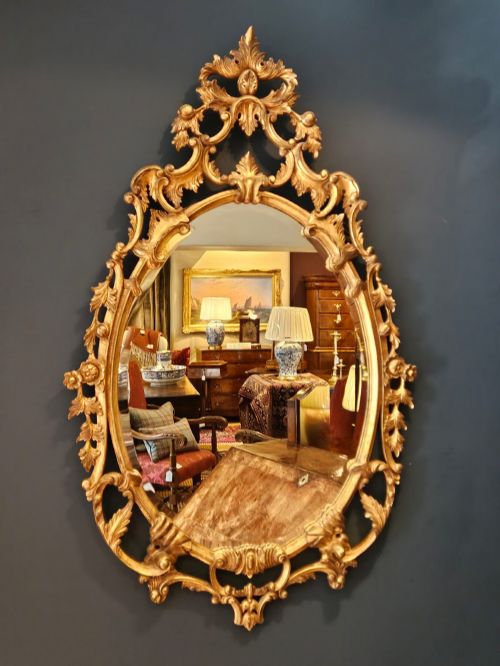
A gold baroque wall mirror represents centuries of decorative ambition, appearing frequently in 18th-century and 19th-century interpretations of Italian and French design. These pieces take various forms, including grand overmantels, pier mirrors, cushion frames, and ornate Florentine wall fixtures.
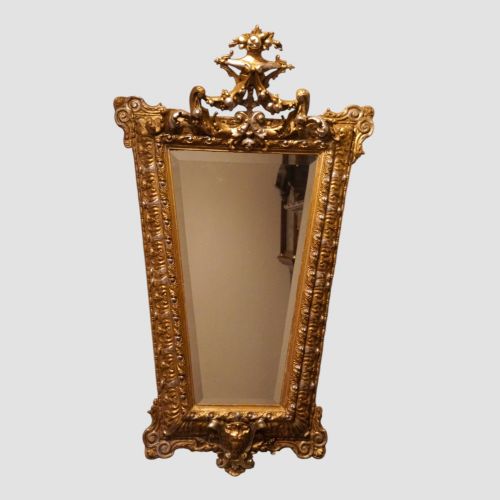
The aesthetic draws heavily from Baroque and Rococo vocabularies, featuring substantial carved timber and gesso decorated with masks, scrollwork, and lions' heads. Buyers encounter both authentic period examples and later revivals spanning the Victorian and Edwardian eras.
Materials and construction
Makers built these frames from carved wood, timber, and gesso, applying gold leaf and silver-gilt surfaces to catch the candlelight or daylight. Early examples frequently rely on original mercury plates secured within hand-carved structures.
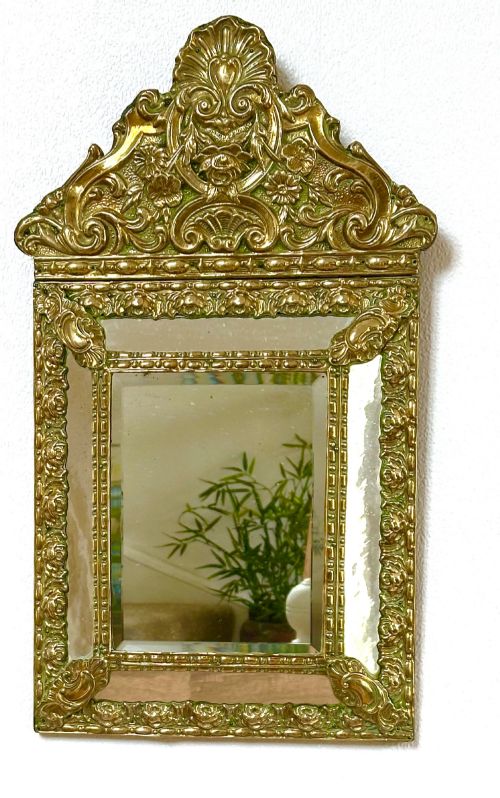
Brass also appears in regional variations such as repoussé Dutch frames. Surface ornamentation relies on deep relief carving, where giltwood and gesso interact to create dramatic shadows and highlights.
Listings feature 17th-century through 20th-century pieces, utilising giltwood, gesso, brass, and original mercury glass plates.
Assessing craftsmanship
The distinction between average and exceptional pieces rests upon the depth and clarity of the hand-carving. Crisp relief work on wooden scrolls and animal motifs separates superior Florentine and French output from mechanical reproductions.
The integrity of the gilding and the survival of original mirror glass plates dictate the visual weight of the object. Surfaces showing genuine layering of gold leaf over gesso retain a warmth that heavy modern repaint fails to replicate.
The Gold Baroque Wall Mirror Glossary
- Giltwood
- Wood that has been coated with gold leaf or gold paint. This technique gives the carved frame its characteristic metallic brilliance.
- Gesso
- A plaster mixture applied to wood frames to provide a smooth base for gilding. It allows artisans to carve intricate relief details before applying gold leaf.
- Pier glass
- A large mirror designed to hang on the wall between two windows. These tall pieces amplify light in grand reception rooms.
- Cushion mirror
- A frame profile shaped like a pillow, sloping outward or inward from the edge. This convex or concave wooden shape creates extra dimension.
- Mercury plate
- An early type of mirror glass backed with a tin-mercury amalgam. It produces a characteristic mottled, dark reflection.
- Repoussé
- Metalworking technique where the metal is hammered from the reverse side to form a raised design. Brass frames often utilise this method.
Gold Baroque Wall Mirror: Frequently Asked Questions
Where should I hang a gold baroque wall mirror?
These pieces suit principal reception rooms, grand hallways, or above a fireplace mantel where their scale anchors the interior space.
Position them opposite windows to maximise the reflection of natural light throughout the room.
How do I clean an antique giltwood frame?
Dust the carved wooden surfaces gently with a soft, dry brush to prevent damage to the delicate gold leaf layers.
Avoid chemical cleaning products or damp cloths entirely, as moisture strips historical gesso and gilding.
What is the difference between baroque and rococo styles?
Baroque design emphasises symmetry, monumental scale, and heavy theatrical grandeur. It uses robust architectural motifs to command attention in a room.
By contrast, Rococo favours asymmetry, playful curves, and organic shell or scroll patterns for a lighter decorative effect.
Are these mirrors heavy to mount?
Substantial carved timber and thick glass plates give these frames considerable physical weight. Proper wall fixings into solid masonry or studwork are essential for safe installation.