
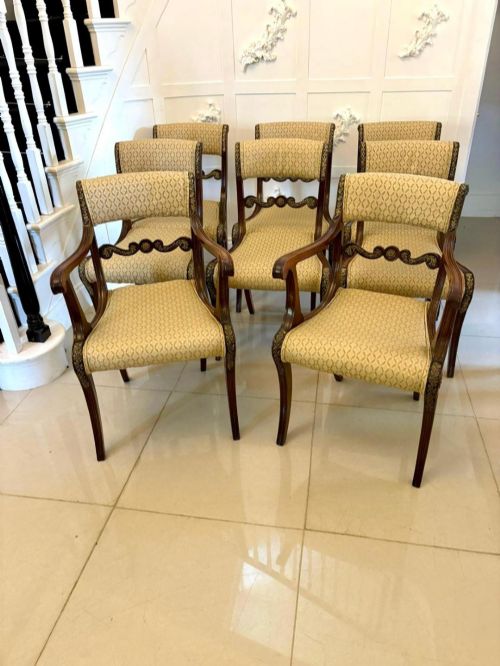

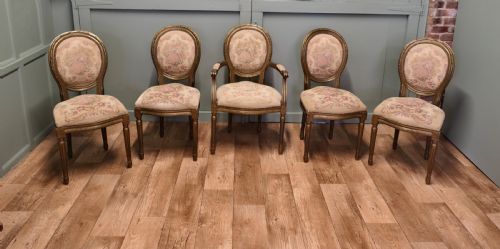
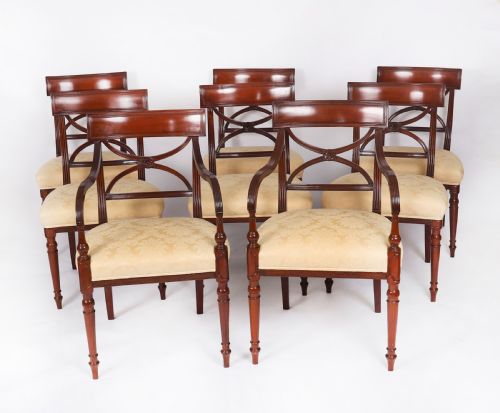
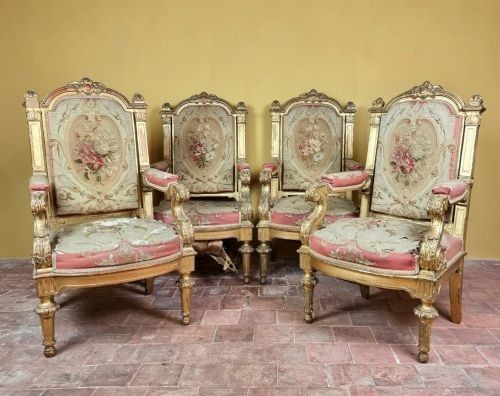






Gold Armchairs Set
A gold armchairs set brings historic seating together, offering matched pairs, larger salon suites and dining chairs framed in giltwood or mahogany.
Gold Armchairs Set
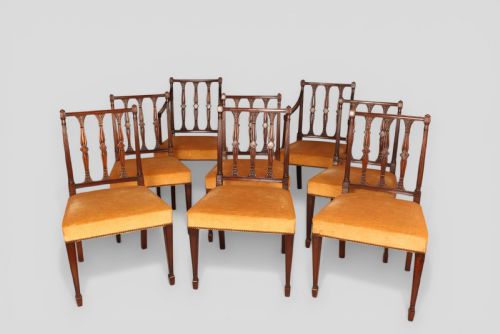
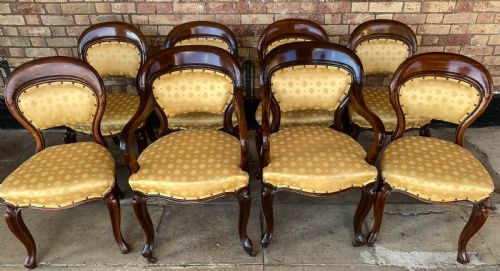
A gold armchairs set brings together historic seating options designed for formal reception rooms, drawing rooms and dining spaces. These groupings range from pairs of bergères and large armchairs to multi-piece salon suites featuring small sofas and matching chairs alongside sets of dining chairs.
The selections span several periods, drawing heavily upon 18th century, Georgian and 19th century craftsmanship, as well as revival aesthetics from the Victorian era and the early twentieth century. Common stylistic influences include Louis XVI, Louis XV, French Rococo and Regency designs.
Buyers encounter gilded timber frames finished in gold alongside rich upholstery textiles such as damask, blue velvet and tapestry. While many items form coordinated suites, others are assembled sets of dining chairs sharing common materials and stylistic traits.
Materials and construction methods
Frames are constructed from hardwoods such as mahogany, walnut and structural timber before receiving their surface treatments. Giltwood and gilded finishes involve applying thin layers of metal leaf over prepared wooden bases to create a luminous metallic surface.
Upholstery relies on traditional stuffing techniques, enclosing supportive foundations beneath outer layers of damask, velvet, fabric or tapestry. Carved details on arms, rails and crests reflect regional joinery traditions linked to French and British cabinet makers.
Listings feature pieces spanning from the 18th century through the 1930s, utilising giltwood, mahogany, damask, velvet and brass.
Distinctions in craftsmanship
Quality rests in the precision of the timber carving and the integrity of the gilded surface, where hand-tooled depth outperforms flat metallic paint. Heavier joinery and well-preserved structural frames distinguish high-end salon suites and dining chairs.
The choice and execution of upholstery materials also separate tiers, with woven tapestries and heavy silks or velvets representing more ambitious commissions than standard fabrics. Preserved sets maintain uniformity across every chair within the grouping.
The Gold Armchairs Set Glossary
- Giltwood
- Timber that has been coated with gold leaf or powder over a prepared gesso base. This technique creates a durable, reflective metallic finish seen across antique frames.
- Bergère
- An enclosed upholstered armchair with wooden framing and solid upholstered sides. It originated in France and remains a staple of period salon seating.
- Salon Suite
- A matched grouping of furniture for a reception room, typically comprising a small sofa and multiple armchairs. These suites share uniform upholstery and decorative carvings.
- Carver
- A term used in British furniture for an armchair, often included alongside single chairs in a dining set for the head of the table.
- Damask
- A reversible figured fabric woven on a jacquard loom, frequently utilised for historic upholstery and wall hangings.
Gold Armchairs Set: Frequently Asked Questions
How do I care for giltwood?
Dust surfaces gently using a soft, dry brush without applying liquid cleaners or polishes that might lift the delicate metal leaf.
Keep the furniture away from direct sunlight and heat sources to prevent the underlying timber from drying and cracking.
What is a salon suite?
A salon suite is a coordinated set of seating designed for formal entertaining in a drawing room or reception space.
These groupings usually combine a small sofa with two or more matching armchairs, sharing identical wood finishes and textile upholstery.
Are dining sets matched?
Dining sets often combine armchairs, known as carvers, with a larger number of single chairs sharing the same period style.
Many sets originate from the 19th century or Georgian periods, constructed from mahogany or giltwood to ensure visual continuity around a table.
How do I identify Louis XVI style?
Louis XVI style is characterised by straight tapered legs, neoclassical geometry and carved motifs such as fluting, ribbons and laurel wreaths.
This aesthetic contrasts with the curving asymmetry of earlier Rococo designs, favouring balanced and restrained proportions.