

Gold Anniversary Band
A gold anniversary band marks a passage of years with diamond, ruby or sapphire stones set across the finger in enduring precious metal.
Gold Anniversary Band
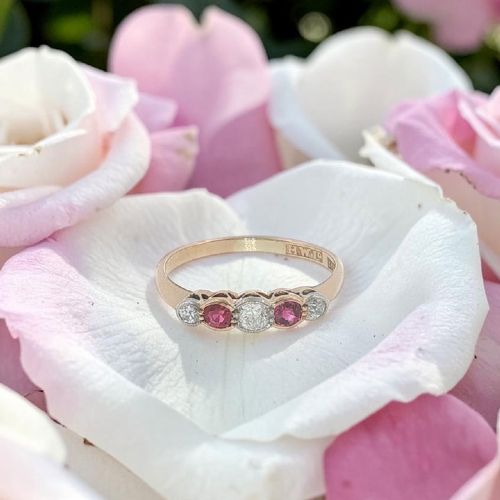
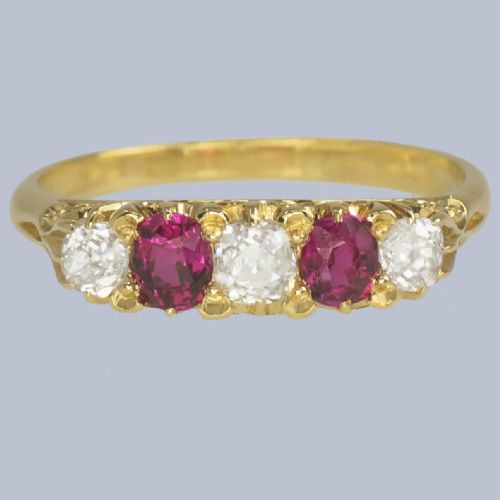
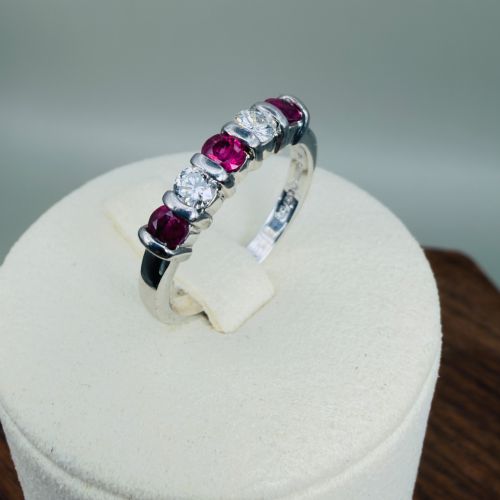
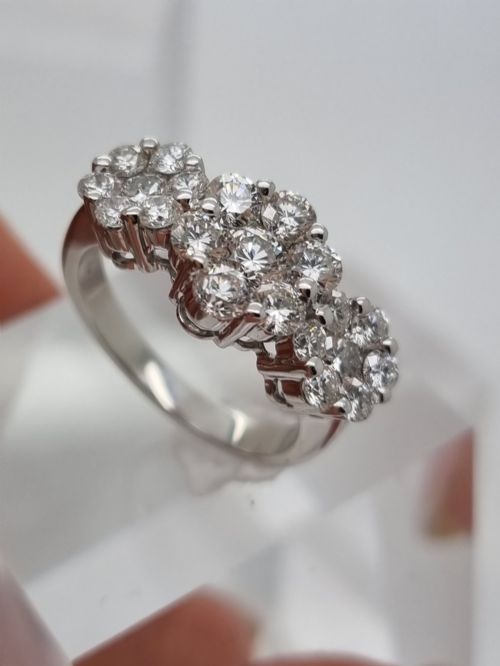
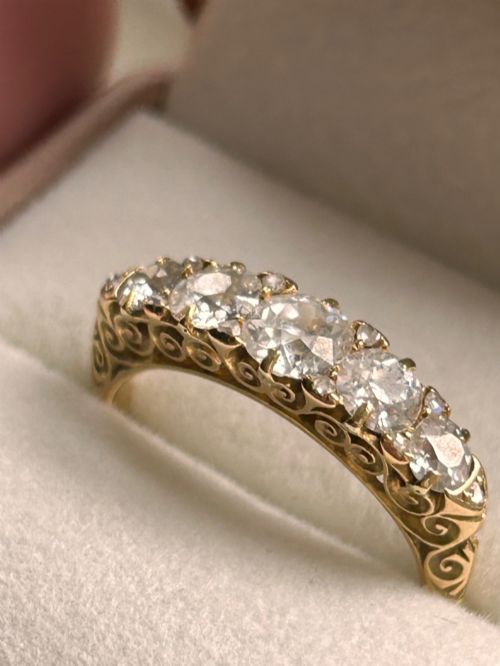
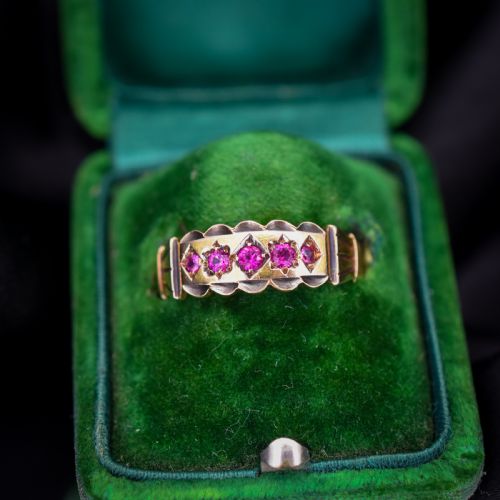
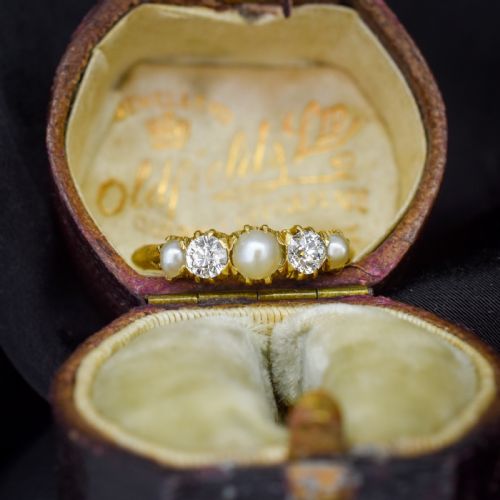
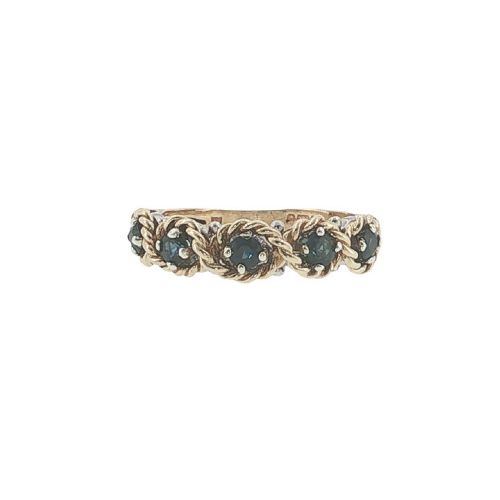
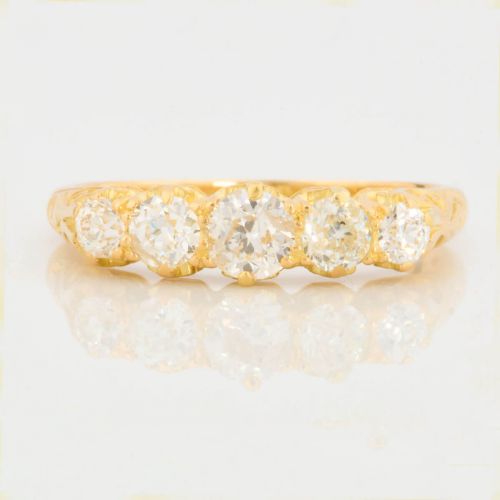
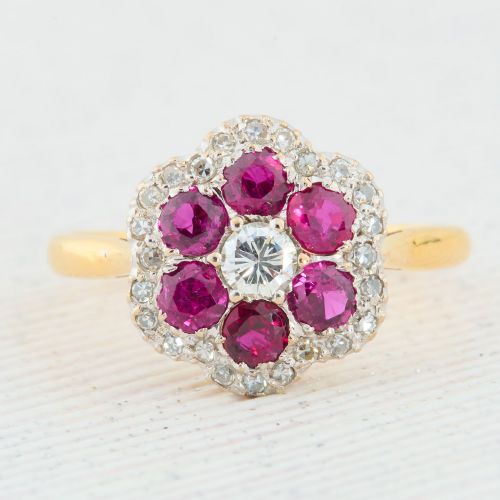
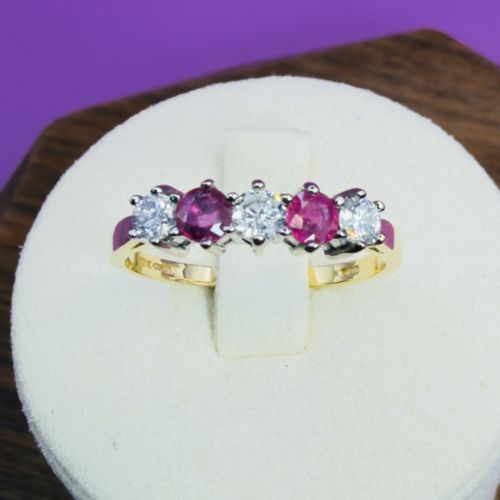
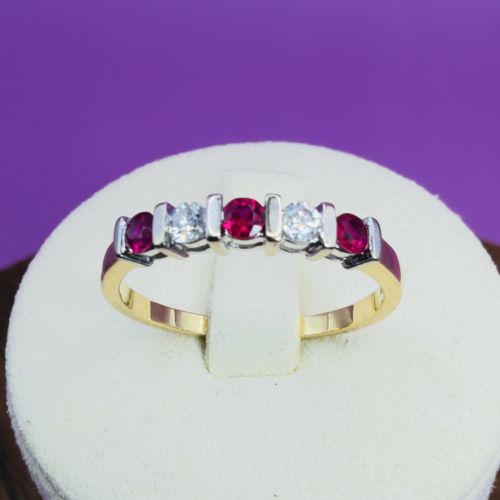
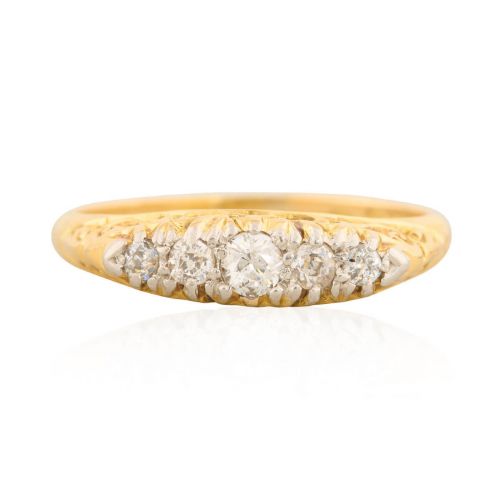
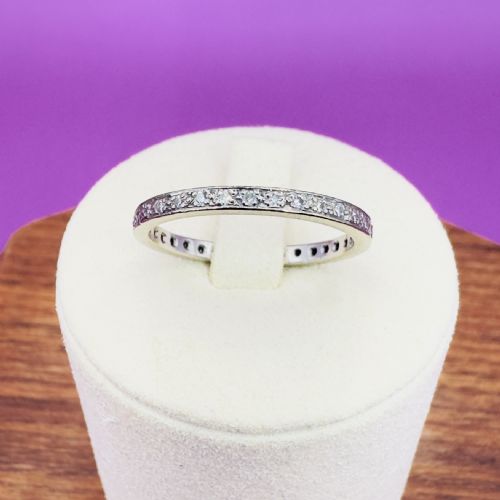
A gold anniversary band takes the form of a finger ring created to celebrate a milestone, appearing in styles from the Victorian and Edwardian eras through Art Deco to mid-century modern designs. When you search for a gold anniversary band, you encounter configurations ranging from traditional five-stone rings and half eternity bands to full eternity bands and cluster formations.
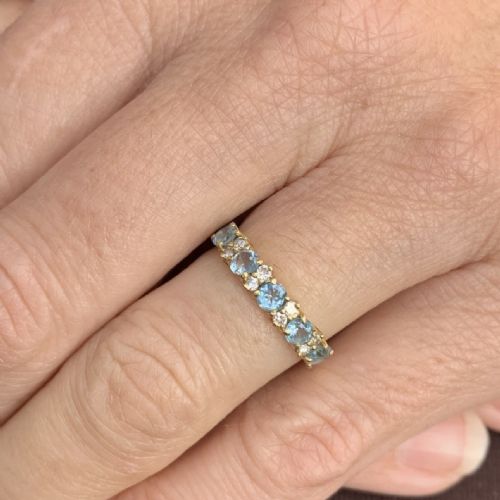
The materials span 18ct yellow gold, 18ct white gold, 9ct gold, and platinum, paired with diamonds, rubies, sapphires, opals, emeralds, pearls, and garnets. Five-stone rings and half eternity bands dominate the selection, often incorporating old mine cut or old cut diamonds alongside coloured gems.
Materials and construction
The foundation rests on precious metal alloys, predominantly 18ct yellow and white gold and platinum, chosen for structural strength and colour. Stones are set directly into the band using techniques suited to the period, such as gypsy settings, claw settings, and channel settings.
Gems like diamonds, rubies, and sapphires are selected for durability and uniformity, with older pieces frequently housing hand-faceted old cut and old mine cut diamonds that display distinct optical proportions.
Several rings proudly display Chester and London hallmarks, whispering tales of British assay offices past.
Factors that define quality
Quality rests upon the precision of the stone setting and the integrity of the metalwork, where clean lines and secure claw or flush mountings distinguish finer examples. The selection and matching of the stones - whether diamonds, rubies, or sapphires - dictate visual harmony across the band.
Heavier gauge metal and minimal wear to the shank or settings indicate superior durability and careful preservation over decades of use.
The Gold Anniversary Band Glossary
- Half eternity band
- A ring set with gemstones along the top half of the band, leaving the lower shank plain metal for resizing comfort.
- Old mine cut
- An early diamond cut characterised by a cushion shape, high crown, small table, and large open culet, typical of antique pieces.
- Gypsy setting
- A mounting style where the gemstone is flush-set directly into the thick metal of the band, showing a smooth exterior.
- Trilogy ring
- A ring featuring three principal stones, often symbolising past, present, and future, frequently seen in diamond and ruby combinations.
- Full eternity band
- A ring encrusted with an unbroken line of gemstones completely encircling the finger.
Gold Anniversary Band: Frequently Asked Questions
Can an eternity ring be resized?
Full eternity rings are notoriously difficult or impossible to resize because the gemstones encircle the entire band.
Half eternity bands and five-stone rings offer more flexibility, as the plain metal shank at the back allows a jeweller to adjust the size.
What is the difference between an engagement ring and an anniversary band?
An engagement ring traditionally highlights a single central stone designed to precede the wedding ceremony.
An anniversary band distributes multiple stones evenly across the finger to celebrate a milestone year of marriage.
How do I care for antique gold gemstone rings?
Antique rings require gentle handling, particularly pieces set with softer gems like opals, pearls, or emeralds.
Remove them during heavy physical work and clean them using mild soapy water and a soft brush, avoiding harsh ultrasonic cleaners.
What metals were commonly used in vintage bands?
Eighteen-carat yellow gold and platinum are common in Edwardian and Art Deco pieces, offering strength and distinct colour.
Later mid-century designs frequently utilise 18ct white gold, 9ct gold, and occasionally 14ct gold variations.