


Gold Amethyst Drop Necklace
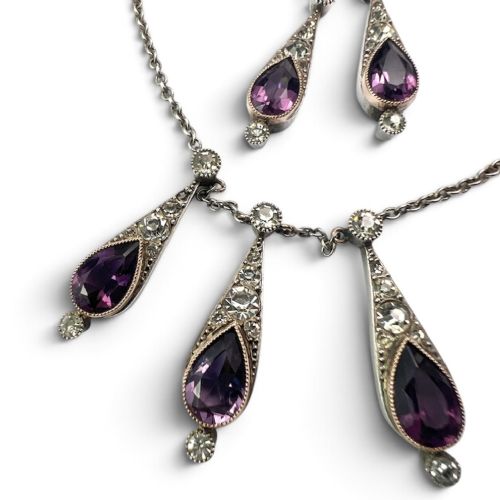
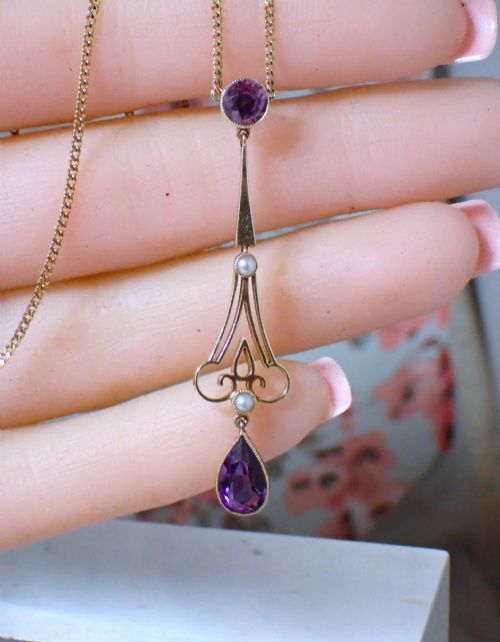
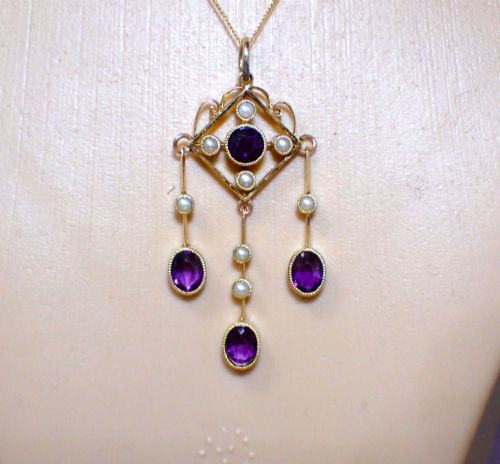
A gold amethyst drop necklace suspends rich purple stones from precious metal, bringing together the bold forms of Victorian and Edwardian design.
Gold Amethyst Drop Necklace
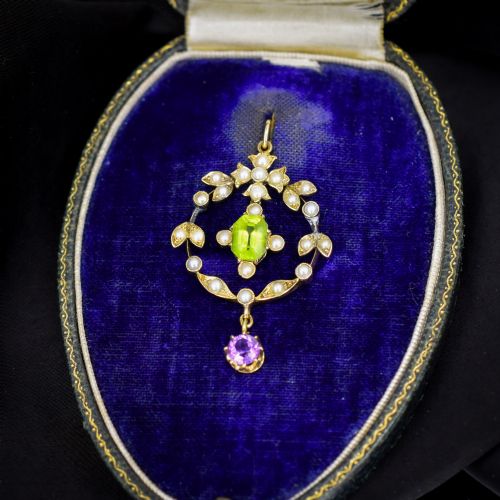
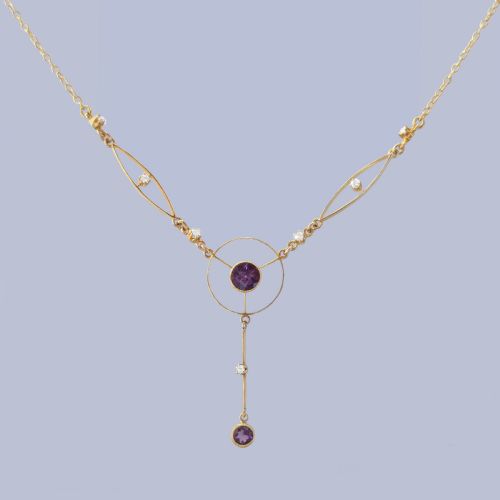
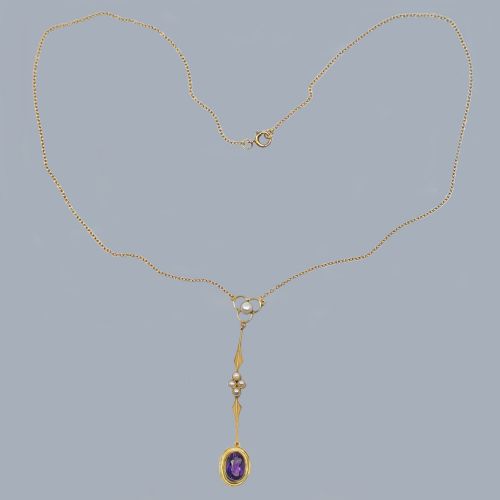
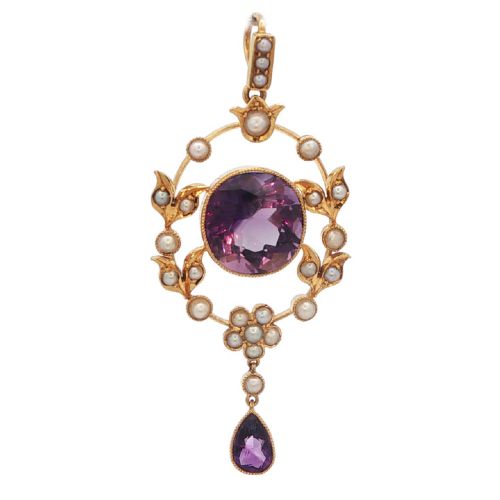
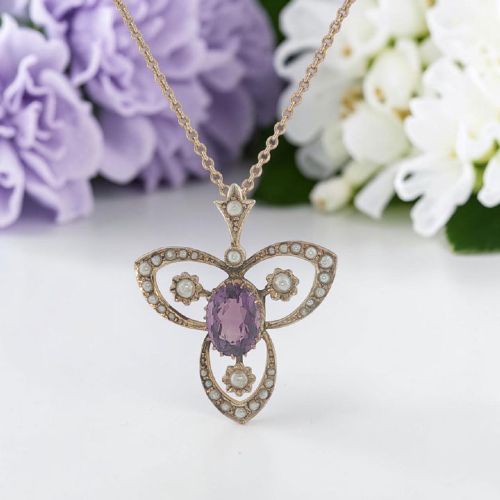
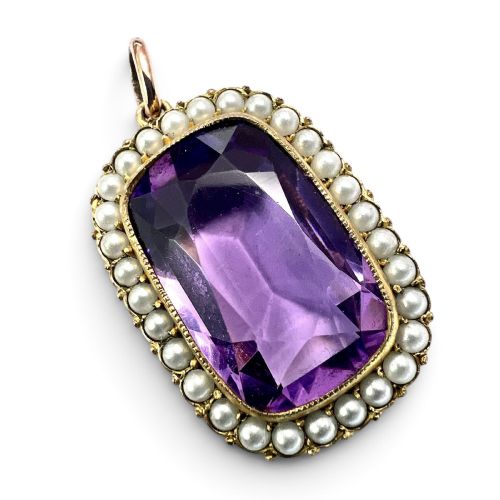
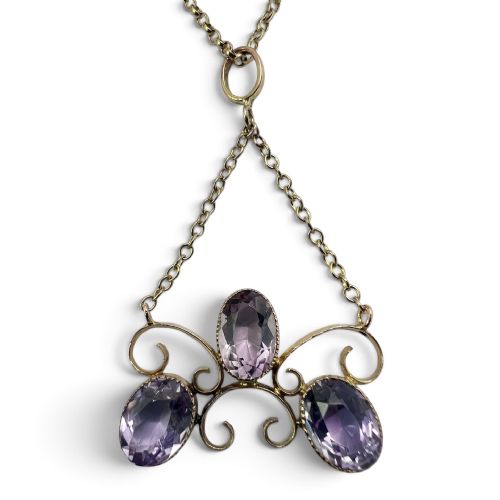
A gold amethyst drop necklace is a pendant or lavalier assembly featuring cut amethysts suspended from chains in styles ranging from Victorian to Art Nouveau and Art Deco. These pieces frequently pair deep purple quartz with seed pearls and yellow gold.
The version most commonly met on this page is the Edwardian lavalier or pendant necklace from around 1910, often formed in 9ct or 15ct gold with foliate or symmetrical drops. Victorian iterations appear alongside these, ranging from early 19th-century works to late-century fringe designs.
Makers and periods span the nineteenth and twentieth centuries, encompassing traditional fine jewellery and specific stylistic movements. The central drop configurations vary from single pear-shaped stones to elaborate multi-stone clusters.
How they were made
Goldsmiths utilised 9ct, 12ct, 14ct, 15ct and 18ct yellow and rose gold to form the chains, settings and backplates, occasionally incorporating silver or platinum accents. Metalwork techniques included fine wirework, collet settings and hinged drop joints that allowed stones to swing with movement.
Amethysts were faceted into oval, pear and round cuts, or shaped into smooth drops and hearts, complemented by seed pearls, natural pearls and old-cut diamonds. Specialised decorative methods such as plique-à-jour enamel also appear in Art Nouveau examples.
The inventory bridges multiple eras, showing the transition from Victorian heart and fringe designs to Edwardian lavaliers.
What varies in quality
The distinction between tiers rests on the saturation and cut of the amethyst, the integrity of the gold work, and the delicacy of associated seed pearl or diamond detailing. Master metalsmithing shows in balanced proportions, secure prong or bezel settings, and articulated drop links that move freely without binding.
Pendant assemblies bearing hallmarks from established makers or retaining original boxes command greater attention, while simpler commercial pieces from later decades display more standardised production methods and lighter gauge gold.
S. Blanckensee & Son·Hamilton & Co
The Gold Amethyst Drop Necklace Glossary
- Lavalier
- A pendant necklace featuring a small drop hanging below the main decorative cluster, popular during the Edwardian period.
- Fringe necklace
- A necklace design where multiple small drops or pendants hang at intervals along the lower edge of the chain or collar.
- Seed pearl
- Very small, naturally occurring pearls often drilled and threaded onto wire or silk, frequently clustered around central gemstones in antique jewellery.
- Plique-à-jour
- An enamelling technique where enamel is applied to open cells without a backing, resembling miniature stained glass.
- Old cut diamond
- A hand-faceted diamond cut prior to the development of modern brilliant-cut standards, characterised by a smaller table and high crown.
Gold Amethyst Drop Necklace: Frequently Asked Questions
What periods do these necklaces come from?
These pieces originate from the Victorian and Edwardian eras, with examples spanning from the early nineteenth century through the Art Nouveau and Art Deco periods.
Later items from the mid-twentieth century also appear, reflecting evolving tastes in gold and amethyst jewellery.
How do I care for an antique amethyst necklace?
Amethyst is a durable quartz, but antique settings with seed pearls require careful handling and should be kept away from harsh chemical dips or ultrasonic cleaners.
Store the necklace flat in a lined box to prevent the chain from tangling and to protect delicate pendant drops.
What is a lavalier necklace?
A lavalier is a specific pendant style featuring one or more suspended drops hanging below the main decorative section.
This form was particularly favoured during the Edwardian era, often paired with seed pearls and 15ct gold.
How can I tell an Edwardian piece from a Victorian one?
Edwardian necklaces often feature lighter, airier platinum or high-karat gold wirework with delicate seed pearl clusters and flowing Art Nouveau lines.
Victorian pieces tend to be heavier, utilising rose or yellow gold in more robust foliate or heart-shaped clusters.