

Globe Wernicke Sectional
Globe wernicke sectional bookcases offer modular storage with lifting glass doors, prized for library and office organisation.
Globe Wernicke Sectional
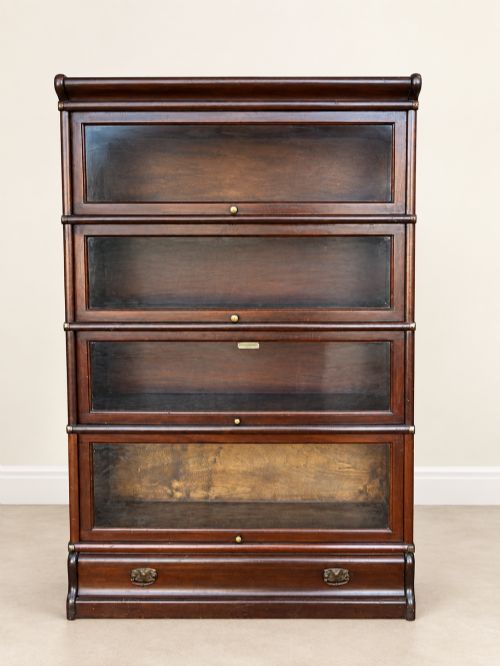
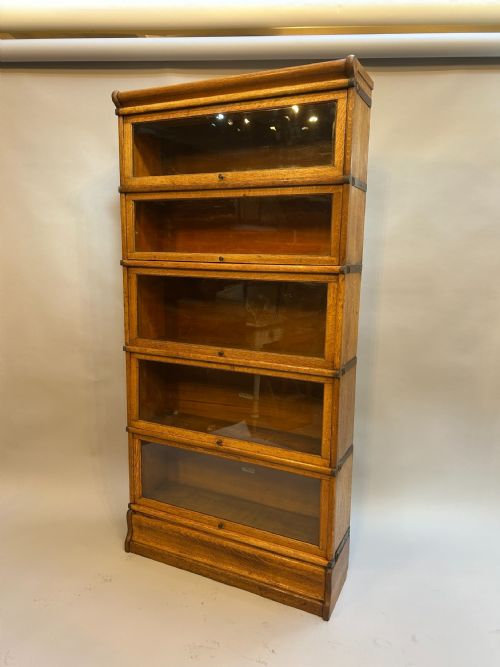
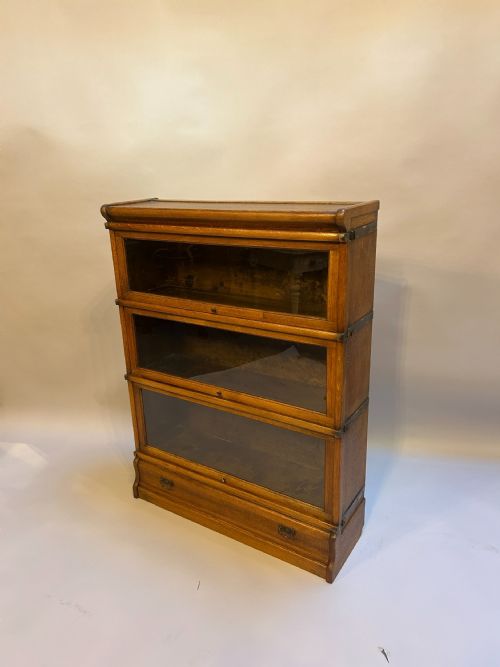
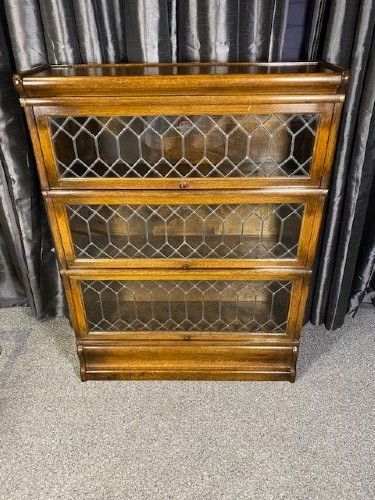
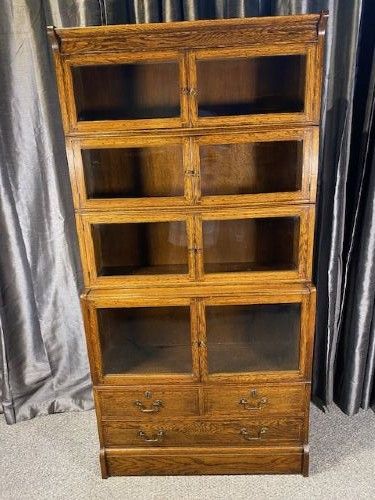
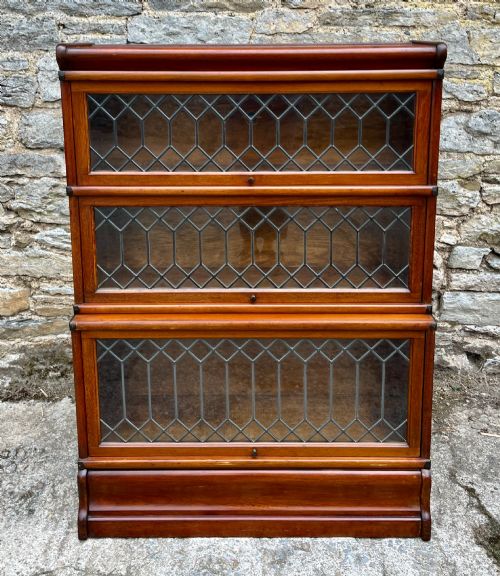
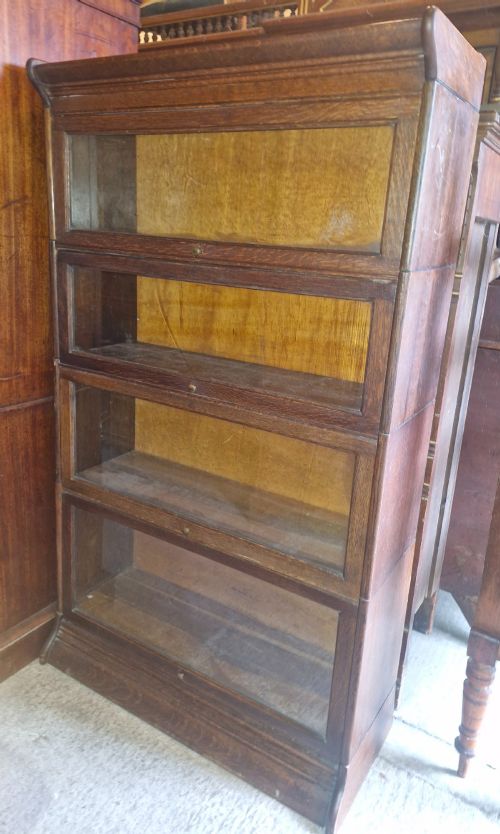
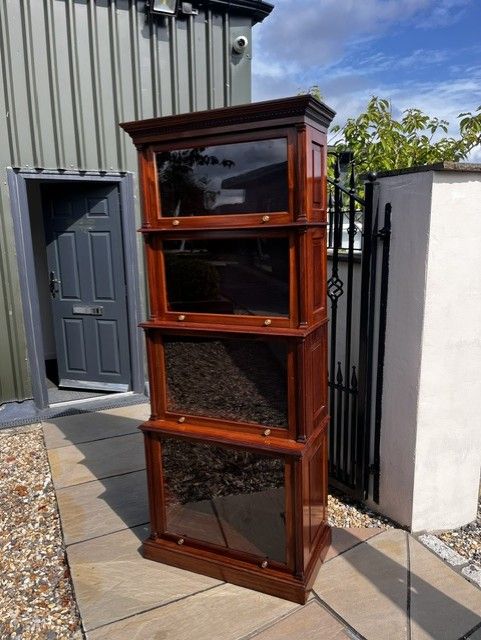
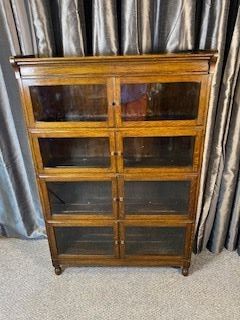
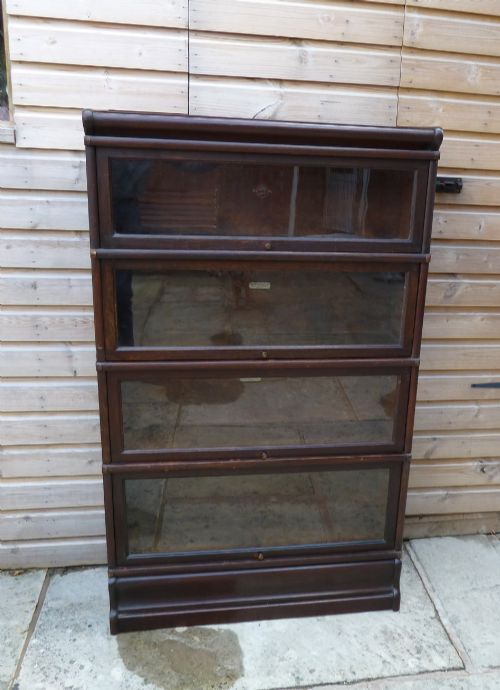
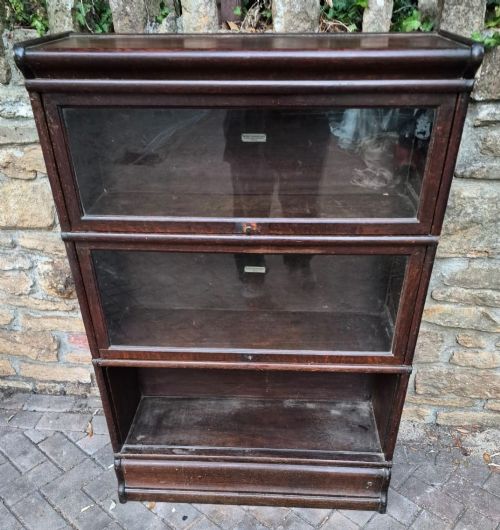
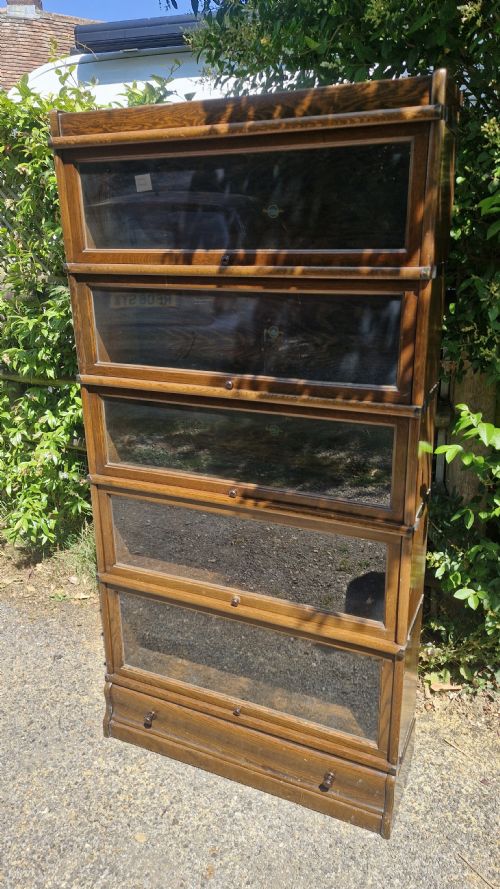
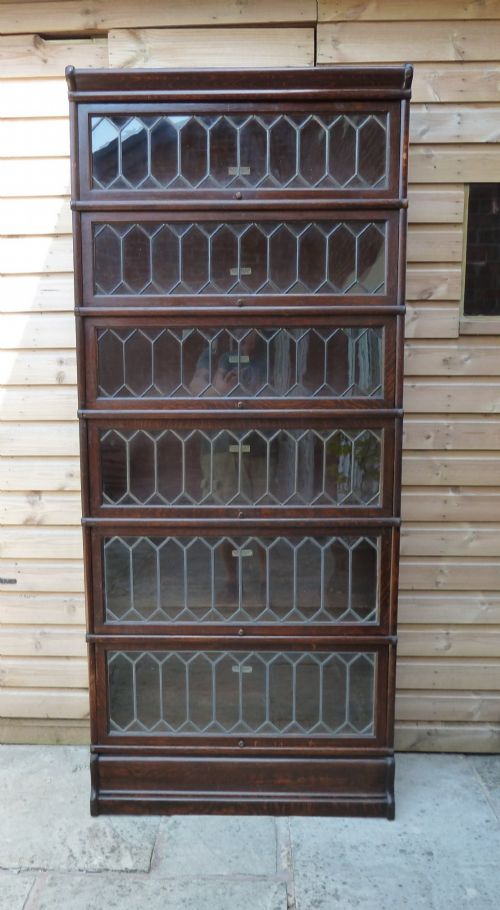
A globe wernicke sectional bookcase consists of individual modular tiers stacked together beneath a top corniced section and above a base plinth. These modular cabinets appeared frequently in offices, libraries and studies during the Edwardian period and through the 1920s and 1930s.
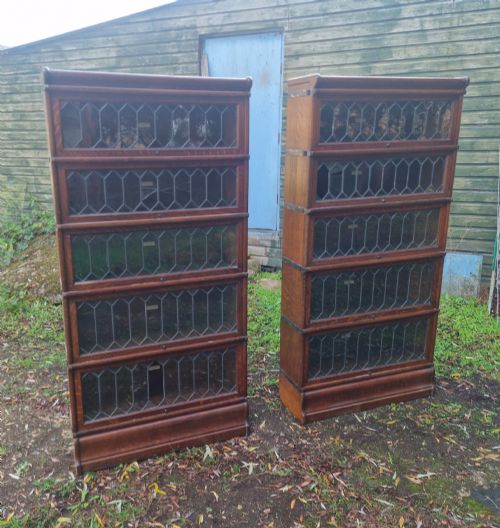
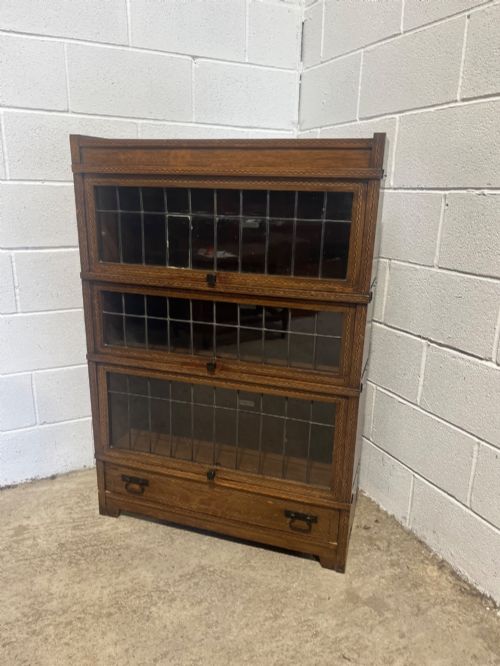
The most common variants encountered on this page are oak or mahogany stacking units featuring three, four, or five tiers with glass or leaded glass doors. Makers arranged these horizontal modules so owners could expand their shelving capacity simply by adding another tier.
Beyond standard book storage, certain examples incorporate drop-front bureau sections or specialised compartments suited for solicitors and administrative use. Buyers often select these modular cabinets to combine visible display with dust-protected storage for expanding libraries.
Factors determining the quality of stacking bookcases
Quality in these modular units depends heavily upon the timber selection and the integrity of the original mechanical door guides. Solid mahogany and finely figured golden oak represent the higher tiers of production, particularly when matched across every tier.
Attention to detail in the joinery, such as dovetailed carcases and intact original brass fittings, distinguishes standard office furniture from finer examples. The presence of makers' marks or labels embedded within the timber further elevates an individual cabinet.
Recorded forms include standard multi-tier book cabinets, bureau combinations, and leaded glass variants.
Heal s·Minty·Lebus·Gunn·AMYL
The Globe Wernicke Sectional Glossary
- Section
- An individual modular tier of a stacking bookcase containing its own shelf and lifting glass door. Multiple sections sit one upon another to form a complete cabinet.
- Barrister bookcase
- An alternative name for a stacking sectional bookcase, traditionally utilised by lawyers for transporting and housing legal texts.
- Leaded glass
- Small panes of glass joined together by strips of lead came, creating decorative patterns commonly found on Edwardian and Arts and Crafts doors.
- Cornice
- The moulded architectural projection that sits at the very top of a sectional bookcase, capping the uppermost tier.
- Plinth
- The foundational base section upon which the stack of modular bookcase tiers rests, often featuring a moulded trim.
Globe Wernicke Sectional: Frequently Asked Questions
How do sectional bookcases work?
Each tier operates as an independent box with a glass door that slides upward and inward on metal side arms. This mechanism allows individual access to books within any specific level without disturbing adjacent shelves.
When assembled, the tiers lock together using side pins or simply stack securely under the weight of the upper cornicing and loaded books.
Were these cabinets only used by lawyers?
While frequently called barrister or solicitors bookcases due to their popularity in legal offices, they served widely in domestic studies, libraries, and administrative workspaces. Their modular nature suited anyone needing expandable, dust-free shelving.
Households adopted them during the Edwardian era and 1920s to display growing private book collections while protecting fragile bindings.
Can individual sections be separated easily?
Yes, the defining feature of these units is their modular construction, allowing the top cornice, individual book tiers, and base plinth to lift apart independently. This made them straightforward to transport and configure to changing spatial requirements.
Buyers should verify whether sections were originally manufactured together as a matching set to ensure uniform depth and wood grain across the stack.
How do I identify an Edwardian example?
Edwardian sectional cabinets typically exhibit characteristics such as golden oak timbers, brass hardware, and occasionally leaded glass doors reflecting Arts and Crafts design preferences. Construction from this era around 1900 to 1910 often relies on solid oak rather than later veneers.
Interior paper labels or stamped manufacturer marks belonging to firms like Globe Wernicke or Minty can also provide precise chronological placement.