
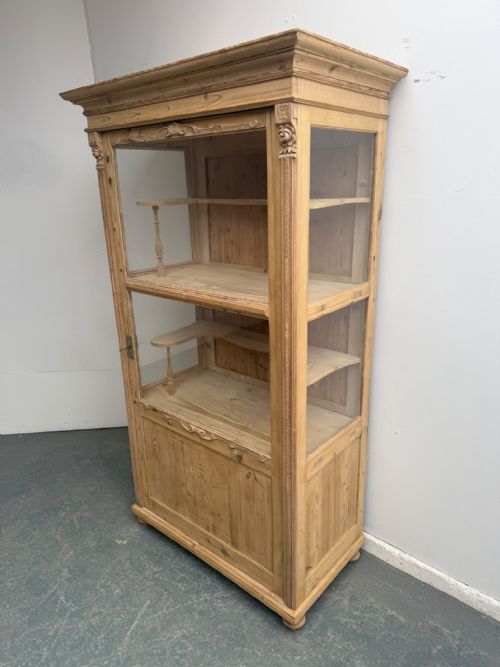


Glazed Shop Display Case
A glazed shop display case brings trade history into a room, offering clear viewing for small collections behind original glass.
Glazed Shop Display Case
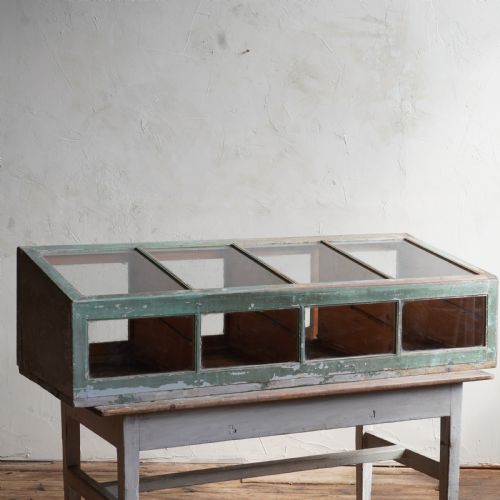
A glazed shop display case serves to present retail goods or private collections within a domestic or commercial interior. Buyers searching for a glazed shop display case encounter countertop models, tall freestanding towers, and long serving counters originating from the Victorian era through to the 1930s.
The most common versions on this page are Edwardian and 1920s countertop cabinets built for pharmacies, tobacconists, and confectioners. These tabletop forms sit directly on furniture surfaces and feature glazed panels designed to protect merchandise while maintaining visibility.
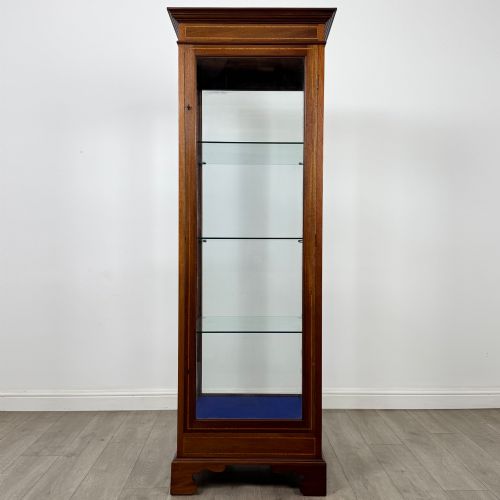
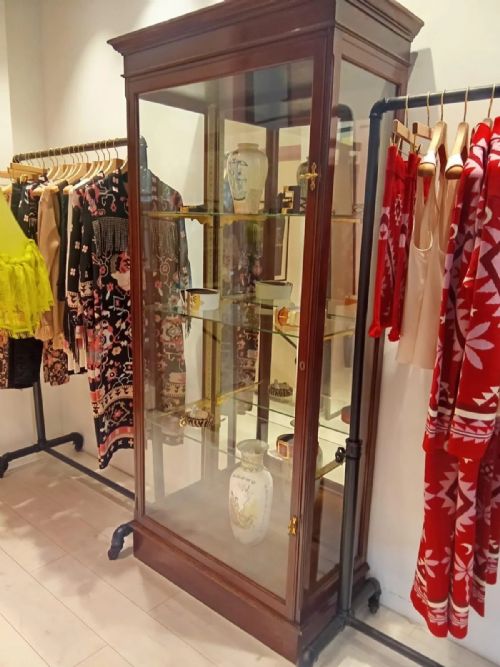
Larger examples include Victorian and Edwardian freestanding floor cabinets alongside commercial display counters fitted with wooden bases and glass viewing areas. Many incorporate advertising scripts or maker branding relating to chocolate, pharmaceuticals, and provisions.
Materials and Construction
Construction relies primarily on solid timber frames housing large expanses of glass. Mahogany and oak dominate the surviving examples, often complemented by secondary woods such as pine, walnut, or ebonised wood.
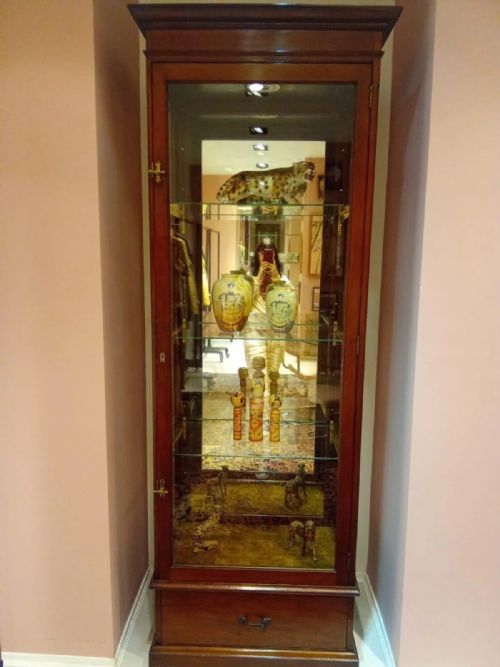
Internal elements frequently include adjustable glass shelves and mirrored backs designed to reflect light through the displayed objects. Brass hardware, bronze mounts, and occasionally steel and leather provide structural framing and closure mechanisms.
Listings feature glazed shop display cases spanning from the Victorian period through the 1930s, constructed primarily in mahogany, oak, and ebonised wood.
Craftsmanship and Scale
Quality in a glazed shop display case rests upon the integrity of the timber framing, the clarity of the original glass panels, and the sophistication of internal fittings like mirrored backs and adjustable shelving. Superior examples demonstrate tight joinery, balanced proportions, and substantial weight in woods such as solid mahogany.
Commercial provenance and original sign-written advertising alter the character of a piece significantly. Cabinets retaining authentic pharmacy or confectionery lettering carry historical layers that distinguish utilitarian furniture from specialist retail fixtures.
F. Sage & Co.·Fry’s Chocolate·Rowntree’s Chocolates·Kemps Pharmacy·Robert West Gunsmith
The Glazed Shop Display Case Glossary
- Countertop cabinet
- A small glazed shop display case designed to sit upon a shop counter or table for eye-level customer viewing. These compact units usually feature hinged or sliding rear doors for access by the shopkeeper.
- Freestanding tower
- A tall vertical glazed shop display case built to stand directly on the floor. They maximise display height while occupying a small footprint in retail spaces.
- Ebonised wood
- Timber treated with a chemical stain or finish to imitate ebony. This dark, formal surface treatment appears frequently on commercial display furniture from the early twentieth century.
- Sign-written
- Lettering painted directly onto wood or glass by hand. Many commercial cabinets display this historical retail branding for confectionery or pharmaceuticals.
- Display counter
- A long shop fixture featuring a glazed top surface and display well above a base storage section. They allowed customers to view goods laid out horizontally.
Glazed Shop Display Case: Frequently Asked Questions
What were glazed shop display cases used for?
Traders utilised these cabinets to protect valuable or delicate stock from dust and handling while keeping goods visible to customers. Confectioners, jewellers, and chemists placed them on counters to encourage impulse purchases.
Today, the same glazed enclosures serve private collectors who wish to exhibit small objects, ceramics, or silver safely in a home setting.
How do I choose between a countertop and freestanding case?
Countertop models suit rooms where floor space is limited, as they sit easily upon existing sideboards, desks, or tables. They keep smaller items at a convenient height for viewing.
Freestanding towers and long counters demand dedicated floor space but provide maximum vertical capacity or a broad surface for larger collections.
How do I date a glazed shop display case?
Dating relies on timber choices, construction techniques, and stylistic cues present in the frame. Victorian examples often feature heavy mahogany or walnut framing with hand-cut joinery.
Later Edwardian and 1920s pieces introduce lighter oak frames, ebonised finishes, or specific commercial advertising scripts associated with known confectionery and pharmaceutical brands.
Are the glass shelves usually original?
Many surviving cabinets retain their original thick plate glass shelving, often supported by adjustable brass rack strips within the interior corners. These internal fittings allowed merchants to alter shelf heights according to their stock.
Where original glass is absent, replacement shelves of appropriate thickness are commonly cut to fit the historical support brackets.
How do I care for the wood and glass?
Maintenance involves dusting the timber surfaces gently and applying a suitable wax polish periodically to nourish dry hardwoods like mahogany or oak. Avoid silicone-based sprays that can penetrate porous old finishes.
Glass panels require standard cleaning with a cloth and mild solution, taking care not to let moisture seep behind mirrored backings or painted advertising scripts.