

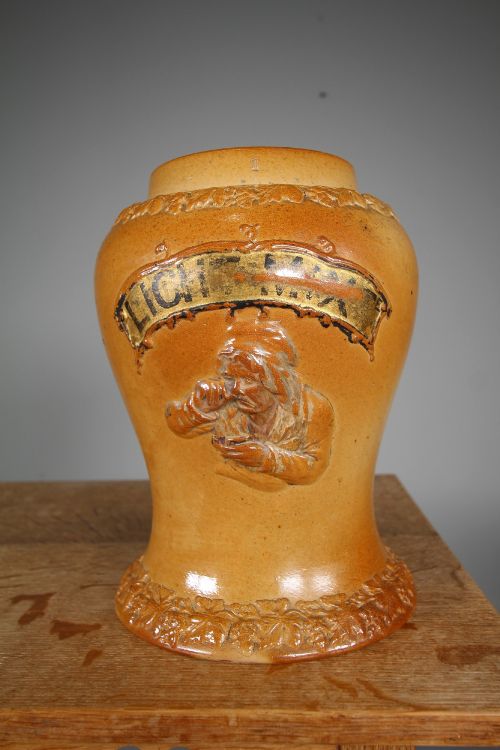
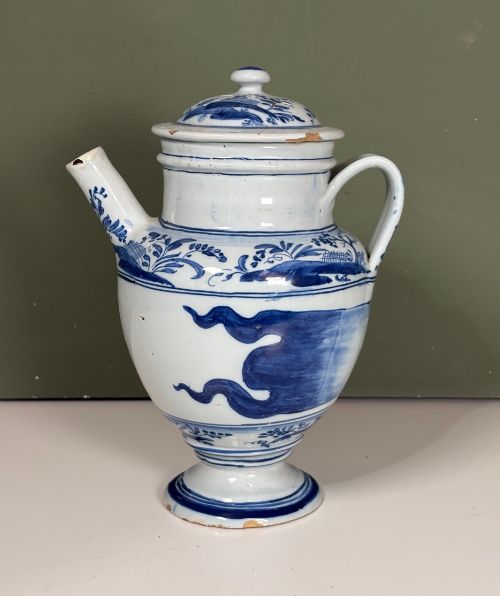
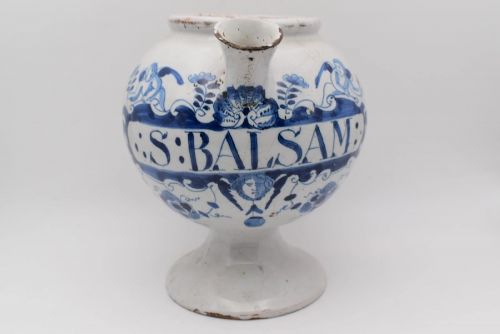
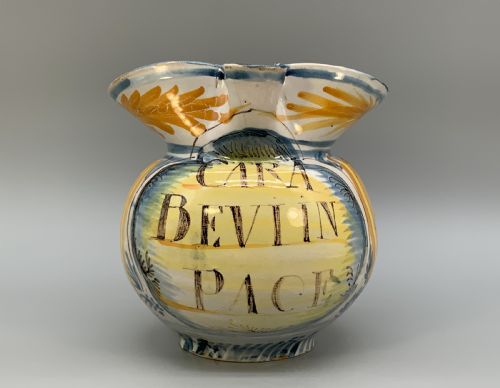
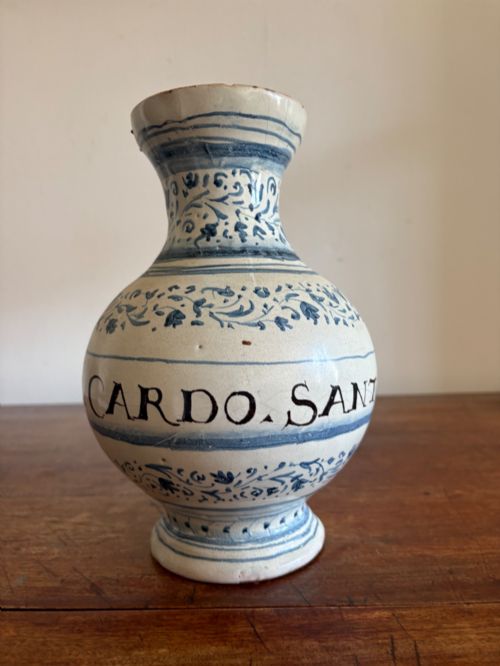


Glazed Pottery Apothecary Jar
These glazed pottery apothecary jar pieces carry centuries of medicinal history into modern rooms as striking ceramic containers.
Glazed Pottery Apothecary Jar
A glazed pottery apothecary jar serves as a tangible link to historical dispensaries and pharmaceutical practices. When searching for a glazed pottery apothecary jar, buyers encounter forms ranging from traditional tall albarellos to lidded storage vessels originating across centuries.
The selection on this page centres heavily on pieces spanning the seventeenth, eighteenth, and nineteenth centuries. English, Dutch, and Italian origins dominate, with English Delftware and Italian Majolica representing the primary styles available.
Vessels appear in various configurations including wet drug jars, dry storage jars, and decorative pharmacy jugs. Buyers frequently meet pieces adorned with painted labels, blue and white pigments, or polychrome decoration.
How they were made
Potters shaped these vessels from earthenware and ceramic bodies before applying tin glaze or opaque white coatings. This absorbent base provided a smooth surface suitable for subsequent painting.
Decoration relied on cobalt pigment, manganese, and yellow paint applied directly to the unfired or fired glaze. Gilding and additional polychrome pigments appear on specific Italian and English examples, adding colour depth to the finished containers.
Glazed Pottery Apothecary Jar Retail Price Guide 2026
Typical asking prices for glazed pottery apothecary jar among the pieces listed under this phrase on Sellingantiques today, from the lower quarter to the upper quarter. They describe what is for sale here now, not the wider market.
Current listings span four distinct centuries, featuring earthenware bodies finished with tin glaze, cobalt pigment, and gilding.
What varies in quality
The sophistication of the painted iconography largely dictates the visual standing of each piece. Detailed hand-painted cartouches, cherubs, and legible apothecary labels demonstrate superior artisan skill compared to simple geometric borders.
Glaze consistency and firing success also separate everyday utility wares from exceptional examples. Even tin glaze application and balanced pigment saturation reflect the discipline of historical workshops in Savona, Naples, and regional Delft potteries.
The Glazed Pottery Apothecary Jar Glossary
- Albarello
- A cylindrical pharmacy jar designed for holding dry drugs or ointments. Its waisted body allowed pharmacists to stack and grip the vessels easily on dispensary shelves.
- Tin Glaze
- An opaque white ceramic glaze containing tin oxide that provides a smooth canvas for painted decoration. This technique underpins Dutch Delft and Italian Majolica traditions.
- Wet Drug Jar
- A specialised apothecary vessel equipped with a spout or wider neck for holding liquid medicines and syrups. These containers frequently featured abbreviated Latin labels.
- Polychrome
- Decoration utilising multiple distinct colours rather than a single monochrome pigment. In these ceramics, manganese, yellow, and blue frequently combine.
- Delftware
- Tin-glazed earthenware produced in England and the Netherlands during the seventeenth and eighteenth centuries. It draws direct inspiration from imported Chinese porcelain.
Glazed Pottery Apothecary Jar: Frequently Asked Questions
What did apothecary jars hold?
Historical dispensaries utilised these containers to store dried herbs, mineral powders, viscous syrups, and medicinal ointments. Each jar kept specific ingredients fresh and protected from light and moisture.
Labels painted directly onto the ceramic surface identified the contents for the apothecary or physician during daily compounding.
How do I date an old jar?
Dating relies heavily on stylistic markers, shape evolution, and the characteristics of the tin glaze. Seventeenth-century examples often display bolder profiles, while eighteenth-century pieces frequently feature refined cartouches and distinct cobalt palettes.
Changes in ceramic bodies and regional painting techniques also help narrow down the decade of production.
Can I use them for plants?
Porous earthenware and historical tin glazes can react adversely to persistent dampness and modern potting soils. Most collectors prefer to display these fragile ceramic vessels dry to preserve the fragile glaze surfaces.
Placing dried botanicals inside works well if moisture is kept entirely away from the interior walls.
Where were these jars made?
Production centred in major European ceramic hubs, notably in Italy, the Netherlands, and England. Italian workshops in Savona and Naples produced renowned Majolica, while Delft potteries dominated the Netherlands.
English delftware facilities in London and Bristol also manufactured significant quantities for local apothecaries.