



Glazed Majolica Earthenware
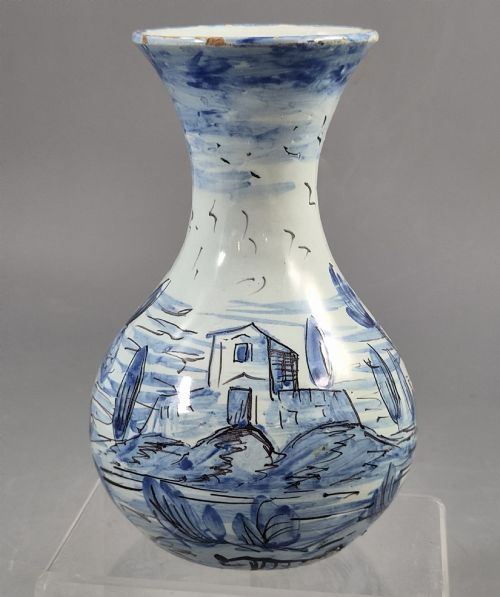
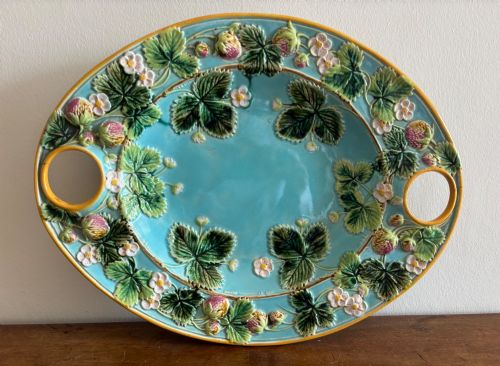
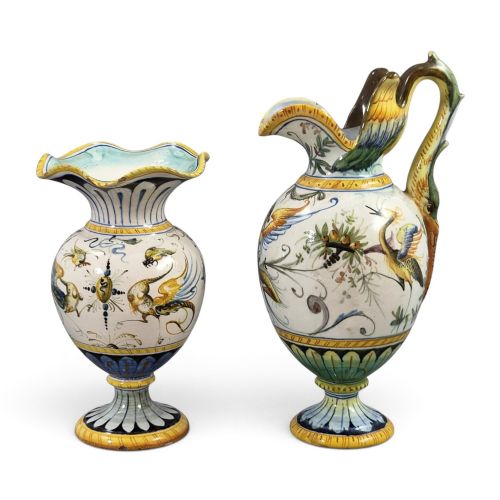
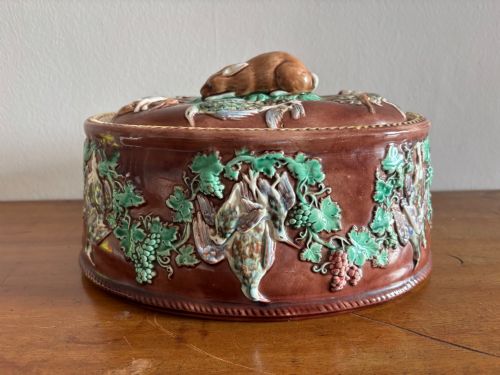
These glazed majolica earthenware pieces combine colourful lead and tin glazes with moulded ceramic bodies to bring vibrant historic imagery into a room.
Glazed Majolica Earthenware
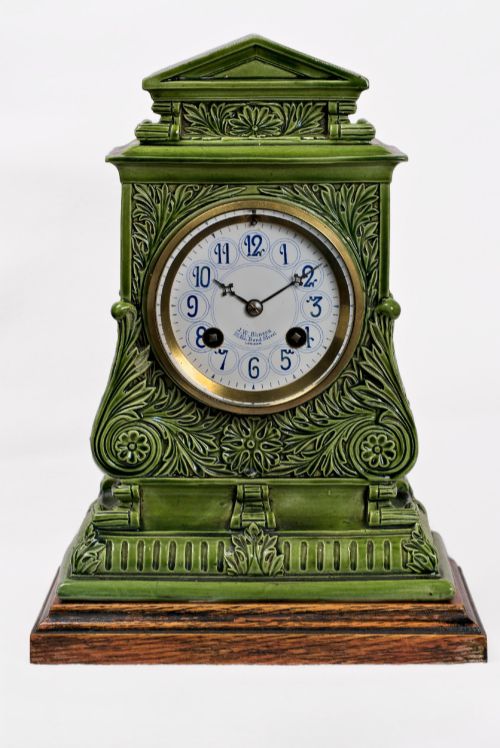
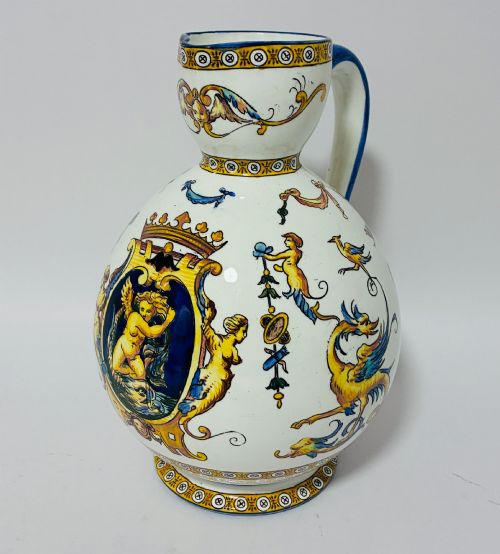
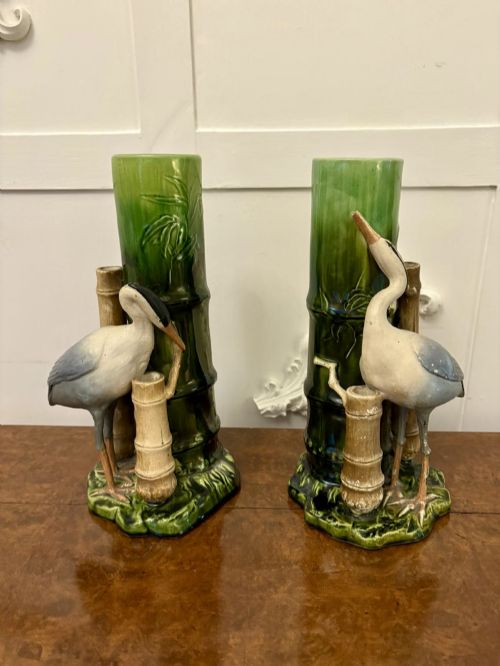
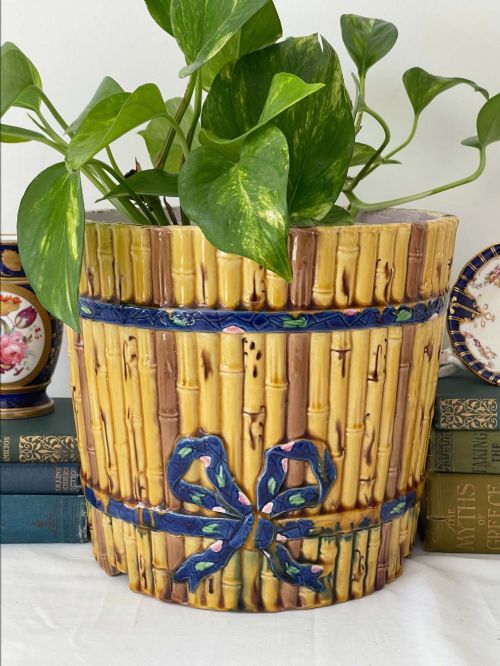
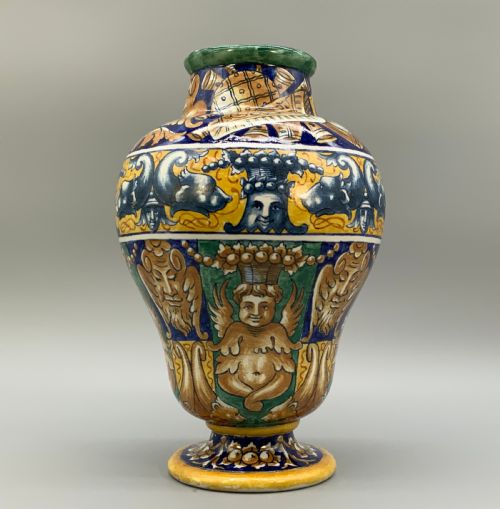
When searching for glazed majolica earthenware, buyers encounter everything from 18th-century Italian apothecary jars and chargers to Victorian naturalistic tablewares and revival vases. The selection spans domestic utility and decorative display, featuring pharmaceutical albarelli, botanical comports, and figural ornaments.
Most pieces met on this page date from the 19th century, drawing on Renaissance revivalism, Italian Baroque, and Victorian naturalism. Continental potteries and English factories alike produced these wares, ranging from large jardinieres on pedestals to small cabinet vases and pilgrim flasks.
Materials and Technique
Potters shaped earthenware and ceramic bodies by hand or in moulds, preparing a porous clay base ready to receive liquid decoration. Artisans then applied tin glazes or lead glazes to create an opaque or glossy canvas for the pigments.
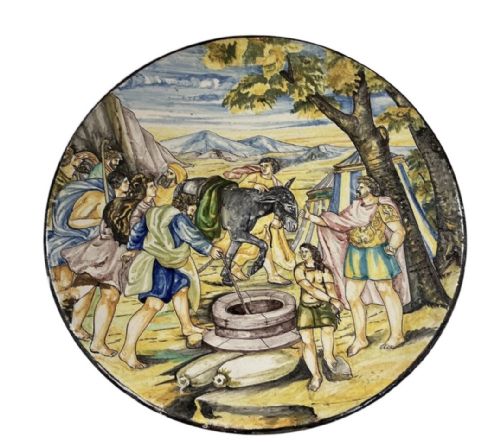
Coloured metallic oxides were painted directly onto the unfired or biscuit-fired glaze, fusing during a second kiln firing to yield bright polychrome or blue and white finishes. This technique allowed makers to achieve rich painterly detail on chargers, ewers, and figural jugs.
Glazed Majolica Earthenware Retail Price Guide 2026
Typical asking prices for glazed majolica earthenware among the pieces listed under this phrase on Sellingantiques today, from the lower quarter to the upper quarter. They describe what is for sale here now, not the wider market.
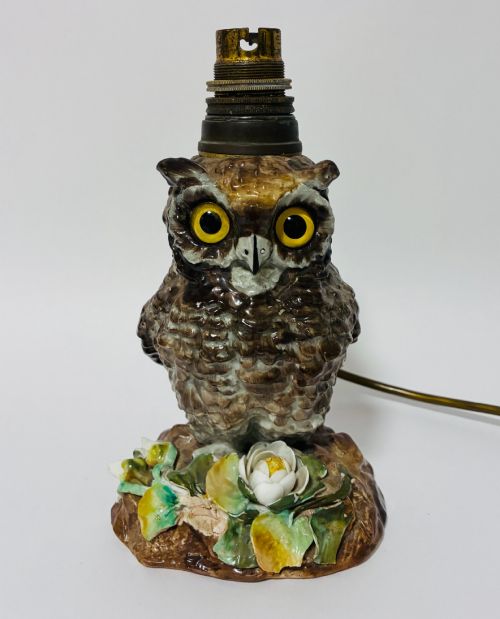
A Victorian ceramic owl lamp base gazes out from the inventory, proving past households enjoyed illuminating their parlours with wide-eyed nocturnal birds.
The Measure of Quality
Quality rests upon the crispness of the moulded relief and the control shown in the painted brushwork. Pieces displaying subtle shading and secure alignment of glazes stand apart from simpler, heavier productions.
The sophistication of the glaze chemistry dictates visual depth, where a smooth, even finish enhances the underlying ceramic contours without obscuring the modelled detail.
Gien French Faience·Bretby Vases·Holdcroft Majolica·Minton Majolica·Cantagalli Florence·George Jones·Burmantofts Majolica
The Glazed Majolica Earthenware Glossary
- Majolica
- A type of earthenware decorated with coloured lead or tin glazes over an opaque white ground. It includes both Italian Renaissance wares and 19th-century Victorian polychrome pieces.
- Albarello
- A cylindrical earthenware jar used by apothecaries to store drugs and ointments. These vessels often feature painted botanical or heraldic labels.
- Charger
- A large decorative plate or dish intended for display on a wall or sideboard rather than daily dining use. Many examples showcase detailed historical or floral scenes.
- Faience
- Tin-glazed earthenware produced in France, Germany, and other European regions outside Italy. The technique creates a smooth white surface suitable for painted ornamentation.
- Istoriato
- A style of ceramic decoration featuring narrative historical, biblical, or mythological scenes painted across the surface. Artisans utilised the tin-glaze canvas much like an artist uses a panel or canvas.
Glazed Majolica Earthenware: Frequently Asked Questions
How do I clean glazed majolica earthenware?
Dust these ceramic pieces gently with a dry, soft cloth to prevent particulate accumulation on the glaze surface. Avoid using water, detergents, or abrasive cleaners, which can penetrate hairline crazing in the earthenware.
Keep pieces away from direct sunlight and damp environments to protect the structural integrity of the ceramic body and the stability of the historical glazes.
Are apothecary jars waterproof?
Historic pharmacy jars and drug jugs were designed to hold dry or viscous medicinal contents rather than act as modern flower vases. Moisture can seep through old earthenware bodies or historic glaze crazing, potentially staining the interior.
Display these jars empty on shelves or tables to preserve their historical condition and prevent internal water damage.
Can I use majolica chargers for food?
Most antique chargers and serving dishes were intended for display or ceremonial presentation rather than modern dining use. Historic glazes can be delicate, and older earthenware bodies may absorb liquids or show wear from cutlery.
Enjoy these plates on wall brackets, plate stands, or sideboards where their painted historical scenes remain safe from accidental impacts.