



Glazed Earthenware Stand
A glazed earthenware stand brings bright colour and functional form to a hallway or conservatory, combining solid ceramic construction with expressive moulded detail.
Glazed Earthenware Stand
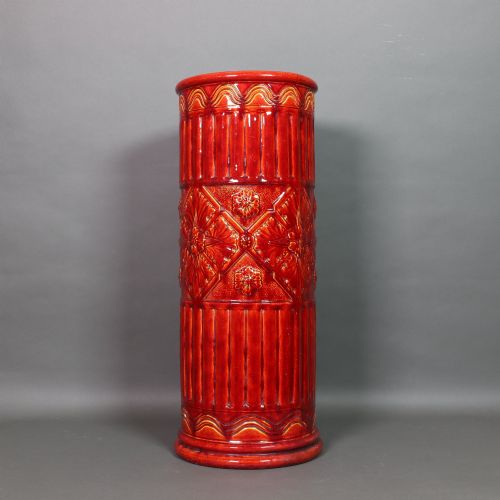
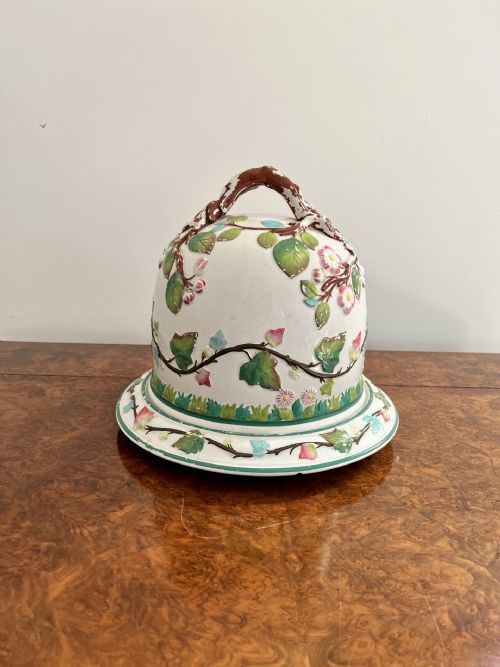
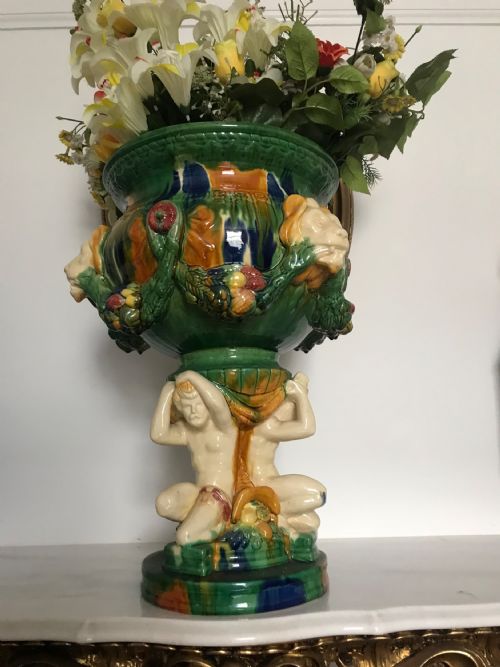
When you search for a glazed earthenware stand, you encounter substantial utilitarian objects designed to support plants, umbrellas or cheese domes in nineteenth and early twentieth century interiors. The pieces on this page span the Victorian period through to the nineteen twenties, encompassing styles from Arts and Crafts to Art Nouveau and Majolica. You are most likely to meet large garden seats, stick stands and jardiniere pedestals fashioned from durable ceramic bodies.
Makers working within British art pottery traditions, such as Burmantofts and Minton, produced many of these architectural stands alongside continental European potteries. Forms range from columnar pedestals for floral displays to heavy umbrella holders decorated with moulded foliage, figures or animal motifs. Each object fulfils a specific domestic or conservatory requirement while displaying the rich decorative vocabulary of its era.
Materials and Technique
Potters constructed these heavy stands using earthenware clay bodies shaped by throwing, moulding or slip casting before applying thick layers of coloured glaze. The application of lead glaze, majolica enamel or lustrous metallic finishes created a glossy impermeable surface that protected the porous ceramic underneath.
Firing techniques allowed vibrant mineral oxides to melt into the glaze, producing the deep greens, blues and browns characteristic of Victorian and Edwardian art pottery. Artisans often combined sculptural figural bases with cylindrical columns, joining separate fired sections together securely before the final glazing process.
Glazed Earthenware Stand Retail Price Guide 2026
Typical asking prices for glazed earthenware stand among the pieces listed under this phrase on Sellingantiques today, from the lower quarter to the upper quarter. They describe what is for sale here now, not the wider market.
Sturdy ceramic greyhounds and griffins stand guard at the base of nineteenth-century umbrella holders, ready to catch your wet walking sticks.
Qualities of Construction and Design
The distinction between ordinary production and superior pieces rests upon the crispness of the moulded relief and the depth of the coloured glazes. Master potteries achieved rich tonal variations across floral and figural surfaces, whereas lesser items display flat, uniform colour washes.
Structural ambition also separates the better examples, seen in large multi-part jardiniere stands and complex figural supports that demand precise firing to prevent warping. The integration of distinct aesthetic movements, such as the fluid lines of Art Nouveau or the stylized botanical motifs of Arts and Crafts, elevates the visual presence of the ceramic.
Burmantofts Faience·Minton·Julius Dressler·Clement Massier·Spode
The Glazed Earthenware Stand Glossary
- Faience
- Tin glazed earthenware, often associated with decorative architectural pieces and colourful art pottery stands from the late nineteenth century.
- Majolica
- Pottery glazed with an opaque tin enamel containing lead, celebrated for its brilliant, saturated colour palette and rich moulded relief decoration.
- Jardiniere
- A large ceramic flower pot or ornamental container, frequently mounted upon a matching columnar pedestal stand.
- Slip
- A mixture of clay and water applied to pottery surfaces for decoration or to create a smooth ground before glazing.
Glazed Earthenware Stand: Frequently Asked Questions
How were garden seats used?
These sturdy ceramic seats served as decorative and practical garden or conservatory furniture throughout the nineteenth century. They provided a moveable perch that resisted damp weather.
Owners placed them among potted plants or along shaded veranda walks where the colourful lead glazes contrasted with green foliage.
What is a majolica stand?
A majolica stand is a heavy earthenware support finished with colourful opaque glazes that highlight moulded botanical or figural details. These pieces often held large potted palms or served as pedestals for decorative tazzas.
The glossy surface protected the porous ceramic body while offering vibrant hues suited to Victorian interiors.
How do I clean glazed earthenware?
Dust these glazed surfaces gently with a soft cloth to prevent scratching the glossy finish. Avoid abrasive cleaning agents or soaking the ceramic.
Harsh chemicals can damage old lead glazes and delicate enamels applied over the earthenware body during manufacture.
Where should I place a stick stand?
Stick stands belong near entrance halls or boot rooms where umbrellas and walking canes require a dedicated storage vessel. The waterproof glazed interior catches drips from wet weather gear.
Position the heavy ceramic piece away from heavy foot traffic to protect its moulded earthenware body from accidental knocks.