





Glazed Earthenware Plant Pots
These glazed earthenware plant pots are robust vessels designed to display indoor foliage, spanning Victorian majolica and French provincial styles.
Glazed Earthenware Plant Pots
Glazed earthenware plant pots appear chiefly as jardinieres and planters, often accompanied by matching pedestals or designed with double handles. They range from nineteenth-century Victorian naturalism and art pottery to twentieth-century French provincial wares.
The selection centres heavily on British factories from the Victorian and Edwardian eras, alongside pieces shaped in the majolica taste. Buyers encounter both single decorative vessels and larger floor-standing jardinieres intended for substantial ferns and palms.
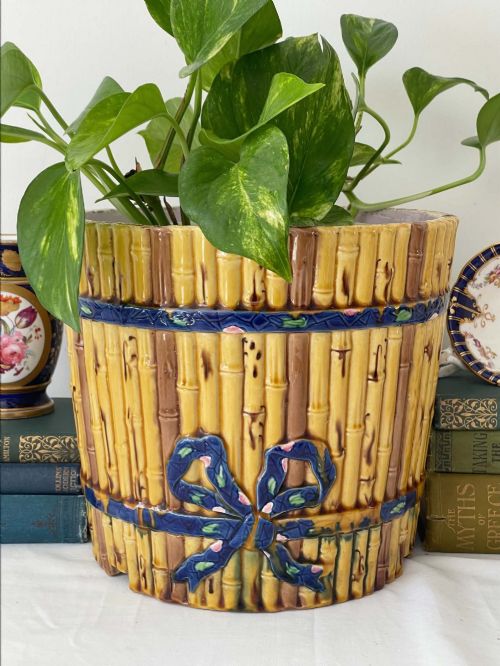
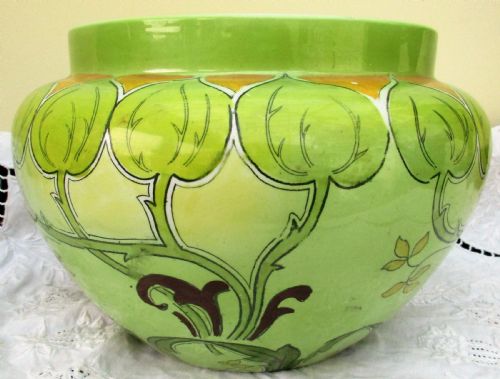
Form and ornamentation follow prevailing historical movements, moving from moulded bamboo motifs and swan forms to fluid art nouveau lines. Each pot serves its original function of housing plants while functioning as a decorative interior centrepiece.
How they were made
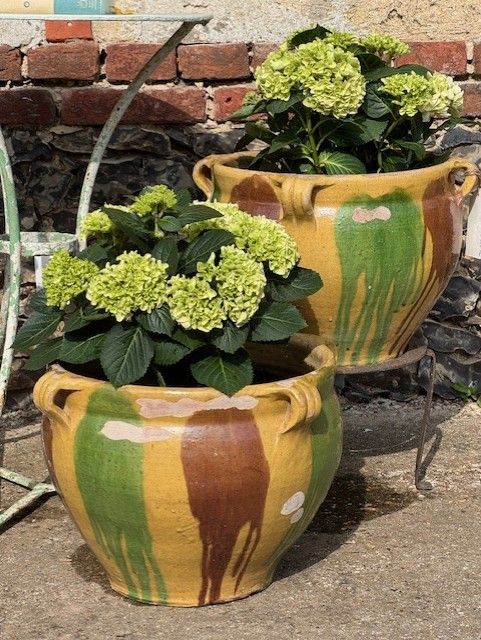
Potters shaped these vessels using earthenware and terracotta clays, applying opaque and coloured glazes to achieve glossy, protective finishes. Techniques such as dribble glazing create varied surface textures on French provincial planters from Castelnaudary.
Moulding and hand-throwing formed the structural bodies, allowing factories to incorporate intricate relief work like bamboo stalks, floral motifs, and sculptural animal figures. Firing fixed the porous earthenware body beneath impervious vitreous layers.
Glazed Earthenware Plant Pots Retail Price Guide 2026
Typical asking prices for glazed earthenware plant pots among the pieces listed under this phrase on Sellingantiques today, from the lower quarter to the upper quarter. They describe what is for sale here now, not the wider market.
Victoria's subjects harboured a fierce passion for indoor ferns, turning the humble plant pot into a stage for sculpted bamboo and swans.
What varies in quality
Quality rests in the crispness of the moulded relief and the depth of the majolica glaze application, where sharper details separate standard production from superior studio outputs. Potteries like Minton, Doulton, and Burmantofts demonstrate distinct control over pigment blending and firing temperatures.
The artistic ambition of the design dictates distinction, from simple utilitarian forms to sophisticated pieces reflecting Christopher Dresser or art nouveau aesthetics. Intact structural integrity and well-preserved glaze surfaces without heavy restoration determine the standing of individual pots.
Minton·W.A. Adderley·Doulton Burslem·Doulton Lambeth·Royal Doulton·Burmantofts Majolica·Royal Worcester·George Jones·Linthorpe Pottery
The Glazed Earthenware Plant Pots Glossary
- Jardiniere
- A decorative ceramic pot or stand designed to hold a live plant or floral arrangement indoors.
- Majolica
- A type of earthenware covered with an opaque tin glaze and painted with brightly coloured metallic oxides.
- Earthenware
- Porous pottery fired at relatively low temperatures, requiring a vitreous glaze to hold water.
- Dribble Glaze
- A decorative glazing technique where liquid colours are allowed to run and blend freely down the vessel walls.
- Terracotta
- Unglazed or porous fired clay of a brownish-red colour, commonly used for basic horticultural vessels.
Glazed Earthenware Plant Pots: Frequently Asked Questions
How do I clean an antique glazed earthenware plant pot?
Wash the ceramic surface gently with lukewarm water and a soft cloth, avoiding harsh chemical detergents that might harm historic glazes.
Dry the vessel thoroughly afterwards to prevent moisture penetration through any microscopic crazing in the glaze layer.
Can I plant directly inside a Victorian jardiniere?
Direct planting risks moisture seeping into the porous earthenware body over time, which can cause the interior glaze to crack.
Use a separate plastic nursery pot and a saucer inside the jardiniere to protect the ceramic walls from dampness.
What is the difference between a planter and a jardiniere?
A jardiniere is traditionally an ornamental indoor vessel intended to hold a potted plant out of sight, often sitting on a matching pedestal.
Planters can encompass a broader range of outdoor and indoor containers, though nineteenth-century terminology frequently uses both words interchangeably.