
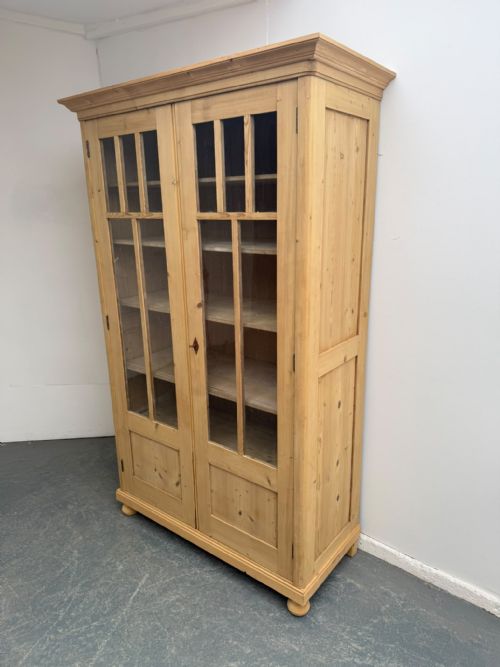
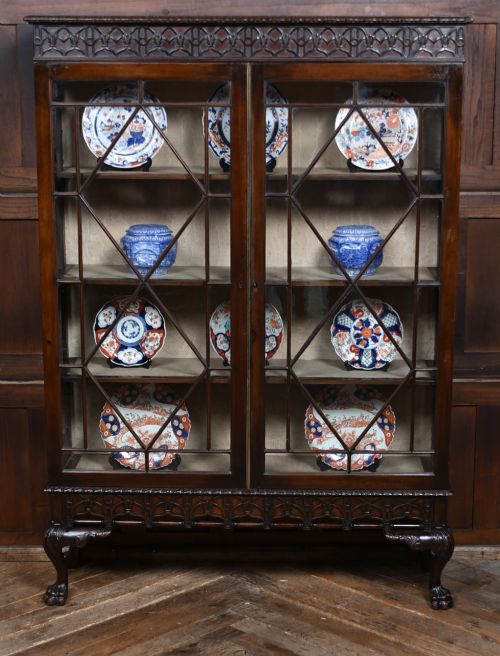


Glazed Double Cupboard
A glazed double cupboard brings together timber and glass to store and display books and china across centuries of domestic life.
Glazed Double Cupboard
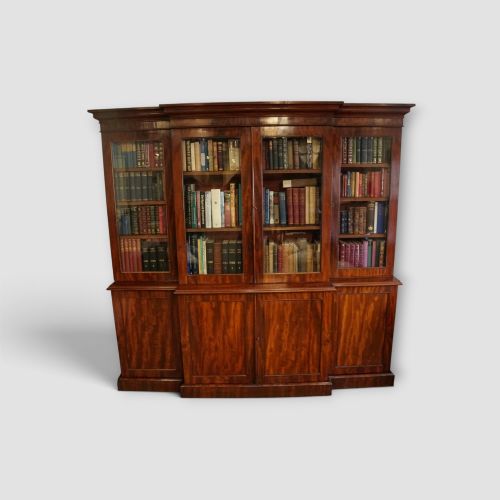
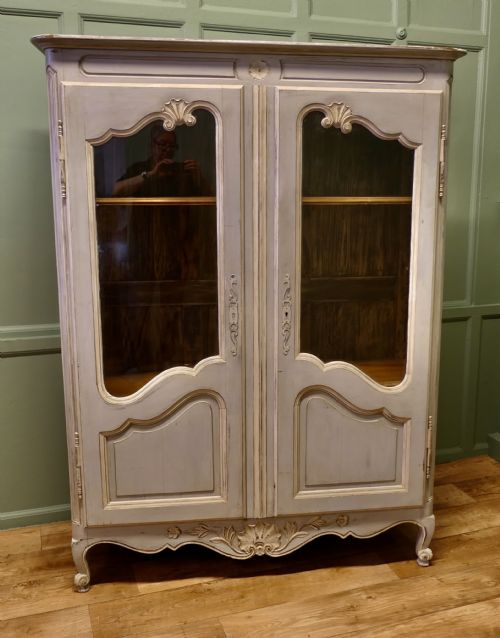
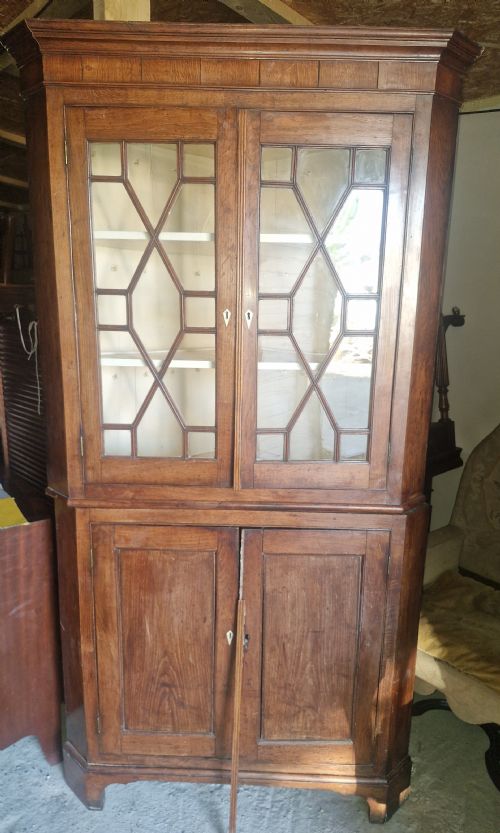
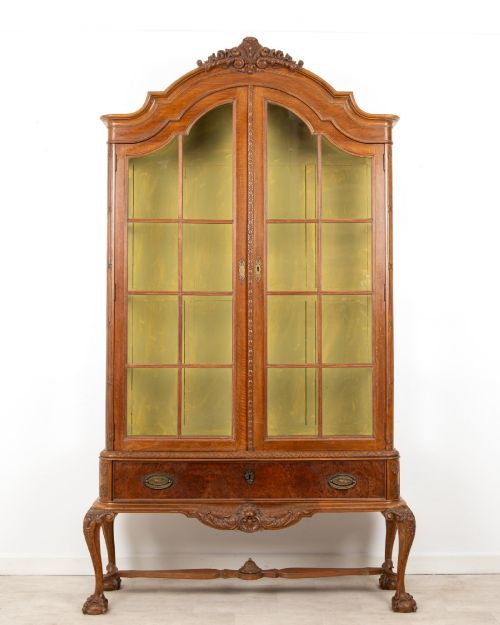
A glazed double cupboard covers freestanding bookcases, breakfront display cabinets, and tall corner cupboards originating from the eighteenth, nineteenth, and early twentieth centuries. These pieces serve to house and exhibit collections behind glass doors while keeping interiors protected from dust.
The version most commonly met on this page is the Victorian or Edwardian mahogany or walnut display cabinet, often standing in two parts. Pieces from the Georgian and Regency eras appear alongside revivals including Chippendale, Queen Anne, and Jacobean styles, reflecting shifting domestic tastes for timber display furniture.
Corner cupboards provide an alternative format designed to fit room angles, using double doors to maximise storage space in smaller interiors. Whether configured as flat-fronted breakfronts or vertical corner units, each piece relies on glazed panels to showcase its contents.
Judging execution and finish
Quality rests on the selection of timber figures and the precision of marquetry inlay rather than the mere presence of decoration. Superior examples demonstrate crisp carving, tight joinery, and well-matched wood grains across the double doors.
The integration of the glass framing and the weight of the timber indicate the standard of workshop production. Finer cabinets exhibit harmonious proportions and carefully fitted brass fittings that align smoothly with the overall architectural style.
Listings feature mahogany, walnut, oak, and pine cabinets spanning the Georgian, Victorian, and Edwardian periods alongside twentieth-century revivals.
Edwards And Roberts
The Glazed Double Cupboard Glossary
- Breakfront
- A cabinet design where the central section projects forward from the flanking wings. This configuration adds architectural depth to large bookcases.
- Marquetry
- Decorative inlay work using various coloured wood veneers to create pictorial or geometric patterns on the surface. Cabinet makers applied this technique to doors and friezes.
- Pier cabinet
- A low cabinet designed to stand against the wall space between windows. These pieces often feature glazed doors and walnut or mahogany construction.
- Ormolu
- Gilded bronze mounts applied as ornamentation to furniture frames. The technique adds metallic contrast to dark timber surfaces.
- Double height
- A piece constructed in two distinct vertical sections, typically with an upper display case resting on a lower cupboard base. This arrangement facilitates movement and placement in rooms.
Glazed Double Cupboard: Frequently Asked Questions
How do I date a glazed double cupboard?
Dating relies on observing timber choices, construction methods, and stylistic revival cues recorded across the pieces. Mahogany and walnut dominate earlier periods, while Edwardian examples often incorporate lighter inlaid marquetry.
Secondary woods, backboards, and the style of the glass glazing bars further indicate the era of manufacture. Comparing the specific revival style, such as Chippendale or Queen Anne, helps narrow the decade.
What is the difference between a display cabinet and a bookcase?
A bookcase is primarily built for storing bound volumes, featuring simple shelving behind glass doors. Display cabinets often incorporate mirrored backs, velvet linings, or delicate framing intended to showcase ceramics and decorative objects.
Many examples on this page bridge both categories, serving interchangeably for books and collections.
Are corner cupboards difficult to place in modern rooms?
Corner cupboards are designed specifically to utilise dead angles in rooms, making them practical for smaller spaces. Their two-part construction also assists with maneuvering them into position.
Measuring the diagonal wall space ensures the double doors open fully without obstruction from nearby furniture.
How should I care for antique mahogany and walnut?
Maintain timber surfaces by applying appropriate wax polish sparingly to nourish the grain. Avoid placing cabinets in direct sunlight or near heat sources to prevent timber warping and veneer cracking.
Regular dusting with a soft cloth keeps the glass and woodwork clear without moisture damage.