
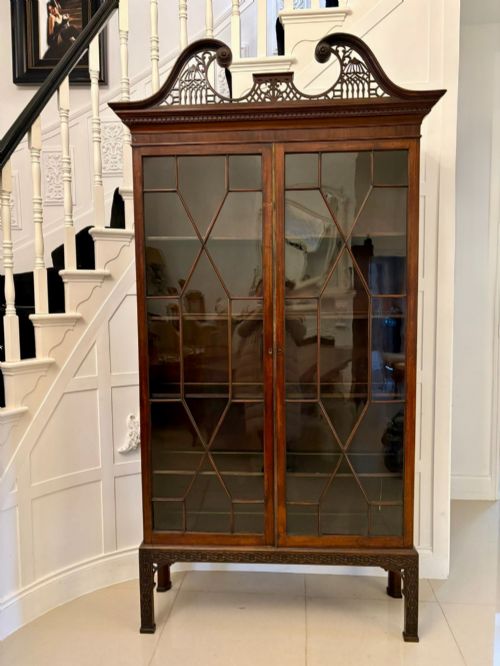
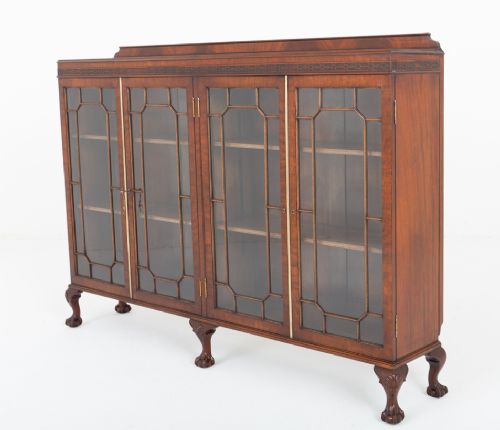
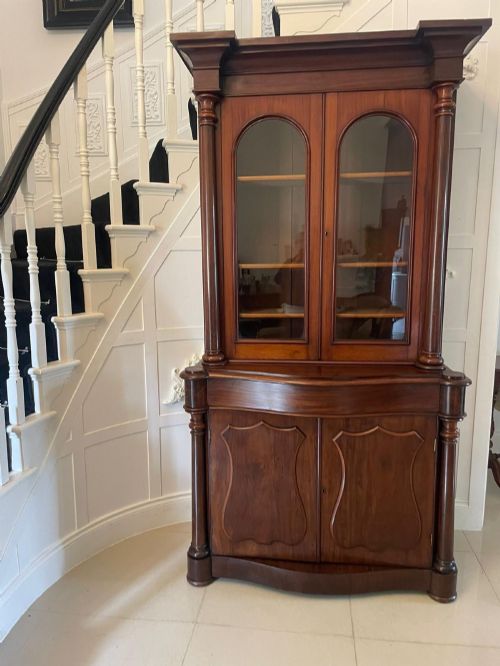
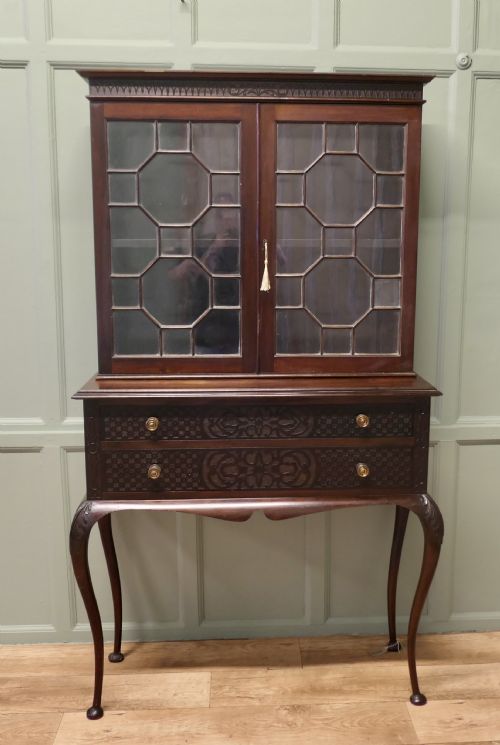
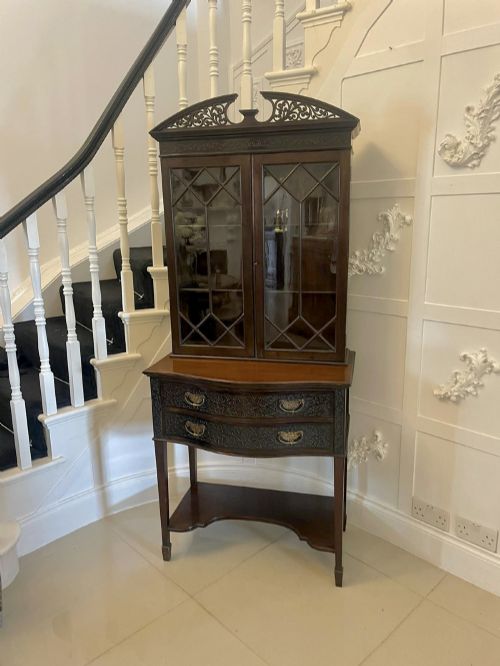
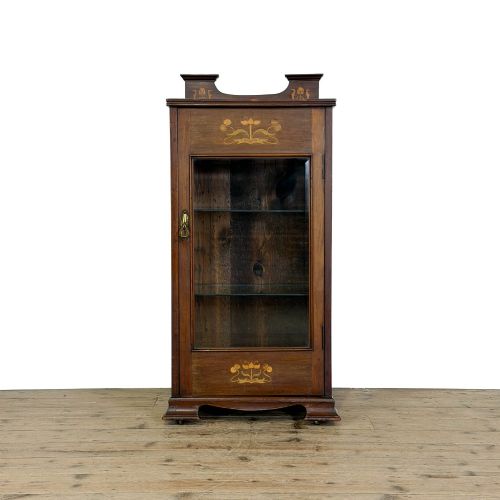
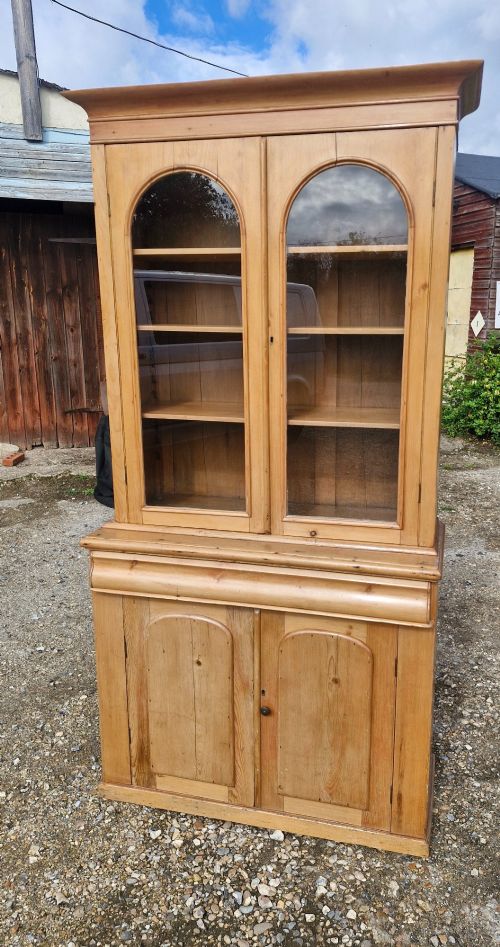
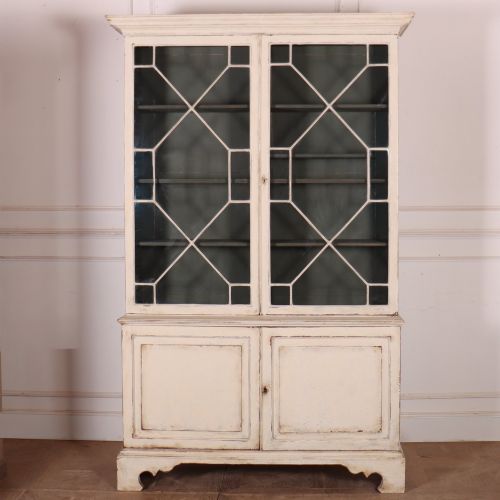
Glazed Door China Cabinet
A glazed door china cabinet protects delicate porcelain behind glass while anchoring a room with traditional timber.
Glazed Door China Cabinet
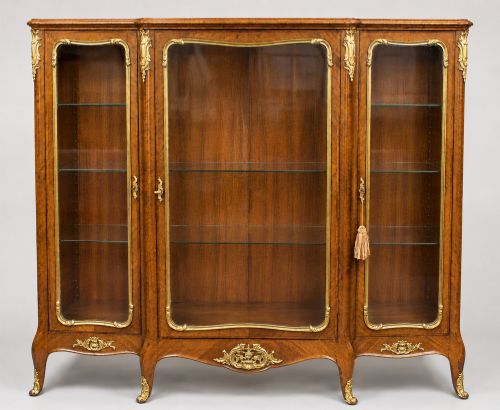
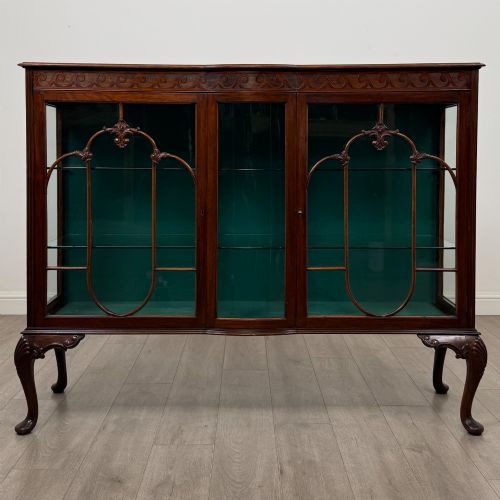
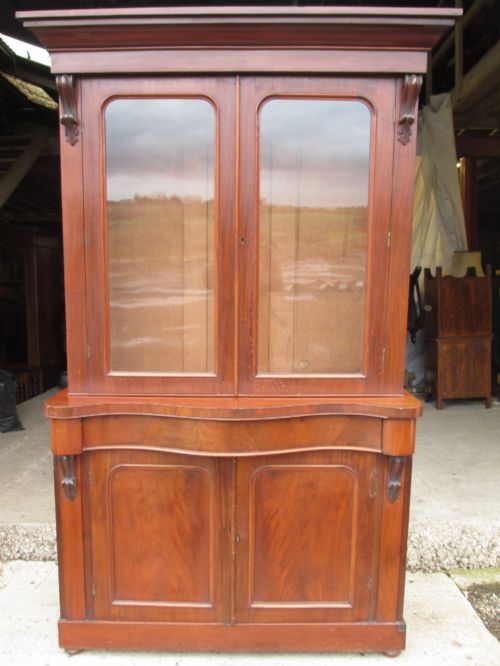
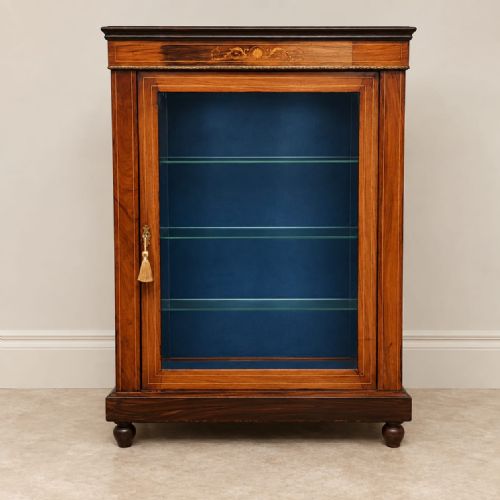
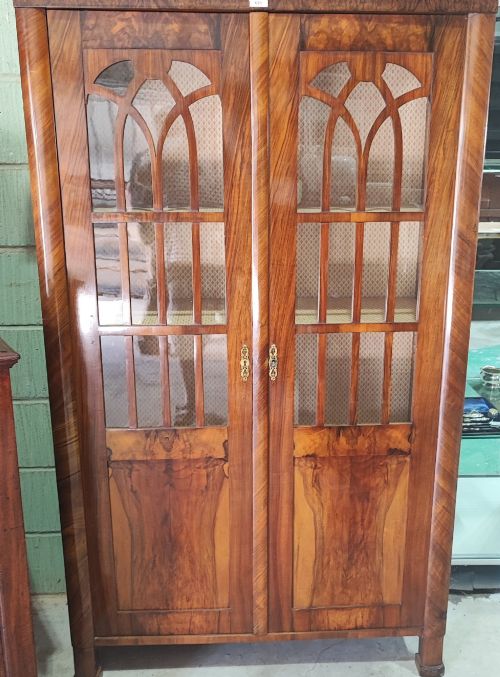
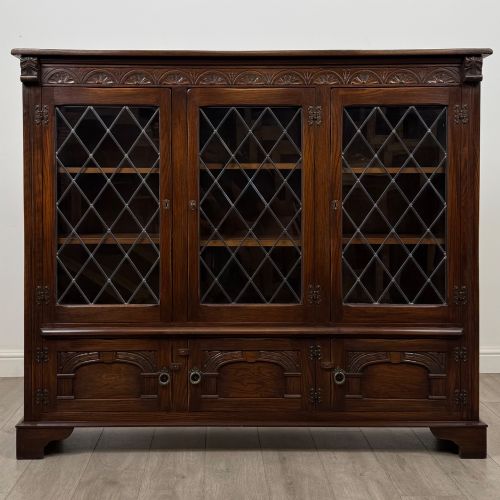
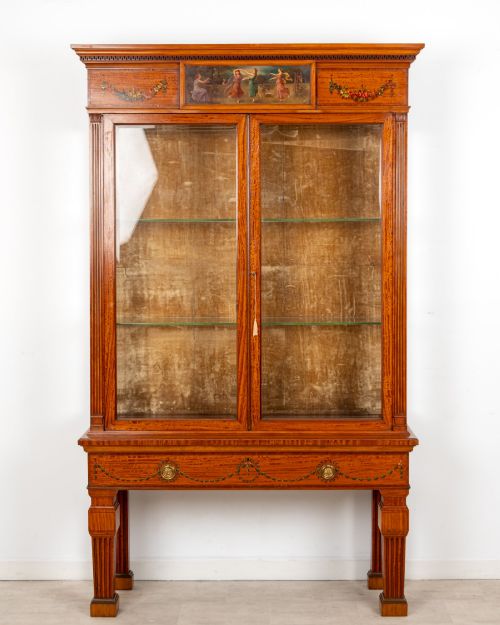
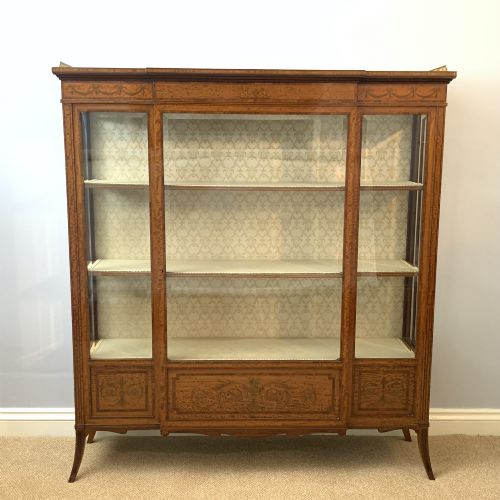
A glazed door china cabinet is a storage piece designed to keep tableware and ornaments visible yet free from dust. The pieces available here span from the nineteenth century into the twentieth, encompassing tall bookcases, narrow pier cabinets and low side units.
Victorian and Edwardian versions in mahogany and walnut dominate the selection, often carrying revival styles like Sheraton or Chippendale. Simpler pine and oak kitchen dressers also appear alongside formal satinwood and kingwood display furniture.
How they were made
Cabinet makers built these pieces using solid timbers like mahogany, oak and pine, frequently applying finer veneers such as satinwood and burr walnut to prominent surfaces. Glass panes were secured into wooden frames or astragals to create compartments for display.
Brass hardware, delicate string inlay and occasional ormolu mounts provide structural detail and decoration. Interiors often feature fabric-lined backing or painted surfaces to complement the displayed ceramics.
The listings span from the eighteenth century through the Victorian and Edwardian eras into the nineteen-twenties, using mahogany, oak, pine, walnut and satinwood.
What varies in quality
The standard of a glazed door china cabinet rests on the selection of timber and the precision of its joinery. Superior examples demonstrate careful figure matching in veneers and subtle hand-carved ornamentation rather than mass-produced presswork.
Finer construction shows in the snug fit of doors, the delicacy of glazing bars and the integration of internal shelving. The depth of finish on the wood distinguishes workshop pieces from simpler utilitarian storage.
Hampton & Sons·Edwards & Roberts
The Glazed Door China Cabinet Glossary
- Astragal
- Moulding strips that divide glass panes within a door frame. These wooden bars form geometric patterns across the cabinet front.
- Vitrine
- A glass-fronted display cabinet used specifically for showcasing fine objects and porcelain. This French term typically applies to more decorative or formal furniture.
- Pier cabinet
- A low freestanding cabinet designed to fit narrow wall spaces between windows. Victorian examples often feature single glazed doors and walnut or mahogany construction.
- Breakfront
- A piece of furniture where the central section projects forward from the flanking wings. This architectural arrangement creates depth and visual balance on larger bookcases.
- Satinwood
- A durable hardwood with a natural golden sheen and smooth grain. Cabinet makers utilised it extensively for fine inlay work during the Sheraton Revival period.
Glazed Door China Cabinet: Frequently Asked Questions
How do I clean the glass?
Use a soft microfibre cloth with a mild vinegar solution applied to the cloth rather than sprayed directly onto the wood. This prevents moisture from seeping into antique frames and damaging older finishes.
Take care around fragile muntins and astragal bars when wiping glazed panels. Old glass can be brittle and requires gentle handling.
Can these cabinets hold heavy books?
Bookcases and heavier oak or mahogany cabinets handle substantial libraries easily. Lighter display cabinets and satinwood vitrines suit porcelain and lighter volumes better.
Check the shelf supports and timber thickness before loading shelves with heavy sets. Adjustable wooden shelves handle weight differently depending on their length.
How do I protect the interior fabric?
Keep cabinets out of direct sunlight to prevent the fading of silk or velvet linings behind the glass. Gentle dusting with a soft brush attachment maintains the fabric safely.
Humidity control in the room prevents mildew from forming on older backings. Proper ventilation ensures the enclosed timber and textiles remain stable.
Are the keys usually included?
Many Victorian and Edwardian cabinets retain their original working locks and tasselled keys. Replacement keys can be fitted by a specialist if originals are missing.
Working locks add functional value to cabinets storing valuable china. Check listing details to confirm if the locking mechanism is operational.