


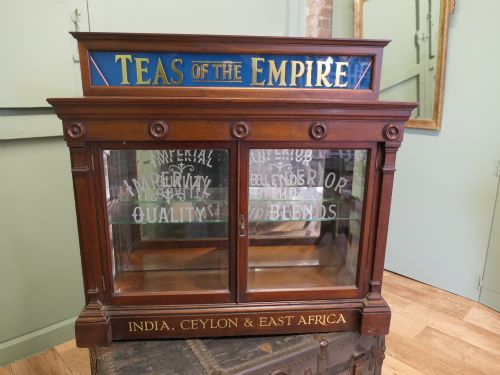



Glass Top Shop Fitting
A glass top shop fitting brings working retail history indoors, offering a glazed display surface built to showcase small objects with period character.
Glass Top Shop Fitting
A glass top shop fitting gathers practical retail furnishings designed to display wares to customers from above. These pieces emerge primarily from Victorian, Edwardian, and later commercial eras, spanning the late nineteenth century through to the mid-twentieth century.
The version most commonly encountered on this page is the counter-top display cabinet or shop counter, constructed to sit upon a timber base while providing a clear glazed viewing area. Materials encompass solid mahogany, oak, brass, and velvet linings.
Forms vary from large display counters and table top cabinets to jewellers countertops and bow top cabinets. Each item reflects the commercial needs of traditional trades such as gunsmiths and drapers.
Construction and materials
Makers utilised timber frames of solid mahogany and oak to build the structural body of each counter or cabinet. These timbers provided the strength needed for daily commercial use in busy shops.
Glazing sits within the wooden framing to protect the contents while maintaining visibility from above. Brass framing also appears in later twentieth-century examples, paired with internal velvet surfaces to cushion displayed goods.
Glass Top Shop Fitting Retail Price Guide 2026
Typical asking prices for glass top shop fitting among the pieces listed under this phrase on Sellingantiques today, from the lower quarter to the upper quarter. They describe what is for sale here now, not the wider market.
Some cabinets bear the ghosts of past commerce through hand-painted sign-writing bearing long-forgotten local gunsmiths.
Evaluating quality and finish
Quality rests upon the selection of timber and the precision of the joinery within the frame. Solid mahogany construction and substantial brass framing separate utilitarian storage from finer merchant fittings.
Original details such as hand sign-writing and specialised trade provenance elevate a piece above standard commercial stock. The integration of curved glass or bow top forms further distinguishes the upper tier of surviving examples.
Saml. Elliott & Sons·Robert West Gunsmith
The Glass Top Shop Fitting Glossary
- Counter-top cabinet
- A glazed display case built to sit upon an existing shop counter. This format allowed merchants to exhibit small valuable goods directly in front of the customer.
- Drapers counter
- A long commercial table used in textile shops for measuring and displaying cloth. These pieces often incorporate internal shelving or drawers beneath the timber top.
- Bow top cabinet
- A display case featuring curved glass panels at the front or top. This configuration softens the boxy silhouette and enhances visibility from multiple angles.
- Trade sign light
- An illuminated commercial fixture designed to direct attention to a business or product. These fixtures date from the mid-twentieth century industrial period.
Glass Top Shop Fitting: Frequently Asked Questions
What is a glass top shop fitting?
A glass top shop fitting is a vintage commercial furnishing designed with a transparent upper surface for displaying merchandise. These items include counter-top cabinets, display counters, and jewellers shelves originating from late nineteenth and early twentieth-century shops.
Built to withstand daily retail use, they combine sturdy timber frames with glazed viewing areas. Collectors now repurpose them in domestic settings to exhibit small collections.
How were these counters used originally?
Merchants placed these glass-topped units on top of main shop counters or used them as standalone tables to present goods securely. Customers could inspect items closely through the glass while the merchandise remained protected from handling.
Specific trades utilised specialised designs, such as drapers using long counters for textiles and gunsmiths or jewellers using tabletop cabinets for precision wares.
How do I date a shop cabinet?
Dating relies upon observing the timber, hardware, and construction methods used in the piece. Victorian and Edwardian examples frequently feature solid mahogany or oak with traditional hand-joined framing.
Later pieces from the 1930s and 1940s introduce brass framing and industrial commercial styling. Specific period markers like curved glass or original trade sign-writing also help narrow down the decade of manufacture.
Can I use these in a modern home?
These fittings integrate well into contemporary interiors as display surfaces for collections, jewellery, or curiosities. Their shallow profile makes them suitable for placing on sideboards, desks, or dedicated table bases.
Purchasers often place them in living spaces or studies where the glazed top protects delicate items from dust while keeping them visible.