



Glass Tantalus Set
A glass tantalus set locks away spirits in cut crystal bottles behind a clever mechanism, combining security with hospitality in one piece.
Glass Tantalus Set
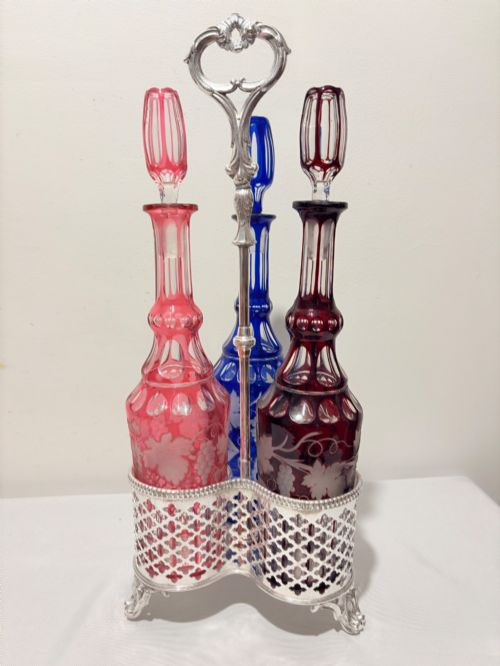
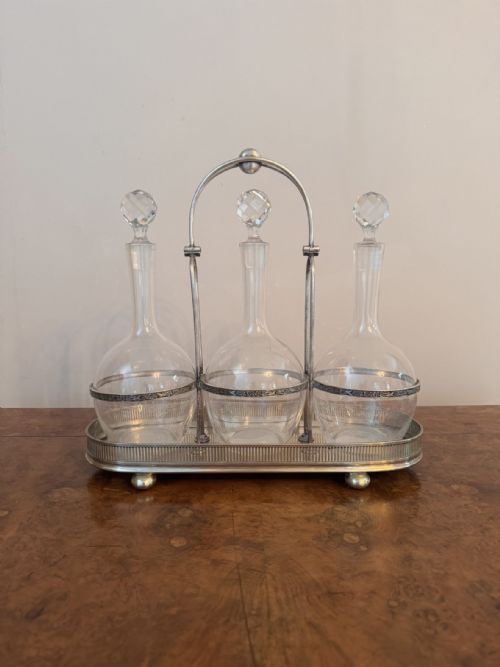
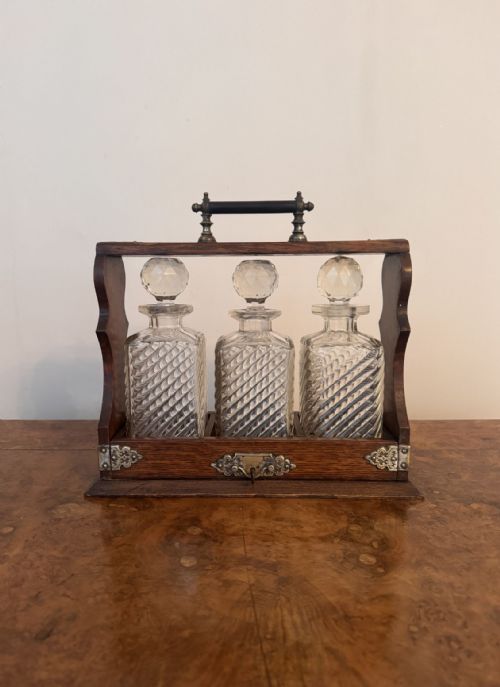
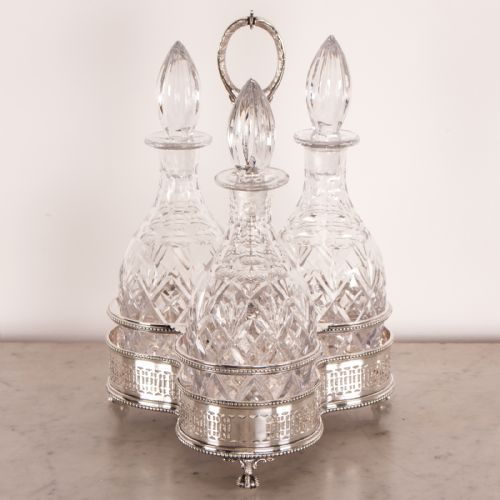
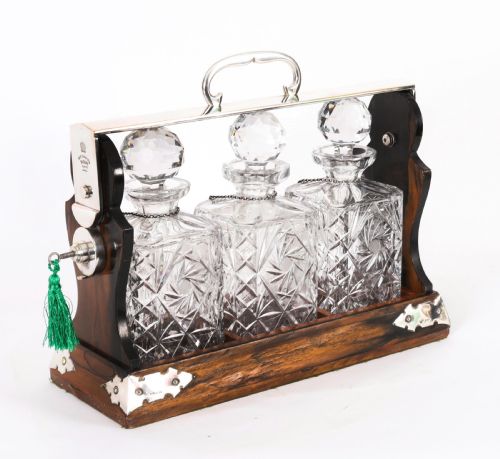
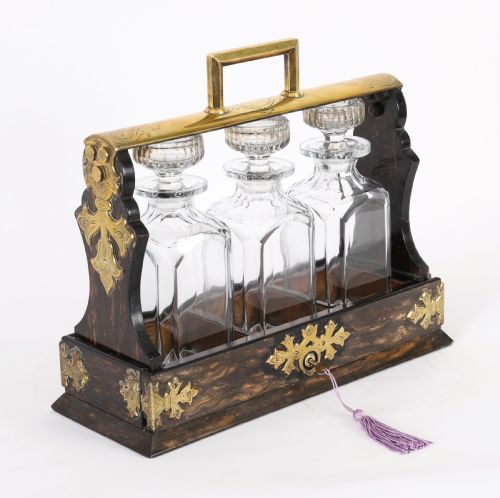
A glass tantalus set comprises cut crystal or glass decanters held within a secure frame, most frequently encountered from the Victorian and Edwardian periods. These pieces combine utilitarian barware with locking mechanisms designed to restrict access to spirits.
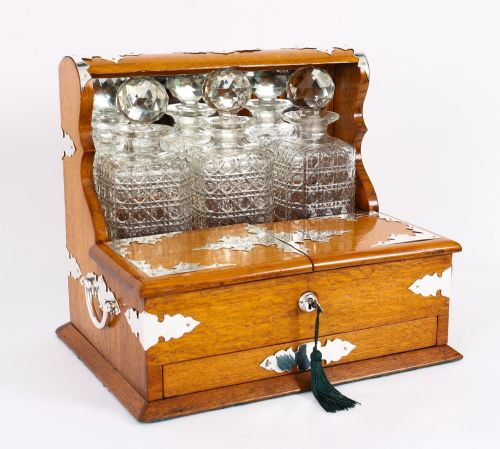
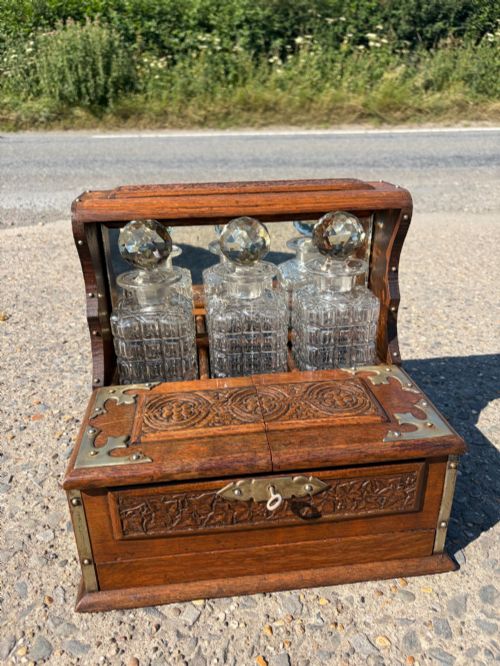
The dominant forms span from two and three bottle oak or mahogany frames to elaborate games compendiums and French liqueur canteens. Makers housed these sets in wood mounted with silver plate, brass, or ormolu.
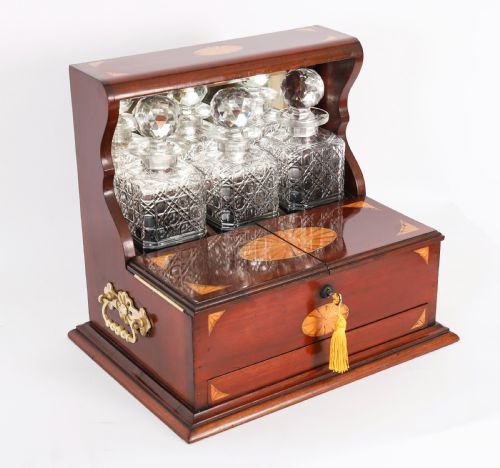
Examples range from simple table stands to multifaceted dry bars incorporating compartments for cards and counters. The core function remains the display and secure containment of decanted liquor.
How they were made
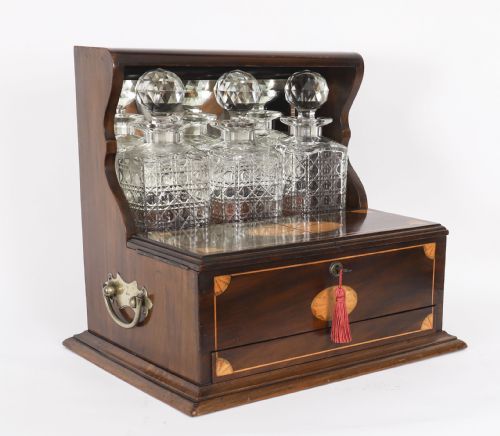
Craftsmen utilised dense hardwoods such as oak, mahogany, walnut, and coromandel to build the exterior boxes and stands, often employing marquetry stringing and satinwood inlay for surface decoration. Metal mounts in silver plate, brass, or ormolu provided structural reinforcement and the locking mechanism itself.
The bottles and decanters inside were formed from cut crystal, frosted glass, or cut glass, sometimes shaped into barrels or traditional decanter profiles. Each element required precision glasscutting and metal casting to ensure the locking bar engaged smoothly across the stoppers.
Some Victorian householders relied on a tantalus to keep the brandy safe from the butler.
What varies in quality
The sophistication of the locking mechanism and the quality of the metal plating determine the upper tier of these pieces, alongside the weight and clarity of the cut crystal bottles. Maker attribution and the inclusion of integrated games compendiums or original keys elevate certain items significantly.
Simpler two bottle stands in plain oak sit at the accessible end of the scale, whereas coromandel or inlaid cases with baccarat crystal represent the more elaborate expressions found within this group.
Walker & Hall·Betjemann’s·Baccarat·Elkington·Jacques Adnet
The Glass Tantalus Set Glossary
- Tantalus
- A locking drink container that exposes the decanters while preventing access to the contents without a key.
- Cave a liqueur
- A French fitted box containing liqueur decanters and matching glasses, often featuring ormolu mounts and marquetry.
- Compendium
- A multi-purpose box housing a tantalus alongside games equipment such as cards and counters.
- Silver plate
- A thin layer of silver fused to a base metal foundation, commonly used for the locking bars and handles.
- Cut crystal
- High clarity glass shaped with deep faceted geometric patterns to catch the light.
Glass Tantalus Set: Frequently Asked Questions
How do you open a glass tantalus set?
Unlocking the side mechanism releases the metal retaining bar that stretches across the glass stoppers. Once the bar pivots upward or slides clear, the individual decanters lift freely from the wooden base.
Keys are often missing on antique examples, requiring careful professional intervention or leaving the locking bar permanently open for daily use.
Were these sets used for wine or spirits?
These pieces served whisky, brandy, and liqueurs after dinner rather than everyday table wines. The heavy cut crystal decanters preserved spirits while presenting them attractively in the dining room or drawing room.
Many examples include integrated small glasses or tot pails specifically intended for serving short measures.
How do I date a glass tantalus set?
Dating relies on the combination of wood types, metal hallmarks, and the prevailing style of the housing. Victorian examples often favour heavy oak and brass mountings, while Edwardian pieces introduce lighter woods and refined silver plate.
Maker marks stamped onto the metalwork provide the most precise indication of production eras.