


Vintage Decanter Frame
A vintage decanter frame holds your bottles securely upon the sideboard, combining practical service with period metalwork.
Vintage Decanter Frame
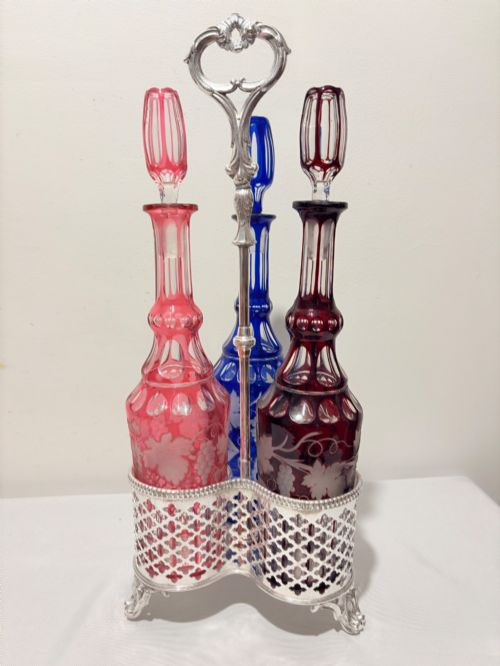
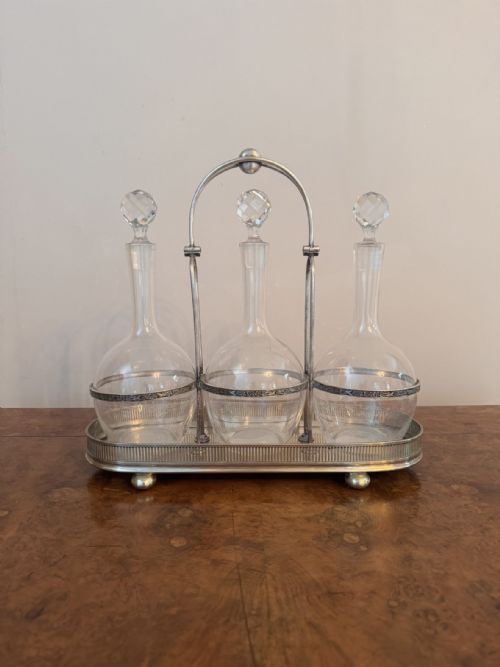
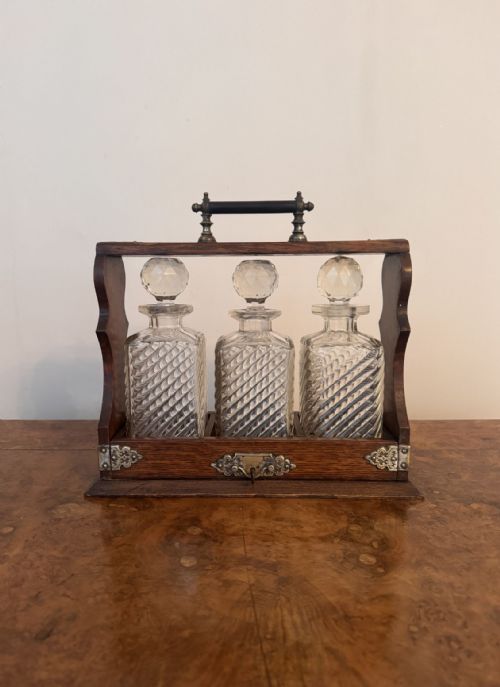
When you search for a vintage decanter frame, you encounter metal, wood, and glass receptacles designed to carry multiple bottles together. The most common forms on this page include silver plated stands, multi-bottle tantalus units, and cruet sets.
How they were made
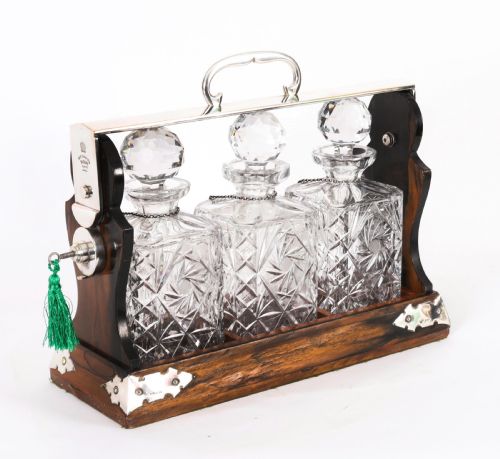
Maker workshops combined silver plating or chrome with timber bases such as oak, mahogany, and exotic coromandel. Metal mounts and locking mechanisms required precise engineering to secure the bottles within their frames.
The accompanying vessels consist of cut glass and cut crystal, shaped by hand and wheel to catch the light. Frames often incorporate sturdy central handles or shields for balanced carriage.
Listings feature silver plate, oak, mahogany, and cut glass across Victorian, Edwardian, and Art Deco periods.
What varies in quality
Subtlety of casting and the weight of the metal frame distinguish finer examples from standard production. Heavier silver plating or solid oak carcasses indicate superior workshops.
The clarity and depth of hand-cut glass bottles matching the original stand elevate the piece. Intricate mechanical locking systems with functional keys also mark higher tier manufacturing.
Betjemann·Elkington·Hukin and Heath·The Goldsmith Co.·Jacques Adnet
The Vintage Decanter Frame Glossary
- Tantalus
- A locking drink stand that secures decanters within a metal and wood frame to prevent unauthorised access. The bottles cannot be removed until the locking bar is unlocked with a key.
- Cruet set
- A fitted frame holding multiple condiment bottles or cruets for the dining table. These frames often feature silver plated handles and matching glass bottles.
- Old Sheffield plate
- An early method of fusing a thin sheet of silver to a thicker copper base before electroplating became common. This technique produces a characteristic warm glow where the base metal subtly shows through.
- Coromandel
- A dense, heavily figured tropical hardwood used in high-end nineteenth-century cabinet work. Its dark grain provides a striking contrast against bright metal mounts.
- Silver plate
- A layer of silver bonded to a base metal substrate, widely utilised for nineteenth and twentieth-century tableware. It offered the appearance of solid silver at a lower cost.
Vintage Decanter Frame: Frequently Asked Questions
What is a decanter tantalus?
A decanter tantalus is a locking frame designed to keep household spirits secure from servants or guests. The wooden or metal bar locks over the stoppers, preventing the bottles from being lifted.
Most examples hold two or three cut glass decanters. They became popular in Victorian and Edwardian dining rooms.
How do I clean a silver plated frame?
Silver plated items require gentle cleaning with a specialised silver cloth or non-abrasive polish. Avoid harsh chemical dips that strip the plating from the underlying base metal.
Take care around wooden bases like oak or mahogany to keep moisture away from the grain.
Are the decanters usually original?
Many frames retain their matching cut glass or crystal decanters, shaped specifically to fit the frame compartments. Replacement bottles do appear frequently due to breakage over the decades.
Matching cut patterns and correct sizing help confirm if the bottles belong to the original stand.
How do I date an oak tantalus?
Dating relies on the style of the hardware, the type of wood, and any maker marks stamped into the metal. Edwardian and late Victorian pieces often feature heavy oak frames with plated brass mounts.
Art Deco examples shift toward modernist chrome framing combined with geometric glass.