



Crystal Decanter Caddy
These crystal decanter caddy pieces secure your finest spirits under lock and key while displaying brilliant cut glass.
Crystal Decanter Caddy
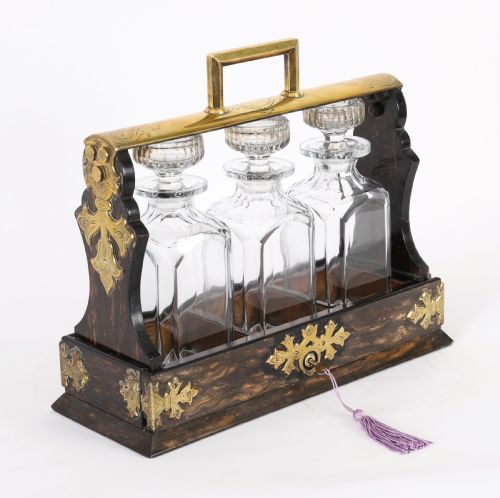
A crystal decanter caddy takes the form of a tantalus, a liquor cave, or a tiered frame designed to hold heavy glassware securely. These drinks furniture items emerge frequently from Victorian and Edwardian workshops, alongside later Art Deco examples.
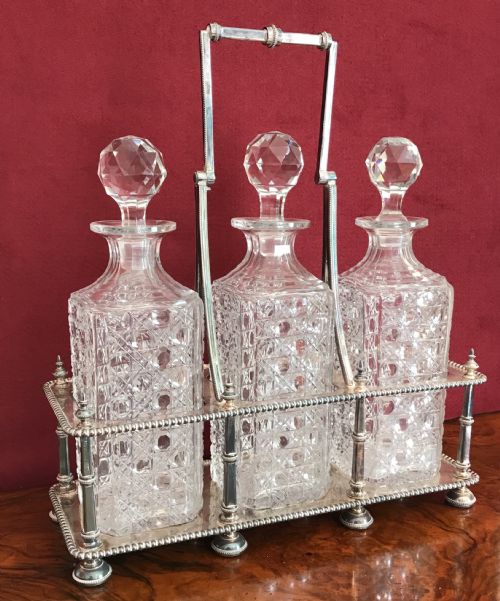
The primary function involves housing two or three cut crystal or glass decanters within a secure frame. Examples range from simple silver-plated stands to elaborate coromandel, walnut, or oak boxes fitted with locking mechanisms.
Victorian and Edwardian versions dominate the current selection, often combining rich timbers with polished metal mounts. Buyers encounter everything from French Napoleon III liqueur cases to sturdy British oak frameworks.
How they were made
Cabinet makers utilised dense hardwoods such as oak, walnut, and coromandel to build the structural boxes and stands. Metalworkers added silver plate, brass, or ormolu mounts to reinforce corners and support the locking bars.
Glassmakers shaped heavy crystal and glass into faceted decanters and barrels, often employing deep hand-cutting techniques. Chrome and glass appear in later Art Deco interpretations reflecting modernist design shifts.
Materials span cut glass, silver plate, brass, oak, cut crystal, glass, metal, and coromandel wood across the Victorian, Edwardian, and Art Deco periods.
What varies in quality
Superior examples feature thick, heavy timbers and complex locking mechanisms that secure the stoppers in place. Lesser pieces rely on simpler open frames without locking bars or intricate cabinet work.
The clarity and depth of the cut crystal distinguish finer vessels from standard moulded glass. High-end pieces also integrate auxiliary items like games compartments or matched tot pails within the primary frame.
Jacques Adnet
The Crystal Decanter Caddy Glossary
- Tantalus
- A locking drink cabinet or frame that prevents the removal of decanters while still displaying their contents. The mechanism holds the stoppers firmly until a key is turned.
- Cave a liqueur
- A French travelling liquor chest containing fitted decanters and liqueur glasses within a plush interior. These often feature ornate brass inlays and exotic wood veneers.
- Coromandel wood
- A dense, heavily figured timber from Asia utilised for luxury Victorian boxes and caddies. Its dark brown grain with black streaks commands attention.
- Ormolu
- Gilded bronze mounts applied to furniture and decorative objects during the nineteenth century. This technique adds metallic lustre to French pieces.
- Silver plate
- A thin layer of silver fused to a base metal like copper or nickel silver. It provides the appearance of solid silver on handles and frames.
Crystal Decanter Caddy: Frequently Asked Questions
How does a tantalus lock work?
A metal bar drops across the glass stoppers to prevent removal of the decanters from the wooden base. Turning a key in the integral lock releases this retaining bar.
This clever mechanical design allowed hosts to restrict access to expensive spirits while keeping them visible on the sideboard.
What is a cave a liqueur?
A cave a liqueur is the French equivalent of a decanter caddy, usually housed in a portable wooden chest. These lift-lid cases contain fitted cradles for small decanters and matching glasses.
Craftsmen often lined the interiors with velvet or silk to protect the delicate glassware during transport.
Are all these caddies fitted with locks?
Not all variations include locking mechanisms, as some pieces function purely as open decanter frames or stands. Open silver-plated stands securely cradle bottles without the overhead locking bar.
Both locked and open variants served the same entertaining purpose in the nineteenth and twentieth centuries.
How do I date an oak decanter stand?
Victorian and Edwardian pieces utilise solid oak with robust brass or silver-plated mounts and hand-cut crystal. Later Art Deco iterations incorporate modernist chrome frames and geometric glass.
Examining the construction joints, lock types, and glass cutting styles helps determine the exact period of manufacture.