

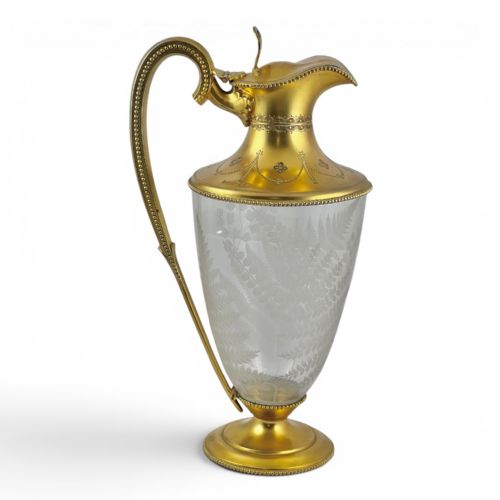
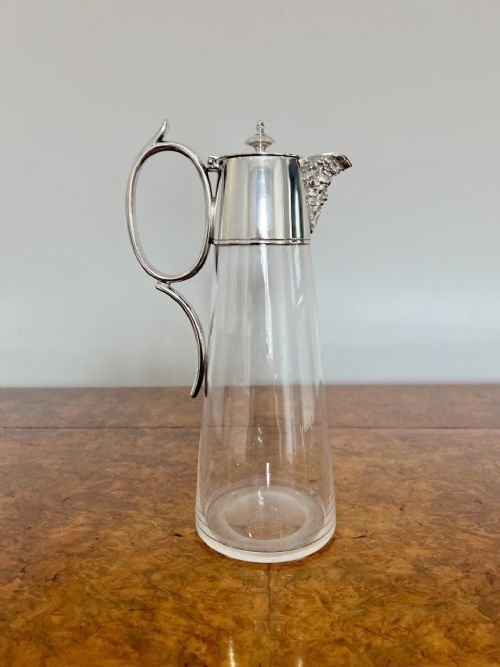
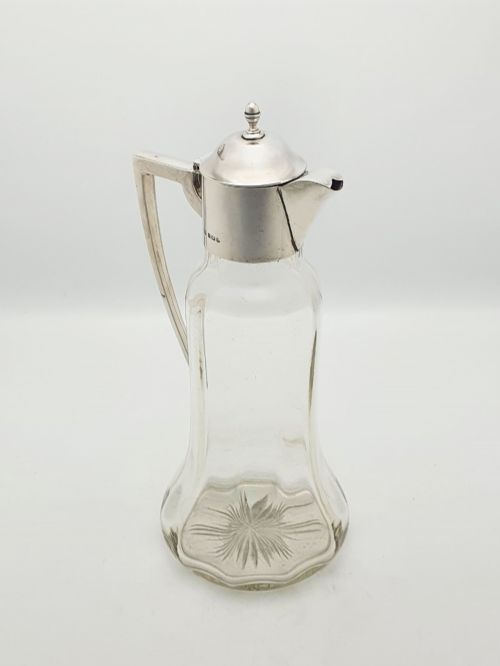
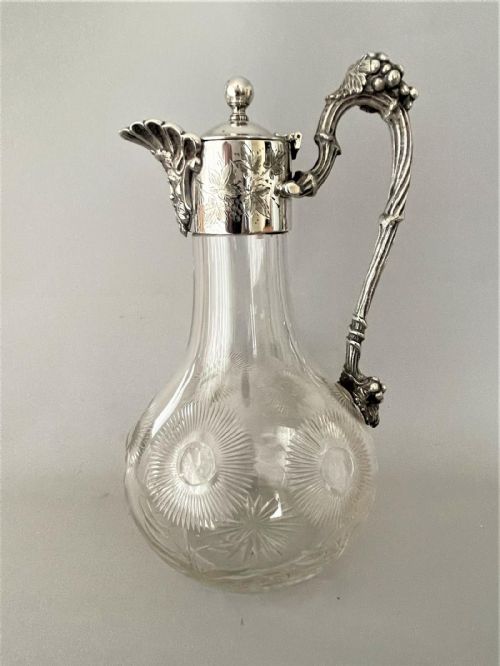



Glass Silver Wine Jug
A glass silver wine jug combines bright metal mounts with clear vessels, offering a functional centrepiece for the dining table.
Glass Silver Wine Jug
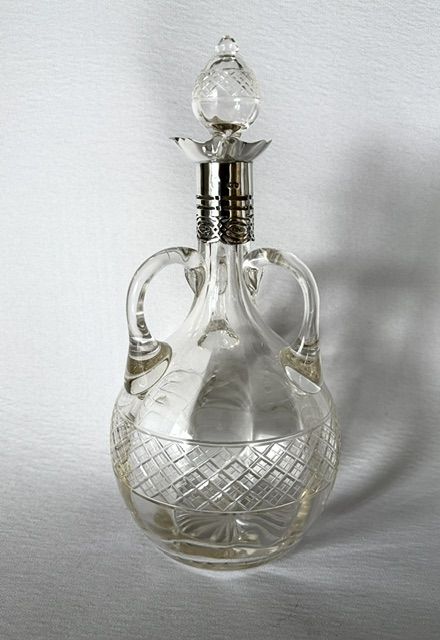
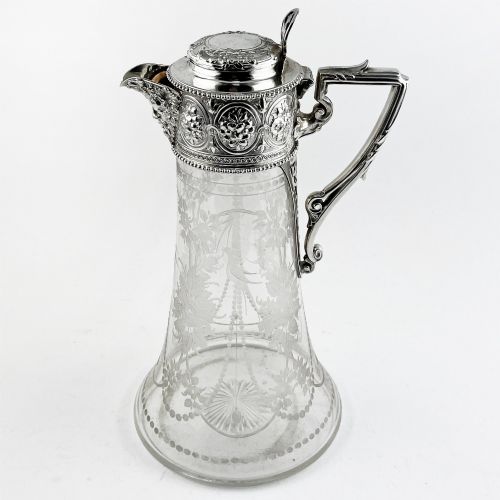
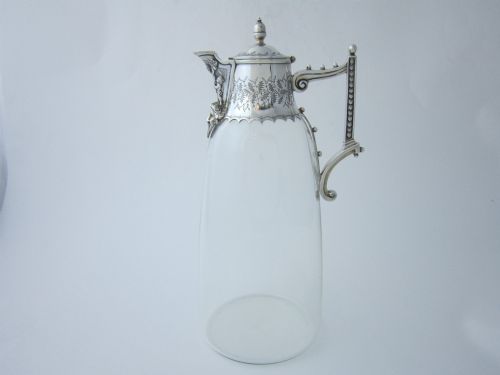
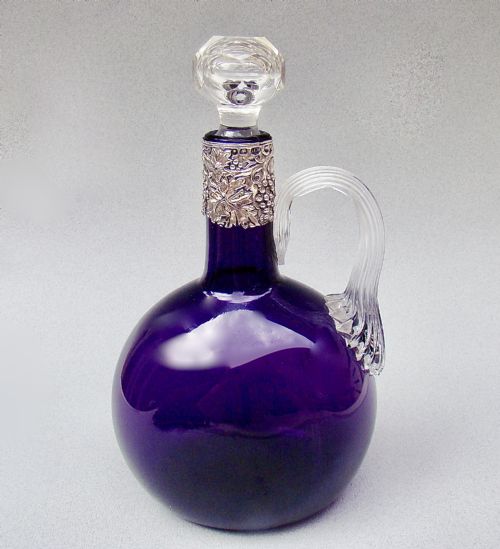
When you search for a glass silver wine jug, you encounter serverware designed primarily for pouring claret and other wines at the table. These items bridge multiple categories, appearing as claret jugs, decanters, ewers, and pitchers across diverse forms.
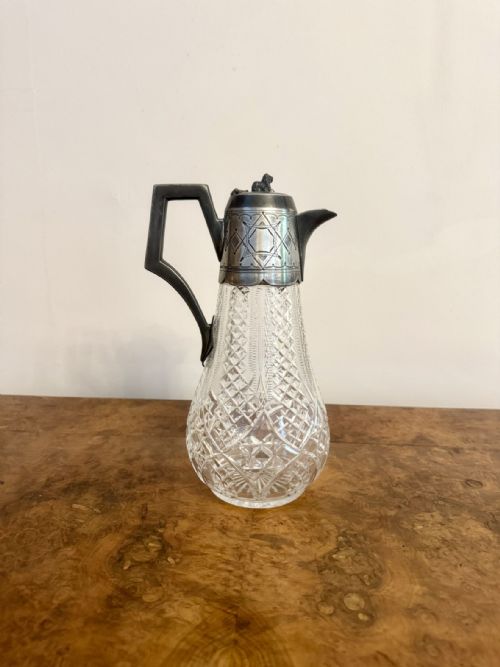
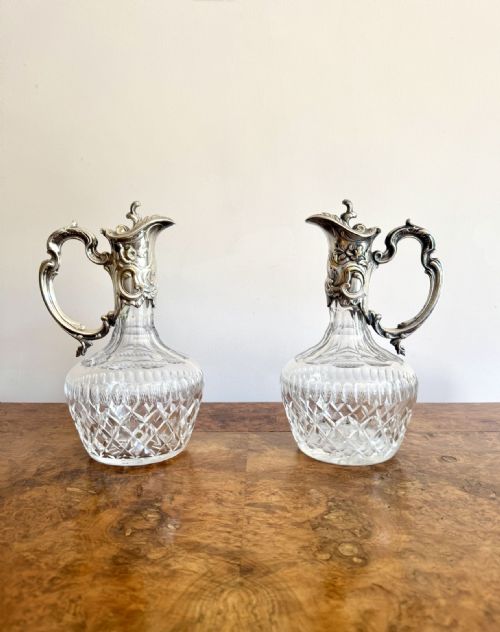
The Victorian and Edwardian periods supply the majority of examples seen on this page, alongside mid-century and earlier nineteenth-century pieces. You meet everything from heavy cut crystal bodies with sterling mounts to slender etched carafes fitted in silver plate.
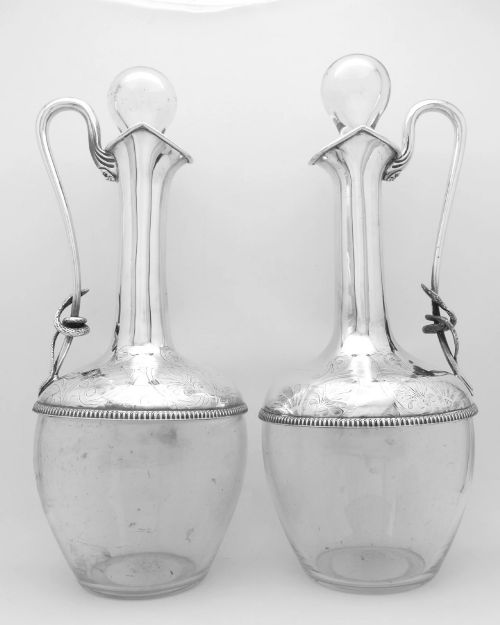
Origins span British workshops in London, Birmingham, and Sheffield, alongside French makers and specialised glasshouses. The combination of glass vessels and silver work defines the group, whether the metal forms a simple collar, a hinged lid, or a sweeping serpent handle.
Materials and construction
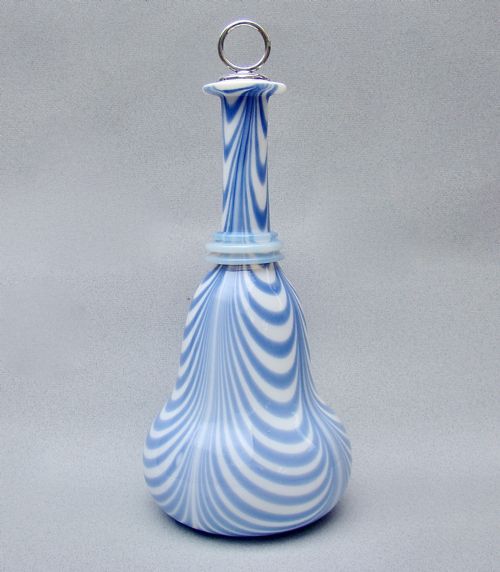
Makers shaped the vessels using clear, cut, crystal, etched, amethyst, cranberry, or Nailsea glass, forming bodies through blowing, moulding, and wheel-cutting. This glasswork provides weight and refraction to the base of the piece.
Silver and silver plate form the mounts, handles, collars, and hinged lids that secure to the glass neck. Artisans utilised sterling silver or applied heavy plating over base metals, often incorporating cast details such as Bacchus masks or botanical motifs.
Materials recorded across the inventory include sterling silver, silver plate, crystal, cut glass, etched glass, and cranberry glass.
Distinctions in craftsmanship
Quality rests in the harmony between the glass body and the metal mount, where heavier crystal and thick sterling silver mounts indicate superior workshop production. Finer pieces demonstrate crisp chasing on the metalwork and deep, precise wheel-cutting on the glass.
The sophistication of the design dictates the upper tier of the range, separating standard commercial output from inventive work by notable makers. Integrated handles, figural elements like serpent or mask motifs, and balanced proportions elevate certain examples above simpler tableware.
Asprey and Co. Ltd·Henry Matthews·Elkington·Hukin & Heath
The Glass Silver Wine Jug Glossary
- Claret jug
- A specialised vessel designed specifically for serving red Bordeaux wine at the dining table. They typically feature a hinged lid and an integral handle attached to a glass body.
- Ewer
- A large pitcher with a wide spout and a curved handle, often ornamental in shape. These pieces trace their lineage back to medieval washing vessels before becoming wine servers.
- Silver plate
- A layer of silver fused or electroplated onto a base metal such as copper or Britannia metal. This technique allowed makers to offer elaborate tableware at a lower cost than solid sterling silver.
- Nailsea glass
- Glassware produced in the Somerset village of Nailsea, recognised by its distinctive looped or feathered opaque white trails. It appears on nineteenth-century carafes and decanters.
- Crystal
- Glass containing lead oxide, which increases the weight, brilliance, and clarity of the material. It allows for deep, sharp facets when cut on a wheel.
Glass Silver Wine Jug: Frequently Asked Questions
What is a glass silver wine jug used for?
These vessels were created to hold and serve wine, specifically claret, at formal dining tables during the Victorian and Edwardian eras. The metal mounts and hinged lids kept the contents covered while allowing graceful pouring.
Today, they serve a similar functional purpose for decanting wine or operate as decorative display items in a dining room or sideboard.
How do I tell sterling silver mounts from silver plate?
Sterling silver mounts usually bear hallmark stamps indicating the assay office, date letter, and maker's mark. Silver plate often shows unmarked metal or specific manufacturer marks rather than official government hallmarks.
Examining the wear points can also reveal the base metal beneath thin silver plating over decades of use.
What periods do these wine jugs come from?
The pieces span the nineteenth and twentieth centuries, with a heavy concentration from the Victorian and Edwardian eras. You also find mid-century examples and earlier nineteenth-century items like Old Sheffield plate pieces.
Stylistic shifts across these decades move from ornate rococo revival and aesthetic movement designs towards cleaner mid-century modern lines.
How should I clean and care for antique silver and glass?
Wash the glass body gently by hand using warm water and mild detergent, avoiding harsh abrasives that could scratch the surface. Keep silver polish away from the glass to prevent staining or residue buildup in the cut patterns.
Dry the metal mounts thoroughly after cleaning to protect the hinges and prevent tarnish accumulation in recessed details.